


Hydrangeas stand as one of the most beloved flowering shrubs in American gardens, prized for their spectacular blooms that can transform a landscape from ordinary to extraordinary. Yet despite their popularity, many gardeners unknowingly sabotage their own flowering displays through a single critical error made during the first warm days of spring. This mistake involves pruning at the wrong time or cutting away the very stems that would have produced the season’s most abundant flowers. Understanding when and how to prune these stunning shrubs makes the difference between a garden bursting with color and one disappointingly bare of blooms.
Common mistake: bad timing in pruning
The most prevalent error gardeners make with hydrangeas involves pruning too early in spring, often before understanding which stems will produce flowers. As temperatures begin to rise and gardening enthusiasm returns, many homeowners rush outside with pruning shears, eager to clean up their landscape. This eagerness, while understandable, frequently leads to the removal of flower buds that formed the previous summer and fall.
Why timing matters for different hydrangea varieties
Not all hydrangeas bloom on the same type of wood, which creates confusion about proper pruning schedules. The timing mistake becomes particularly damaging because different varieties have distinct blooming habits:
- Bigleaf hydrangeas (Hydrangea macrophylla) bloom on old wood formed during the previous growing season
- Panicle hydrangeas (Hydrangea paniculata) produce flowers on new growth from the current season
- Smooth hydrangeas (Hydrangea arborescens) also bloom on new wood
- Oakleaf hydrangeas (Hydrangea quercifolia) set buds on old wood like their bigleaf cousins
The critical issue arises when gardeners treat all hydrangeas identically, applying a one-size-fits-all approach that works for some varieties but devastates others. Those who prune bigleaf or oakleaf hydrangeas in early spring remove the very stems carrying dormant flower buds, ensuring a bloomless summer regardless of how well they care for the plant afterward.
The temperature trap
Another dimension of the timing mistake involves responding to unseasonably warm weather. When temperatures climb unexpectedly in late winter or very early spring, gardeners often assume it’s safe to begin pruning. However, these warm spells can be followed by damaging freezes that kill exposed buds. Premature pruning removes the protective older growth that shields developing buds from temperature fluctuations, leaving remaining buds vulnerable to frost damage.
Understanding which parts of your hydrangea will produce flowers requires careful observation and knowledge of bud formation patterns.
How to identify last year’s buds ?
Recognizing flower buds from the previous season represents an essential skill for successful hydrangea pruning. These buds contain the potential for the current year’s blooms on old-wood varieties, making their identification crucial before making any cuts.
Visual characteristics of flower buds
Flower buds on hydrangeas display distinctive features that differentiate them from leaf buds. Flower buds appear noticeably plumper and rounder than their slender leaf bud counterparts. They typically form at the tips of stems and in pairs along the upper portions of branches. On bigleaf hydrangeas, these buds often have a slightly greenish or pinkish hue, depending on the variety and winter conditions.
Leaf buds, by contrast, appear more pointed and elongated, lying flatter against the stem. They’re generally smaller and less prominent than flower buds. Learning to distinguish between these two bud types prevents the accidental removal of flowering potential.
Location patterns on stems
Flower buds on old-wood hydrangeas follow predictable placement patterns that aid in identification:
- Terminal buds at stem tips frequently contain flowers
- Lateral bud pairs in the upper third of stems often produce blooms
- Buds lower on stems typically generate only leaves
- Dead or winter-damaged wood shows brown, shriveled buds rather than plump, viable ones
The swelling test
As spring progresses, viable flower buds begin swelling noticeably before leaf buds activate. This differential timing provides confirmation of bud identity. Gently touching buds can also reveal differences: flower buds feel fuller and more substantial, while leaf buds remain tight and small. Waiting until buds begin showing these signs of activity eliminates guesswork and prevents premature cutting.
Once you’ve identified which buds will flower, knowing the appropriate timing for pruning becomes the next critical factor.
The right time to prune your hydrangeas
Proper pruning timing varies significantly based on hydrangea type, making variety identification the foundation of a successful pruning strategy.
Old-wood bloomers: patience required
For bigleaf, oakleaf, and mountain hydrangeas that bloom on old wood, the safest pruning window occurs immediately after flowering ends, typically in late summer. This timing allows the plant to set next year’s buds on the new growth produced following pruning. Early spring pruning on these varieties should be limited strictly to:
- Removing completely dead stems that show no signs of life
- Cutting out broken or damaged branches
- Eliminating stems affected by disease
Even this minimal spring pruning should wait until leaf buds begin breaking, making it clear which stems are truly dead versus merely dormant.
New-wood bloomers: spring flexibility
Panicle and smooth hydrangeas offer more forgiving pruning schedules since they flower on current-season growth. These varieties can be pruned in late winter or early spring before new growth emerges, typically in March or early April depending on climate zone. Some gardeners prefer waiting until early spring when swelling buds make dead wood obvious.
Climate considerations
| Climate Zone | Old-Wood Pruning | New-Wood Pruning |
|---|---|---|
| Zones 5-6 | After flowering (Aug-Sept) | Late March-April |
| Zones 7-8 | After flowering (July-Aug) | March |
| Zones 9-10 | After flowering (June-July) | February-March |
These timeframes provide general guidance, but local conditions and individual garden microclimates may require adjustments.
Beyond timing, the techniques employed during pruning significantly impact plant health and flowering performance.
Pruning techniques to avoid and recommendations
How you prune matters as much as when you prune, with certain common practices causing more harm than good.
Techniques that damage flowering potential
Shearing or hedging hydrangeas represents one of the most detrimental practices. This approach, which involves cutting all stems to a uniform height, removes flower buds indiscriminately and creates an unnatural appearance. The technique might work for formal hedges of new-wood bloomers, but it devastates old-wood varieties and reduces bloom quality even on new-wood types.
Another problematic technique involves cutting stems at random heights without considering bud placement. This creates a chaotic appearance and often removes buds unnecessarily. Similarly, leaving long stubs above buds invites disease and die-back, while cutting too close damages the buds themselves.
Recommended pruning methods
Proper hydrangea pruning follows these principles:
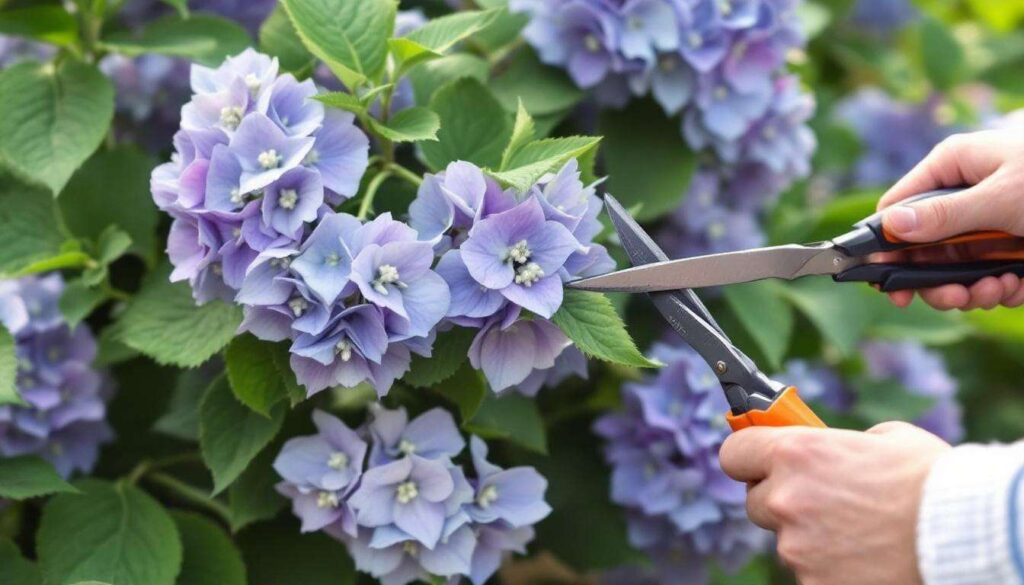
- Make cuts at a 45-degree angle approximately one-quarter inch above a bud pair
- Remove entire stems at ground level rather than shortening them when thinning
- Use sharp, clean pruning shears to ensure smooth cuts that heal quickly
- Follow the natural shape of the plant rather than imposing geometric forms
- Remove the oldest stems (more than three years old) to encourage renewal
The one-third rule
For maintaining mature hydrangeas, the one-third rule provides excellent guidance: remove no more than one-third of the plant’s stems in any single year. This approach maintains flowering while gradually renewing the shrub. Focus on the oldest, least productive stems, cutting them completely to ground level to stimulate new basal growth.
When pruning mistakes occur despite best intentions, understanding the consequences helps set realistic expectations for recovery.
Consequences of incorrect pruning on blooming
Pruning errors produce predictable effects on hydrangea performance, with severity depending on the extent and timing of the mistake.
Immediate bloom loss
The most obvious consequence of early spring pruning on old-wood hydrangeas is complete or near-complete absence of flowers during the growing season. Since these varieties cannot produce replacement flower buds on new growth, removing the previous year’s buds eliminates flowering potential entirely. The plant remains healthy and produces abundant foliage, but the characteristic blooms simply don’t appear.
Long-term impacts on plant structure
Repeated incorrect pruning creates structural problems beyond just missing flowers:
- Plants develop weak, spindly growth from constant cutting back
- The natural vase or mounded shape becomes distorted
- Excessive vegetative growth occurs at the expense of flower bud formation
- Plants may grow larger than desired as they compensate for pruning stress
Stress and disease vulnerability
Hydrangeas subjected to severe or poorly timed pruning experience physiological stress that compromises their overall health. This stress makes plants more susceptible to disease and pest problems. Wounds from improper cuts provide entry points for pathogens, while the energy diverted to healing and regrowth reduces the plant’s ability to defend against threats.
| Pruning Error | Primary Consequence | Recovery Time |
|---|---|---|
| Early spring pruning (old-wood types) | No blooms current season | 1 year |
| Severe heading back | Reduced blooms, weak growth | 2-3 years |
| Repeated annual shearing | Structural damage, minimal blooms | 3-5 years |
Fortunately, hydrangeas demonstrate remarkable resilience, and appropriate interventions can restore flowering relatively quickly.
Solutions for recovering from reckless pruning
When pruning mistakes happen, specific strategies accelerate recovery and restore flowering performance.
Immediate response actions
If you realize pruning errors immediately after making cuts, minimize further damage by stopping all pruning activity. Resist the temptation to “fix” mistakes with additional cuts, which typically worsens the situation. Instead, focus on supporting the plant’s recovery through optimal care.
Cultural practices for recovery
Helping hydrangeas bounce back from pruning mistakes requires attention to fundamental care practices:
- Provide consistent moisture without waterlogging, especially during the first growing season after pruning errors
- Apply a balanced, slow-release fertilizer in early spring to support vigorous regrowth
- Maintain a 2-3 inch layer of organic mulch to moderate soil temperature and retain moisture
- Avoid additional stress from transplanting, heavy fertilization, or other major interventions
The waiting game
For old-wood bloomers pruned incorrectly in spring, patience becomes the primary solution. The plant will produce new vegetative growth throughout the current season, and this growth will set flower buds for the following year. Providing excellent care ensures robust growth that maximizes next year’s flowering potential. Avoid the common mistake of over-fertilizing in an attempt to force blooms, as excessive nitrogen promotes foliage at the expense of flower bud formation.
Renovation pruning for severely damaged plants
Hydrangeas subjected to years of incorrect pruning may require renovation through gradual renewal. This process involves removing one-third of the oldest, least productive stems each year for three consecutive years, allowing the plant to rebuild its structure while maintaining some flowering. Execute this renewal pruning at the correct time for your hydrangea variety, and the plant will gradually return to full flowering capacity with improved form.
Hydrangeas reward informed care with spectacular floral displays, but this beauty depends entirely on understanding their specific pruning requirements. The timing mistake of early spring pruning affects old-wood bloomers most severely, removing the buds that would have produced the season’s flowers. Learning to identify flower buds, knowing the optimal pruning schedule for your specific variety, and employing proper cutting techniques protects flowering potential while maintaining plant health. When mistakes occur, appropriate cultural care and patience allow these resilient shrubs to recover fully. By avoiding the common timing error and following variety-specific guidelines, gardeners can ensure their hydrangeas deliver the abundant blooms that make these shrubs garden favorites.