

Fruit trees require proper care and maintenance throughout the year to produce abundant, high-quality harvests. Among all the tasks involved in orchard management, pruning stands out as one of the most critical practices that directly impacts fruit production. Strategic winter and early spring pruning sets the foundation for a successful growing season by improving tree structure, enhancing air circulation, and directing the plant’s energy toward fruit development rather than excessive vegetative growth. With the right timing and techniques, you can transform your fruit trees from underperforming plants into productive powerhouses that deliver exceptional yields when summer arrives.
Understanding the importance of pruning fruit trees
Pruning fruit trees serves multiple essential functions that go far beyond simple aesthetic improvement. Proper pruning fundamentally changes how a tree allocates its resources, directing energy away from unnecessary branches and toward fruit-bearing wood. This practice creates a more open canopy structure that allows sunlight to penetrate throughout the tree, ensuring that fruiting spurs receive adequate light for photosynthesis and fruit development.
Health benefits of regular pruning
Regular pruning significantly improves tree health by removing dead, diseased, or damaged wood that could harbor pests and pathogens. Enhanced air circulation resulting from a well-pruned canopy reduces humidity levels within the tree, creating an environment less conducive to fungal diseases such as powdery mildew, fire blight, and brown rot. Additionally, pruning helps maintain manageable tree size, making it easier to monitor for pest problems and apply treatments when necessary.
Impact on fruit quality and quantity
The relationship between pruning and harvest quality cannot be overstated. Trees that receive appropriate pruning typically produce:
- Larger individual fruits due to reduced competition for nutrients
- Better-colored fruits with improved sun exposure
- More uniform ripening across the entire tree
- Reduced biennial bearing tendencies in apple and pear trees
- Easier harvest access with well-spaced branches
Understanding these fundamental benefits sets the stage for implementing effective pruning strategies at the optimal time of year.
When and why to prune your fruit trees
Late winter to early spring represents the ideal pruning window for most deciduous fruit trees. This timing, typically between late February and early April depending on your climate zone, offers several distinct advantages. Trees remain dormant during this period, meaning pruning wounds heal quickly once growth resumes, and the absence of leaves makes it easier to assess branch structure and identify which cuts to make.
Dormant season advantages
Pruning during dormancy minimizes stress on the tree because sap flow has not yet begun in earnest. The tree’s energy reserves remain stored in the roots and trunk, ready to support vigorous spring growth. Cuts made during this period also attract fewer disease-carrying insects, and the risk of transmitting bacterial or fungal infections decreases substantially compared to growing-season pruning.
Climate considerations
| Climate Zone | Optimal Pruning Period | Key Indicator |
|---|---|---|
| Cold climates (Zones 3-5) | Late March to early April | After severe frost danger passes |
| Moderate climates (Zones 6-7) | Late February to mid-March | Before bud swell begins |
| Warm climates (Zones 8-10) | January to early February | During brief dormancy period |
With timing established, attention turns to identifying which specific fruit trees benefit most from immediate pruning attention.
Fruit trees to prune right now
Three fruit tree varieties particularly benefit from pruning during the current window, each requiring specific attention to maximize summer harvest potential.
Apple trees
Apple trees respond exceptionally well to late winter pruning, making this the perfect time to shape your trees for optimal production. Focus on removing water sprouts, which are vigorous vertical shoots that consume energy without producing fruit. Thin out crossing branches and eliminate any limbs growing toward the tree’s center. Maintain a central leader system or modified central leader depending on your tree’s age and variety, ensuring that scaffold branches are well-spaced vertically and radially around the trunk.
Peach and nectarine trees
Peach and nectarine trees require more aggressive pruning than most other fruit trees because they bear fruit exclusively on one-year-old wood. This means last season’s new growth produces this summer’s crop. Prune these trees into an open vase or open center shape by:
- Removing the central leader to create an open center
- Selecting three to five main scaffold branches
- Cutting back last year’s growth by approximately one-third
- Eliminating inward-growing branches completely
- Thinning crowded areas to improve light penetration
Pear trees
Pear trees benefit from moderate pruning that balances fruit production with fire blight resistance. Avoid excessive nitrogen-stimulating cuts that promote succulent growth susceptible to this devastating bacterial disease. Remove dead wood, thin out dense areas, and maintain a strong framework with wide branch angles. Pears naturally develop narrow crotch angles, so training young branches to grow at 45 to 60-degree angles from the trunk creates stronger, more productive trees.
Having identified the right trees to prune, implementing proper techniques ensures the best possible results.
Effective pruning techniques
Successful pruning requires both proper tools and correct cutting methods to avoid damaging trees while achieving desired outcomes.
Essential pruning tools
Quality tools make pruning easier and produce cleaner cuts that heal faster. Invest in professional-grade equipment including:
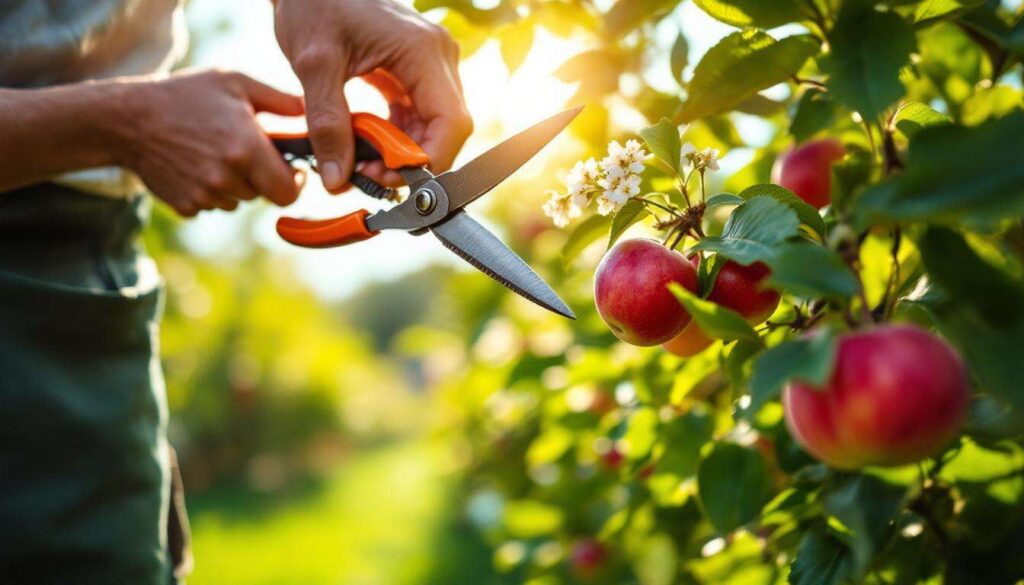
- Bypass hand pruners for branches up to three-quarters inch diameter
- Loppers for branches between three-quarters inch and two inches
- Pruning saw for larger branches
- Pole pruner for high branches without using ladders
- Disinfectant solution to clean tools between cuts
Proper cutting techniques
The three-cut method prevents bark tearing when removing larger branches. First, make an undercut about 12 inches from the trunk, cutting one-third through the branch from below. Second, cut from above, slightly farther out from the undercut, removing the branch’s weight. Finally, remove the remaining stub with a clean cut just outside the branch collar, the swollen area where the branch meets the trunk.
The four Ds of pruning
Professional arborists follow a systematic approach by removing branches that are:
- Dead: showing no signs of life or leaf buds
- Diseased: displaying cankers, discoloration, or abnormal growth
- Damaged: broken, split, or mechanically injured
- Deranged: crossing, rubbing, or growing in undesirable directions
Mastering these techniques provides the foundation, but additional practices can further enhance your harvest potential.
Tips to optimize your harvest this summer
Beyond pruning, several complementary practices work synergistically to maximize fruit production and quality.
Post-pruning care
Avoid applying wound dressings or tree paint to pruning cuts, as research demonstrates that trees heal faster when cuts remain exposed to air. Instead, focus on proper watering and fertilization to support vigorous spring growth. Apply a balanced fertilizer in early spring as buds begin to swell, providing nutrients for both vegetative growth and fruit development.
Fruit thinning strategies
Even with excellent pruning, most fruit trees set more fruit than they can adequately support. Thinning excess fruit six to eight weeks after bloom dramatically improves the size and quality of remaining fruit. Remove fruits to achieve spacing of:
| Fruit Type | Recommended Spacing | Benefits |
|---|---|---|
| Apples | 6-8 inches apart | Larger fruit, reduced limb breakage |
| Peaches | 4-6 inches apart | Improved size and sweetness |
| Pears | 4-6 inches apart | Better fruit finish, less disease |
Ongoing maintenance
Monitor trees throughout the growing season for pest and disease issues, addressing problems promptly before they compromise your harvest. Maintain consistent soil moisture, particularly during fruit development periods, as water stress significantly reduces fruit size and quality. Consider applying organic mulch around the tree base to conserve moisture, suppress weeds, and gradually improve soil quality.
Proper pruning performed at the optimal time transforms fruit tree productivity and sets the stage for exceptional summer harvests. The three key varieties requiring immediate attention are apple, peach, and pear trees, each benefiting from specific pruning approaches tailored to their growth habits and fruiting patterns. By combining strategic dormant-season pruning with proper technique, quality tools, and complementary practices such as fruit thinning and consistent care, you create ideal conditions for trees to channel their energy into producing abundant, high-quality fruit. The investment of time spent pruning now pays substantial dividends when harvest season arrives, rewarding your efforts with baskets full of delicious, homegrown fruit.