



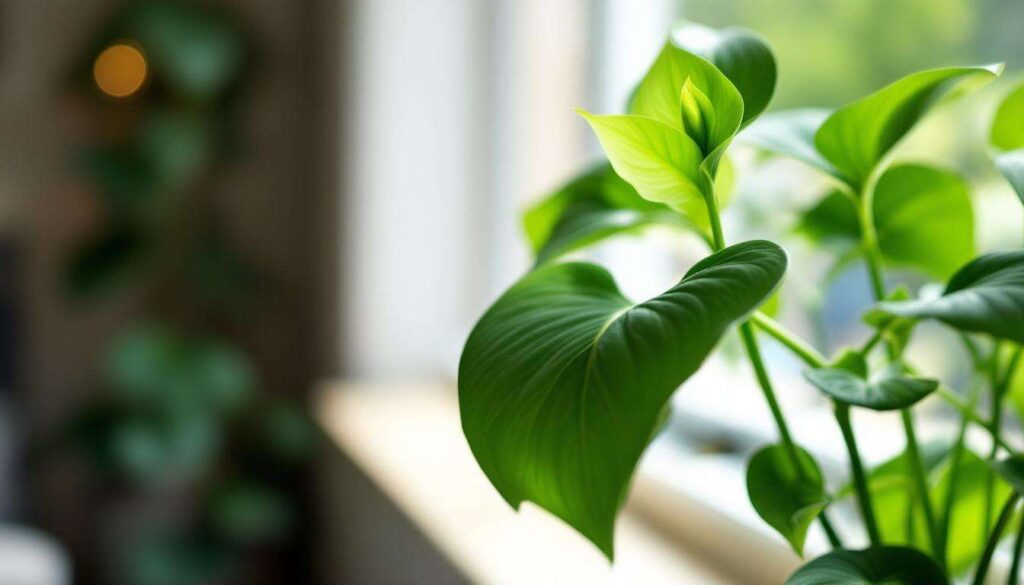
When your once-thriving pothos starts producing leaves barely larger than a thumbnail, it’s signaling that something in its care routine needs adjustment. This common houseplant problem frustrates many plant enthusiasts, but the solution is often more straightforward than expected. Understanding why your pothos produces miniature foliage and implementing targeted corrections can restore its characteristic lush, large leaves within weeks.
Causes of tiny pothos leaves
Insufficient light exposure
Pothos plants require adequate indirect light to produce full-sized leaves. When placed in excessively dim locations, the plant enters survival mode, directing limited energy toward producing smaller, less resource-intensive foliage. This adaptive response allows the plant to maintain basic functions while conserving resources.
Root-bound conditions
A pothos cramped in an undersized container cannot develop the robust root system necessary for supporting large leaf growth. When roots circle the pot’s perimeter with nowhere to expand, nutrient and water uptake becomes severely restricted. The visible consequence appears as progressively smaller leaves emerging from new growth points.
Nutritional deficiencies
Plants deprived of essential nutrients lack the building blocks required for substantial leaf development. Key deficiencies include:
- Nitrogen shortage limiting chlorophyll production and overall growth
- Insufficient potassium affecting cell expansion and water regulation
- Magnesium deficiency impacting photosynthesis efficiency
- Micronutrient imbalances disrupting metabolic processes
Watering inconsistencies
Both underwatering and overwatering create stress conditions that manifest as diminished leaf size. Irregular moisture levels prevent the plant from establishing consistent growth patterns, forcing it to produce smaller, more manageable foliage that requires less water to sustain.
| Cause | Primary symptom | Secondary effect |
|---|---|---|
| Low light | Pale, small leaves | Leggy growth |
| Root-bound | Stunted leaves | Slow growth rate |
| Nutrient deficiency | Yellowing small leaves | Weak stems |
| Water stress | Crispy small leaves | Drooping vines |
Identifying the specific cause requires careful observation of your plant’s environment and recent care history, which guides the appropriate corrective measures.
Fixing improper watering
Establishing a consistent schedule
Rather than watering on predetermined calendar dates, pothos thrives with moisture-responsive watering. Insert your finger two inches into the soil; when this depth feels dry, the plant needs water. This typically translates to watering every seven to ten days, though environmental factors create variation.
Proper watering technique
When watering, thoroughly saturate the soil until water flows freely from drainage holes. This complete soaking ensures the entire root system receives moisture. Discard any water collected in saucers within thirty minutes to prevent root rot. Shallow watering that barely dampens the surface encourages weak, shallow root development.
Adjusting for seasonal changes
Water requirements fluctuate with seasons. During active growing periods in spring and summer, pothos requires more frequent watering. Winter dormancy reduces water needs significantly, sometimes requiring watering only every two weeks. Monitor soil moisture rather than adhering rigidly to schedules.
Once watering practices align with your plant’s actual needs, addressing environmental factors becomes the next priority for encouraging larger leaf production.
Addressing light issues
Optimal light conditions
Pothos performs best in bright, indirect light where it receives filtered sunlight for several hours daily. East-facing windows provide ideal morning sun, while locations near south or west windows positioned several feet back prevent direct exposure that scorches leaves.
Recognizing light deficiency signs
Beyond small leaves, inadequate light produces:
- Elongated spaces between leaves along vines
- Loss of variegation in patterned varieties
- Vines stretching toward light sources
- Overall pale or yellowing foliage
Supplementing with artificial light
When natural light proves insufficient, full-spectrum LED grow lights positioned twelve to eighteen inches above the plant provide effective supplementation. Running lights for twelve to fourteen hours daily mimics natural conditions. This solution particularly benefits spaces with northern exposure or limited windows.
Gradual relocation strategy
Moving pothos from dim to bright locations requires gradual acclimation over two weeks to prevent shock. Incrementally increase light exposure by relocating the plant closer to light sources every few days, allowing adaptation between moves.
With lighting optimized, examining whether the current container adequately supports growth becomes essential.
Adjusting pot size
Identifying root-bound plants
Signs your pothos needs repotting include roots emerging from drainage holes, circling visibly at the soil surface, or forming a dense mat when removed from its container. Water draining immediately through the pot without absorption also indicates insufficient soil volume relative to root mass.
Selecting appropriate containers
Choose pots approximately two inches larger in diameter than the current container. Excessive pot size encourages soil to remain waterlogged, promoting root rot. Ensure containers include drainage holes, as trapped water creates anaerobic conditions fatal to roots.
Repotting procedure
Gently remove the plant, loosening circled roots to encourage outward growth. Fill the new container partially with fresh, well-draining potting mix formulated for houseplants. Position the plant at the same depth it previously grew, then fill surrounding space with soil, firming gently. Water thoroughly after repotting.
| Current pot size | New pot size | Repotting frequency |
|---|---|---|
| 4 inches | 6 inches | 12-18 months |
| 6 inches | 8 inches | 18-24 months |
| 8 inches | 10 inches | 24-36 months |
After providing adequate root space, supporting vigorous growth through proper nutrition maximizes leaf size potential.
Fertilizing for larger leaves
Choosing the right fertilizer
Balanced liquid fertilizers with equal nitrogen-phosphorus-potassium ratios (such as 10-10-10 or 20-20-20) support overall pothos health. Nitrogen-rich formulations particularly encourage foliage development. Select products specifically designed for houseplants or foliage plants for optimal results.
Application frequency and dilution
During active growth from spring through early fall, fertilize every four to six weeks at half the strength recommended on product labels. Dilution prevents fertilizer burn while providing consistent nutrition. Discontinue fertilizing during winter dormancy when growth naturally slows.
Alternative organic options
Organic fertilizers release nutrients gradually, reducing burn risk:
- Compost tea provides gentle, balanced nutrition
- Worm castings offer slow-release nutrients when top-dressed
- Fish emulsion supplies nitrogen for leaf development
- Seaweed extract delivers micronutrients and growth hormones
Flushing accumulated salts
Fertilizer residue accumulates in soil over time, potentially damaging roots. Every three to four months, flush pots by running water through soil for several minutes, allowing complete drainage. This practice removes salt buildup while maintaining soil health.
Even with proper care techniques, certain common errors can undermine efforts to restore leaf size.
Mistakes to avoid
Over-fertilizing
Excessive fertilizer creates toxic salt concentrations that burn roots and stunt growth rather than promoting it. Brown leaf tips, white crusty deposits on soil surfaces, and wilting despite adequate water indicate fertilizer excess. When detected, flush soil thoroughly and reduce fertilization frequency.
Impatient repotting
Repotting too frequently or into excessively large containers stresses plants and creates waterlogged conditions. Allow pothos to become moderately root-bound before repotting, as slight crowding actually encourages more compact, vigorous growth.
Ignoring humidity needs
While tolerant of average household humidity, pothos produces larger, healthier leaves in environments with forty to sixty percent humidity. Extremely dry air causes stress that manifests as smaller foliage. Grouping plants together, using pebble trays, or running humidifiers addresses this factor.
Neglecting vine pruning
Excessively long vines divert energy away from producing new, larger leaves. Pruning encourages bushier growth and redirects resources toward developing fuller foliage. Trim vines just above leaf nodes, using cuttings for propagation.
Using poor-quality soil
Dense, compacted soil restricts root growth and retains excessive moisture. Pothos requires well-draining mixes containing perlite, orchid bark, or coconut coir that balance moisture retention with aeration. Garden soil proves too heavy for container cultivation.
Addressing these fundamental care elements systematically restores pothos vitality and leaf size. Most plants respond within four to eight weeks of implementing corrections, with new growth emerging noticeably larger than previous leaves. Consistency in watering, appropriate light exposure, adequate root space, and balanced nutrition form the foundation for maintaining healthy pothos with characteristically large, vibrant foliage. Regular monitoring and responsive adjustments to changing conditions ensure long-term success with this resilient houseplant.