


Pruning might seem like a chore best left for later, but timing matters more than most gardeners realize. The dormant period just before spring awakening offers a critical window when plants can handle cutting without stress, diseases spread less readily, and you can clearly see the structure beneath bare branches. Strategic pruning during these final weeks of winter sets the stage for vigorous growth, abundant blooms, and healthier plants throughout the growing season.
Why prune your plants before spring
The science behind winter pruning
Pruning before spring takes advantage of plant dormancy, a period when growth has slowed and energy reserves concentrate in roots and main stems. During this time, cutting branches causes minimal stress because plants aren’t actively transporting nutrients to new growth. The wounds heal faster once spring arrives, and the plant directs energy toward producing healthy new shoots rather than repairing damage during peak growing season.
Disease prevention and visibility benefits
Late winter pruning offers several practical advantages that make the task easier and more effective:
- Fungal spores and bacterial diseases remain largely inactive in cold temperatures
- Bare branches reveal the plant’s true structure without leaf cover
- Dead, damaged, or crossing branches become immediately apparent
- Insect pests haven’t yet emerged to colonize fresh cuts
- Frozen or firm ground allows access without damaging surrounding soil
This visibility advantage cannot be overstated. When you can see exactly where each branch connects and how the plant’s framework functions, you make better pruning decisions that enhance both health and appearance.
Timing considerations for different climates
The ideal pruning window varies based on your location. In mild climates, late winter pruning can begin as early as January. For regions with harsh winters, waiting until late February or early March reduces the risk of cold damage to fresh cuts. The key indicator is watching for swelling buds, which signal that pruning time is nearly past for most species.
Understanding these principles helps explain why certain plants benefit most from pre-spring attention, starting with perennials that form the backbone of many gardens.
Perennials not to be missed
Ornamental grasses requiring attention
Ornamental grasses should be cut back to approximately 4-6 inches above ground level before new growth emerges. Species like miscanthus, fountain grass, and switchgrass develop dead foliage over winter that must be removed to prevent smothering tender new shoots. Use sharp hedge shears or even a string trimmer for large plantings, bundling the old growth for easy removal.
Herbaceous perennials needing renewal
Several popular perennials benefit tremendously from late winter cutting:
- Sedum: Remove dried flower heads and trim stems to 2 inches to encourage compact growth
- Russian sage: Cut back to 6-8 inches to prevent woody, unproductive stems
- Catmint: Shear to ground level for fresh, vigorous spring foliage
- Coneflowers: Trim dead stems unless you’ve left them for winter bird feeding
Butterfly bush and similar woody perennials
Butterfly bush (Buddleia) represents a category of plants that blur the line between perennial and shrub. In colder regions, these plants die back significantly and require aggressive pruning to 12-18 inches above ground. This severe cutting stimulates vigorous new growth that produces the most flowers. Without this annual renewal, butterfly bushes become leggy with blooms concentrated at branch tips beyond easy viewing.
While perennials respond well to straightforward cutting back, shrubs demand more nuanced techniques that preserve their natural form while promoting health.
Tips for pruning shrubs
The three-cut method for large branches
When removing substantial branches from shrubs, the three-cut technique prevents bark tearing that can damage the plant. First, make an undercut about 12 inches from the trunk, cutting upward about one-third through the branch. Second, cut from above, slightly farther out, allowing the branch to fall cleanly. Finally, remove the remaining stub just outside the branch collar where healing occurs naturally.
Deciduous shrubs requiring renewal
Hydrangeas present particular challenges because pruning requirements vary by type. Smooth hydrangeas and panicle hydrangeas bloom on new wood and should be cut back by one-third to one-half in late winter. However, bigleaf and oakleaf hydrangeas bloom on old wood and should only receive light pruning to remove dead wood and shape the plant.
| Shrub Type | Pruning Timing | Amount to Remove |
|---|---|---|
| Smooth Hydrangea | Late winter | One-third to one-half |
| Forsythia | After flowering | Oldest stems only |
| Spirea | Late winter | One-quarter to one-third |
| Lilac | After flowering | Dead wood only |
Evergreen shrubs and their special needs
Evergreen shrubs like boxwood and holly tolerate late winter pruning well, but avoid cutting into old wood that may not regenerate. Focus on shaping cuts and removing damaged branches. Broadleaf evergreens such as rhododendrons should wait until after flowering unless you’re removing dead or damaged wood that poses immediate problems.
Among all garden plants, roses perhaps benefit most dramatically from proper pre-spring pruning that directly impacts bloom quantity and quality.
Preparing your roses for better blooming
Hybrid tea and grandiflora techniques
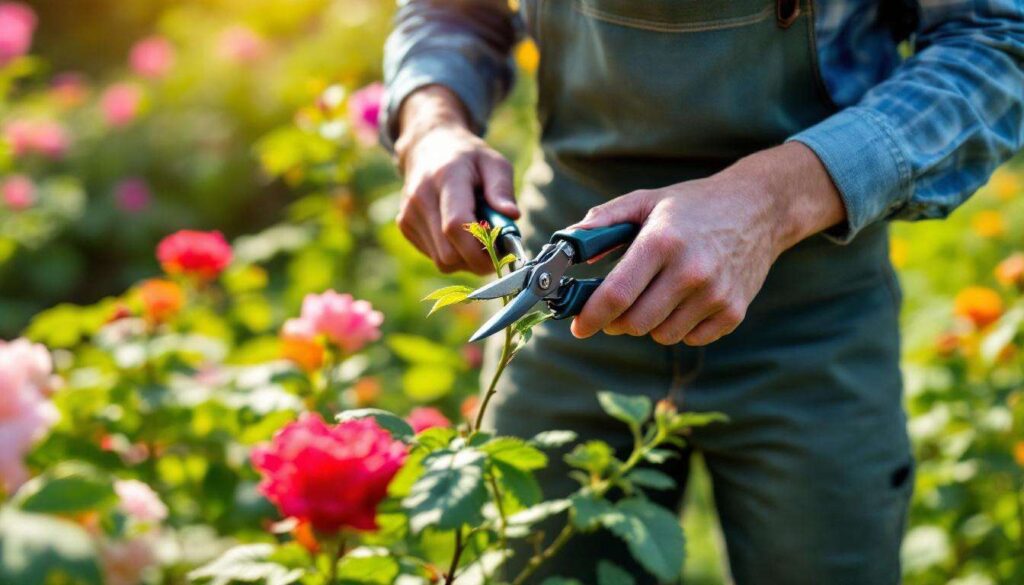
Hybrid tea roses require substantial pruning to produce their characteristic large blooms. Remove all dead, damaged, and diseased canes first, cutting back to healthy white pith. Then reduce remaining canes to 3-5 of the strongest, cutting these back to 12-18 inches tall. Make cuts at a 45-degree angle approximately one-quarter inch above an outward-facing bud to encourage open growth that improves air circulation.
Shrub and landscape roses
Shrub roses and modern landscape varieties need less aggressive treatment than hybrid teas. Remove about one-third of the oldest canes entirely, then trim remaining canes by one-third of their length. This approach maintains the natural shrub form while encouraging new growth from the base. Disease-resistant varieties like Knock Out roses require minimal pruning beyond removing dead wood and shaping.
Climbing roses and their framework
Climbing roses demand different techniques because they bloom on lateral shoots growing from main canes. Preserve the main framework of horizontal or arching canes, removing only dead wood and the oldest canes that no longer produce vigorous laterals. Trim lateral shoots back to 3-5 buds to concentrate energy into fewer, larger flower clusters.
Just as roses reward proper pruning with spectacular blooms, fruit trees respond to careful cutting with improved harvests and healthier growth patterns.
Fruit trees: essential maintenance
Apple and pear pruning fundamentals
Apple and pear trees benefit from annual pruning that opens the canopy to sunlight and air circulation. Remove water sprouts growing vertically from main branches, as these rarely produce fruit and waste the tree’s energy. Thin crossing branches that rub against each other, creating wounds vulnerable to disease. Maintain a central leader or modified central leader form that allows light penetration throughout the canopy.
Stone fruit considerations
Peaches, plums, and cherries require different timing than apples and pears in some regions. While dormant pruning works well, some experts recommend waiting until just before bloom when you can distinguish live wood from winter-killed branches. Stone fruits produce best on younger wood, so annual renewal of fruiting branches maintains productivity:
- Remove branches older than four years that produce small, sparse fruit
- Head back vigorous shoots to encourage lateral branching
- Thin the center to create a vase or open-center shape
- Remove any branches showing signs of bacterial canker or other diseases
Rejuvenating neglected trees
Overgrown fruit trees require gradual restoration rather than severe cutting that shocks the tree. Remove no more than one-quarter of the canopy in a single year, focusing first on dead wood, then crossing branches, then the worst structural problems. Spread major renovation over three to four years, allowing the tree to adjust and maintain some fruit production during the process.
Success with all these pruning tasks depends significantly on having the right equipment properly maintained and ready for use.
Essential tools for effective pruning
Basic cutting tools every gardener needs
Quality tools make pruning easier, safer, and more effective for both gardener and plant. Bypass pruners should be your primary tool for cuts up to three-quarters of an inch in diameter. Unlike anvil-style pruners that crush stems, bypass pruners make clean cuts that heal quickly. Invest in professional-grade pruners with replaceable blades and comfortable grips that reduce hand fatigue during extended sessions.
Specialized equipment for different tasks
Different pruning situations require specific tools matched to the job:
| Tool | Best Use | Cutting Capacity |
|---|---|---|
| Hand pruners | Small stems, deadheading | Up to 3/4 inch |
| Loppers | Medium branches | 3/4 to 2 inches |
| Pruning saw | Large branches | Over 2 inches |
| Pole pruner | High branches | Up to 1.5 inches |
| Hedge shears | Shaping, grasses | Multiple small stems |
Maintenance and safety practices
Sharp blades are essential for clean cuts that minimize plant damage and reduce your effort. Clean tools with rubbing alcohol or a bleach solution between plants to prevent disease transmission, especially when working with roses or fruit trees susceptible to bacterial or fungal infections. Wear safety glasses when pruning overhead, and use gloves appropriate for the thorns or rough bark you’ll encounter. Store tools clean and dry, applying light oil to metal parts to prevent rust.
The investment in proper tools pays dividends through years of reliable service, making annual pruning tasks manageable rather than overwhelming. When combined with knowledge of timing and technique, these tools help transform overgrown, underperforming plants into vigorous specimens that enhance your garden’s beauty and productivity throughout the growing season.
Strategic pruning before spring transforms garden maintenance from reactive crisis management into proactive plant care that yields measurable results. The ten plant categories covered represent the foundation of most temperate gardens, and addressing their needs during the dormant period sets a positive trajectory for the entire year. Clean cuts made with sharp tools at the right time allow plants to heal quickly and redirect energy toward growth and flowering rather than recovery. Whether you’re shaping ornamental grasses, rejuvenating shrubs, preparing roses for spectacular blooms, or maintaining fruit tree productivity, the principles remain consistent: remove dead and diseased wood first, improve structure and air circulation, and make cuts that work with the plant’s natural growth patterns rather than against them.