



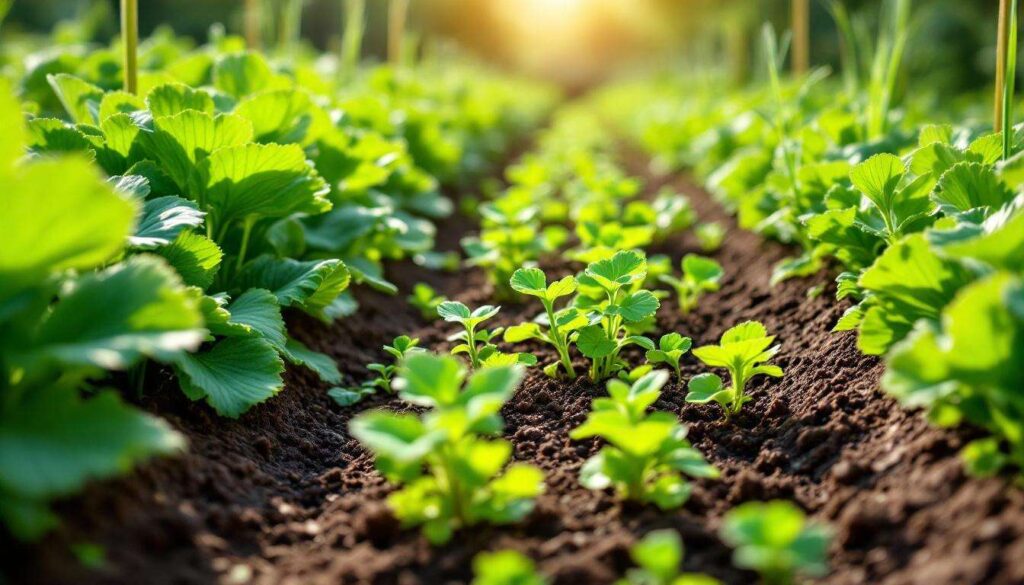
Gardeners and farmers seeking sustainable practices are increasingly turning to green manure cover crops as a natural solution for soil regeneration. The practice of sowing clover and mustard between vegetable rows represents a strategic approach to maintaining soil health while actively growing food crops. These living mulches work continuously throughout the growing season, fixing nitrogen, suppressing weeds, and improving soil structure without requiring additional land or disrupting main crop production. This intercropping technique bridges the gap between conventional vegetable gardening and regenerative agriculture, offering practical benefits that become visible within a single growing season.
Definition and benefits of cover crops
What constitutes a cover crop
Cover crops are plants grown primarily to benefit the soil rather than for harvest. Unlike traditional crops cultivated for consumption or sale, these plants serve as biological tools that enhance soil fertility and structure. Green manure specifically refers to cover crops that are incorporated into the soil while still green, adding organic matter and nutrients directly to the growing medium. When sown between vegetable rows, these crops function as living ground covers that protect and enrich the soil simultaneously with main crop production.
Primary advantages for soil health
The benefits of incorporating cover crops extend across multiple dimensions of soil management:
- Nitrogen fixation: leguminous cover crops like clover capture atmospheric nitrogen and convert it into plant-available forms
- Erosion prevention: dense root systems and foliage protect soil from wind and water erosion
- Weed suppression: vigorous growth shades out competing weeds, reducing manual labor requirements
- Organic matter addition: biomass from cover crops increases soil carbon content when incorporated
- Pest management: diverse plantings can disrupt pest cycles and provide habitat for beneficial insects
Economic and environmental considerations
Beyond soil improvement, cover crops offer economic advantages that appeal to both home gardeners and commercial growers. Reduced fertilizer inputs translate directly to lower production costs, while improved soil structure decreases irrigation needs. The environmental benefits include decreased chemical runoff, enhanced carbon sequestration, and increased biodiversity in agricultural systems. These multifaceted advantages make cover cropping a cornerstone practice in regenerative agriculture. Understanding these foundational benefits sets the stage for selecting the most appropriate species for specific growing conditions.
The choice between clover and mustard
Characteristics of clover as a cover crop
Clover species, particularly white clover and crimson clover, excel as nitrogen-fixing cover crops suitable for intercropping. These legumes establish symbiotic relationships with Rhizobium bacteria in root nodules, converting atmospheric nitrogen into forms accessible to neighboring plants. White clover grows as a low-spreading perennial that tolerates foot traffic and partial shade, making it ideal for pathways between vegetable beds. Crimson clover grows more upright and produces abundant biomass quickly, though it functions as an annual in most climates. Both varieties attract pollinators with their flowers, adding an ecological dimension to their practical benefits.
Mustard’s unique soil properties
Mustard cover crops, including yellow mustard and oriental mustard, offer distinct advantages centered on biofumigation and rapid growth. These brassicas contain glucosinolates, compounds that break down into natural pest-suppressing chemicals when plant tissues are damaged and incorporated into soil. This biofumigation effect helps control soilborne pathogens, nematodes, and certain weed seeds. Mustard establishes quickly, often germinating within days and producing substantial biomass in weeks. The deep taproots penetrate compacted soil layers, creating channels for water infiltration and root growth of subsequent crops.
Comparative analysis for different situations
| Factor | Clover | Mustard |
|---|---|---|
| Primary benefit | Nitrogen fixation | Biofumigation |
| Growth rate | Moderate | Rapid |
| Shade tolerance | Good | Poor |
| Lifespan | Perennial or annual | Annual |
| Best for | Long-term soil building | Quick biomass, pest control |
The selection between these species depends on specific garden conditions and goals. Gardens with nitrogen-hungry crops like tomatoes and brassicas benefit most from clover’s nitrogen contributions. Sites with pest or disease pressure gain advantages from mustard’s biofumigation properties. Many experienced gardeners combine both species to capture complementary benefits. With species selected, attention turns to proper establishment techniques for intercropping situations.
How to sow between vegetable rows
Timing and preparation considerations
Successful intercropping requires strategic timing to avoid competition with main crops. The ideal window for sowing cover crops between vegetable rows occurs when primary crops have established sufficiently to avoid being overwhelmed. For spring-planted vegetables, this typically means waiting three to four weeks after transplanting or when seedlings reach six inches in height. Fall vegetables may accommodate earlier cover crop establishment. Soil preparation involves minimal disturbance to avoid damaging vegetable roots; light raking to create seed-to-soil contact usually suffices.
Seeding rates and techniques
Proper seeding density ensures adequate coverage without excessive competition:
- White clover: 4-6 ounces per 1,000 square feet when broadcast between rows
- Crimson clover: 8-12 ounces per 1,000 square feet for denser stands
- Mustard species: 2-4 ounces per 1,000 square feet, adjusted for rapid growth
Broadcasting seed by hand works effectively for small areas, while mechanical seeders improve efficiency in larger gardens. After broadcasting, lightly rake or roll the area to ensure seed contact with soil. A thin layer of compost can improve germination rates while adding organic matter. Irrigation immediately after sowing activates germination, particularly important during dry periods.
Managing growth and competition
Once established, cover crops require monitoring to prevent competition with vegetables. Clover generally remains low-growing and poses minimal competitive threat, though occasional mowing maintains desired height. Mustard’s vigorous growth may require trimming or cutting back if it begins shading vegetable crops. The trimmed material can be left as mulch or added to compost piles. Maintaining adequate spacing between cover crop areas and vegetable stems prevents moisture competition and allows air circulation. These management practices ensure cover crops enhance rather than hinder vegetable production while simultaneously working to transform the soil beneath.
Impact on soil structure and fertility
Physical improvements to soil architecture
Cover crops fundamentally alter soil structure through both root activity and organic matter addition. Living roots create networks of channels that improve water infiltration and gas exchange, essential for healthy root development of all plants. As roots grow, die, and decompose, they leave behind pore spaces that enhance soil aggregation. This improved structure increases the soil’s capacity to hold both water and nutrients while maintaining adequate drainage. The glomalin produced by mycorrhizal fungi associated with cover crop roots acts as a natural glue, binding soil particles into stable aggregates resistant to erosion and compaction.
Nutrient cycling and availability
The fertility benefits of cover crops operate through multiple mechanisms. Clover’s nitrogen fixation can contribute 40-150 pounds of nitrogen per acre annually, depending on species, growing conditions, and biomass production. This nitrogen becomes available to subsequent crops as clover residues decompose. Mustard and other deep-rooted covers mine nutrients from subsoil layers, bringing them into the root zone of shallow-rooted vegetables. When incorporated as green manure, cover crop biomass releases nutrients gradually, matching plant uptake patterns better than synthetic fertilizers. The carbon-to-nitrogen ratio of incorporated material influences decomposition speed and nutrient release timing.
Biological activity enhancement
Perhaps the most profound impact occurs in the soil food web. Cover crops provide continuous food sources for soil microorganisms through root exudates and decaying plant material. This sustained feeding increases populations of:
- Bacteria: decompose organic matter and cycle nutrients
- Fungi: form beneficial mycorrhizal associations with plant roots
- Protozoa: consume bacteria and release plant-available nitrogen
- Nematodes: regulate microbial populations and contribute to nutrient cycling
- Earthworms: create channels and process organic matter into stable humus
This enhanced biological activity creates a self-sustaining system where soil organisms continuously improve soil conditions. The diversity of microbial life also provides natural disease suppression, as beneficial organisms outcompete pathogens for resources and space. These structural and biological improvements create ideal conditions for integrating cover crops into broader cropping strategies.
Integration of cover crops into crop rotation
Planning seasonal sequences
Effective integration requires viewing cover crops as active participants in crop rotation rather than mere soil amendments. A well-designed rotation alternates nutrient-demanding crops with soil-building phases, using cover crops to bridge transitions. For example, following heavy feeders like tomatoes with nitrogen-fixing clover replenishes soil nitrogen for subsequent crops. Winter cover cropping between fall and spring vegetable seasons prevents nutrient leaching while adding biomass. Annual rotations might include spring vegetables, summer cover crops in fallow areas, fall vegetables, and winter covers, creating continuous soil coverage and improvement.
Termination methods and timing
Proper cover crop termination ensures nutrients transfer to subsequent crops without creating weed problems. Timing depends on crop maturity and planting schedules for following crops:
| Method | Best for | Timing before planting |
|---|---|---|
| Mowing | Clover, young mustard | 2-3 weeks |
| Tillage incorporation | Maximum biomass addition | 3-4 weeks |
| Crimping/rolling | Mature covers, no-till systems | Immediately before planting |
| Frost kill | Cold-sensitive species | Natural termination |
The decomposition period between termination and planting allows initial nutrient release and prevents nitrogen tie-up that can occur when fresh plant material competes with crops for nitrogen during decomposition. No-till approaches using crimping or mowing preserve soil structure while still capturing cover crop benefits.
Long-term rotation strategies
Multi-year planning maximizes cumulative benefits of cover cropping. Rotating between different cover crop families prevents pest and disease buildup while addressing various soil needs. A three-year rotation might cycle through legumes for nitrogen, brassicas for biofumigation, and grasses for biomass production. This diversity maintains soil biological activity and prevents nutrient imbalances. Record-keeping tracks which areas received specific covers, allowing strategic placement based on observed results. These documented experiences provide valuable insights for refining practices over time.
Practical examples and concrete results
Small-scale garden implementation
A home gardener in Oregon implemented white clover between tomato rows in a 400-square-foot plot. After two growing seasons, soil tests showed nitrogen levels increased by 35 percent compared to adjacent areas without clover. The gardener reduced synthetic fertilizer use by half while maintaining equivalent yields. Weed pressure decreased noticeably, reducing weeding time by an estimated three hours per month. The clover persisted as a perennial ground cover, requiring only occasional mowing to prevent flowering and maintain desired height. This example demonstrates scalable benefits achievable in typical home garden settings.
Market garden experience
A quarter-acre market garden in Vermont incorporated mustard cover crops into rotation between brassica plantings. The grower reported reduced flea beetle damage and fewer instances of clubroot disease in subsequent cabbage crops. Soil compaction from foot traffic decreased measurably, with penetrometer readings showing improved tilth to eight inches depth. The rapid growth of mustard allowed multiple cycles per season, with spring and fall plantings each contributing biomass. Yield data over three years showed:
- Year one: baseline yields with conventional practices
- Year two: 18 percent yield increase after first mustard incorporation
- Year three: 27 percent increase with established cover crop rotation
These results occurred alongside reduced input costs, creating both environmental and economic benefits. The grower attributed success to consistent implementation and patience allowing soil biology to establish.
Measurable soil improvements
Research plots comparing vegetables grown with and without intercropped clover revealed significant differences. Organic matter content increased from 3.2 percent to 4.7 percent over three years in clover-treated plots. Water infiltration rates improved by 40 percent, reducing runoff and irrigation needs. Earthworm populations tripled in areas with continuous clover coverage. Vegetable crops in treated areas showed improved drought resilience, maintaining productivity during dry periods that stressed crops in conventional plots. These quantifiable improvements validate the theoretical benefits of cover cropping, providing evidence for expanded adoption of these practices.
The practice of sowing clover and mustard between vegetable rows offers gardeners a practical pathway to soil regeneration without sacrificing growing space. These cover crops deliver multiple benefits including nitrogen fixation, improved soil structure, enhanced biological activity, and natural pest suppression. Success requires thoughtful species selection based on specific goals, proper timing and seeding techniques, and integration into broader crop rotation strategies. Both small-scale gardeners and market growers have documented substantial improvements in soil health and crop performance through consistent implementation. The accumulated evidence demonstrates that green manure cover crops represent not merely a sustainable practice but an actively regenerative approach that improves soil conditions with each growing season.