
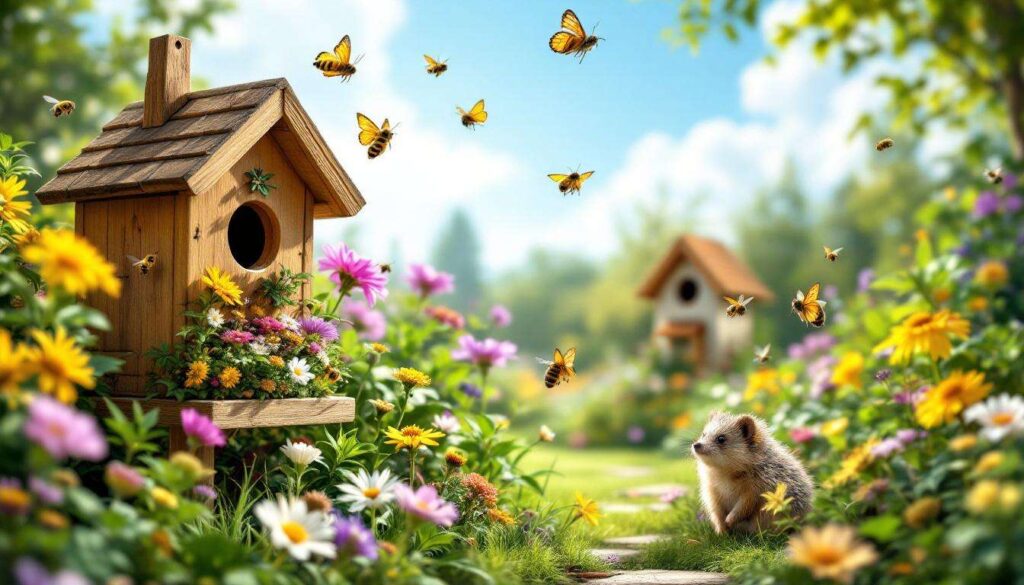
Gardens serve as vital ecosystems where wildlife can thrive alongside cultivated plants. Creating habitats for beneficial creatures like bees, butterflies, and hedgehogs transforms outdoor spaces into productive environments that naturally protect crops from pests while supporting pollination. Installing insect hotels and birdhouses represents a practical approach to fostering biodiversity, enhancing garden health, and contributing to local wildlife conservation efforts.
Understanding the role of insect hotels and birdhouses
Insect hotels and birdhouses function as artificial shelters designed to replicate natural habitats that have diminished due to urbanization and intensive farming practices. These structures provide essential nesting sites, overwintering locations, and safe havens for various species that contribute to garden health.
What insect hotels offer to beneficial species
Insect hotels consist of compartments filled with natural materials such as bamboo tubes, drilled wood blocks, pine cones, and straw. These components attract solitary bees, lacewings, ladybugs, and other beneficial insects. Unlike social bees that live in hives, solitary bees nest individually and are exceptional pollinators, often more efficient than honeybees for certain crops.
The structure typically includes:
- Hollow stems or bamboo tubes for mason bees and leafcutter bees
- Drilled wooden blocks with varying hole diameters for different bee species
- Loose bark and wood shavings for beetles and spiders
- Pine cones and dried leaves for ladybugs and lacewings
- Clay or mud sections for potter wasps
How birdhouses support garden ecosystems
Birdhouses attract insectivorous birds that consume significant quantities of pests including aphids, caterpillars, slugs, and beetles. Species like chickadees, wrens, and bluebirds actively hunt garden pests, reducing the need for chemical interventions. A single chickadee family can remove thousands of insects during the breeding season.
| Bird species | Primary diet | Pest control benefit |
|---|---|---|
| Chickadees | Caterpillars, aphids | Controls leaf-eating pests |
| Wrens | Spiders, beetles | Reduces ground-dwelling insects |
| Bluebirds | Grasshoppers, beetles | Manages larger pest populations |
Understanding these structures’ purposes helps gardeners appreciate their contribution to establishing balanced ecosystems where natural predators manage pest populations effectively.
Why attract bees and butterflies to your garden
Pollinators represent critical allies for productive gardens, directly influencing crop yields and plant health. Bees and butterflies facilitate reproduction in flowering plants, ensuring fruit and seed production for vegetables, herbs, and ornamental species.
The pollination advantage for crop production
Approximately 75 percent of flowering plants depend on animal pollinators, with bees being the most efficient contributors. When bees visit flowers to collect nectar and pollen, they transfer pollen between plants, enabling fertilization. This process directly impacts:
- Fruit size and quality in tomatoes, peppers, and squash
- Seed production in herbs like basil and cilantro
- Berry yields in strawberries, blueberries, and raspberries
- Flower development in ornamental plants
Gardens with robust pollinator populations typically experience increased harvests with better-formed fruits and vegetables compared to areas with limited pollinator activity.
Butterflies as indicators of garden health
Butterfly presence signals a healthy ecosystem with diverse plant species and minimal pesticide use. Adult butterflies pollinate flowers while feeding on nectar, though they are generally less efficient than bees. However, their caterpillar stage plays an important role in the food chain, providing sustenance for birds and other predators.
Native bee species and their specific benefits
Native bees often outperform honeybees in pollinating specific crops. Mason bees, for example, are 120 times more effective at pollinating apple trees than honeybees. Bumblebees perform buzz pollination, a technique essential for tomatoes and blueberries where pollen must be vibrated loose from anthers.
Attracting these pollinators creates a foundation for understanding how other wildlife, including ground-dwelling species, contributes to garden protection.
How to arrange your garden to welcome hedgehogs
Hedgehogs serve as natural pest controllers, consuming slugs, snails, beetles, and other invertebrates that damage crops. Creating hedgehog-friendly environments requires specific modifications to garden design and maintenance practices.
Creating hedgehog highways and access points
Hedgehogs roam considerable distances nightly, requiring access through fenced gardens. Installing hedgehog highways ensures these creatures can move freely between properties. Cut square openings measuring 13 by 13 centimeters at ground level in fences or walls, allowing hedgehogs to pass while preventing larger animals from entering.
Providing shelter and nesting sites
Hedgehogs need safe locations for daytime rest and winter hibernation. Establish sheltered areas by:
- Leaving undisturbed log piles in quiet garden corners
- Creating leaf heaps under shrubs or hedges
- Installing purpose-built hedgehog houses with entrance tunnels
- Maintaining wild areas with long grass and native plants
- Avoiding disturbance of compost heaps during winter months
Garden practices that support hedgehog populations
Certain gardening methods either support or endanger hedgehogs. Avoid using slug pellets and other chemical pesticides, as these poison hedgehogs when they consume affected prey. Check areas thoroughly before using strimmers or mowers, particularly in long grass where hedgehogs may be resting.
Provide shallow water dishes, especially during dry periods, as hedgehogs require regular hydration. Ensure ponds have sloped edges or ramps, as hedgehogs can swim but may become trapped in steep-sided water features.
| Hedgehog-friendly practice | Benefit |
|---|---|
| Chemical-free pest control | Safe food sources |
| Log and leaf piles | Shelter and hibernation sites |
| Garden connectivity | Extended foraging range |
| Water access | Hydration during dry spells |
With these habitat modifications in place, attention shifts to positioning wildlife structures for maximum effectiveness.
Choosing the right location for your hospitality structures
Strategic placement of insect hotels and birdhouses significantly influences their occupancy rates and the benefits they provide. Location considerations include sun exposure, protection from elements, proximity to food sources, and safety from predators.
Optimal positioning for insect hotels
Insect hotels perform best when facing southeast to south, receiving morning sunlight that warms occupants and encourages activity. Position structures at least one meter above ground to prevent moisture damage and flooding. Ensure the hotel remains sheltered from prevailing winds and heavy rain, ideally under a slight overhang or against a wall.
Place insect hotels near:
- Flowering plants that provide nectar and pollen
- Water sources for mud-building species
- Diverse vegetation offering varied nesting materials
- Areas protected from direct afternoon sun in hot climates
Birdhouse placement considerations
Different bird species have specific height and location preferences. Mount birdhouses between 1.5 and 4.5 meters high depending on target species. Wrens prefer lower positions near dense vegetation, while bluebirds favor open areas with clear flight paths. Ensure entrance holes face away from prevailing winds and avoid direct afternoon sun exposure.
Maintain adequate spacing between birdhouses, as most species are territorial during breeding season. Space houses at least 25 meters apart for the same species, though different species may tolerate closer proximity.
Hedgehog house location requirements
Position hedgehog houses in quiet garden areas with minimal foot traffic, preferably under hedges or shrubs. The entrance should face away from prevailing winds and direct sunlight. Ensure the location remains dry and slightly elevated to prevent waterlogging during heavy rainfall.
Once structures are properly positioned, ongoing care ensures their continued effectiveness.
Tips for maintaining insect hotels and birdhouses
Regular maintenance keeps wildlife structures functional, safe, and attractive to target species. Different structures require varying levels of intervention, with some needing minimal care while others benefit from seasonal attention.
Seasonal insect hotel maintenance
Insect hotels require limited intervention to avoid disturbing residents. In late autumn, gently brush away debris, spider webs, and empty cocoons from the exterior. Avoid removing or replacing nesting materials during active seasons from spring through early autumn. Replace damaged bamboo tubes or wooden blocks annually during winter when structures are unoccupied.
Monitor for unwanted residents like wasps or ants that may dominate the structure. While most insects are beneficial, aggressive species may prevent target inhabitants from using the hotel.
Birdhouse cleaning and inspection
Clean birdhouses annually after breeding season concludes, typically in late autumn or winter. Remove old nesting material, scrub interiors with a stiff brush and mild disinfectant solution, then rinse thoroughly and allow complete drying before reassembling. This process eliminates parasites and diseases that could affect subsequent occupants.
Inspection checklist includes:
- Checking for cracks, rot, or structural damage
- Ensuring entrance holes remain properly sized
- Verifying drainage holes remain clear
- Tightening loose screws or fasteners
- Replacing damaged roofing or weatherproofing
Long-term care considerations
Both insect hotels and birdhouses benefit from protective treatments applied to exterior surfaces. Use non-toxic, water-based preservatives on wooden structures, avoiding treated lumber or chemical stains that might harm inhabitants. Reapply protective coatings every two to three years.
Document which structures attract occupants and note seasonal patterns. This information helps refine placement strategies and identify successful designs worth replicating in other garden areas.
Creating wildlife-friendly gardens through insect hotels, birdhouses, and hedgehog habitats establishes self-sustaining ecosystems that naturally control pests while supporting pollination. Strategic placement of structures near appropriate food sources and shelter, combined with regular maintenance and chemical-free gardening practices, attracts beneficial species that enhance crop productivity. These interventions transform gardens into thriving habitats where wildlife and cultivation coexist, reducing reliance on artificial pest control while supporting biodiversity conservation efforts.