



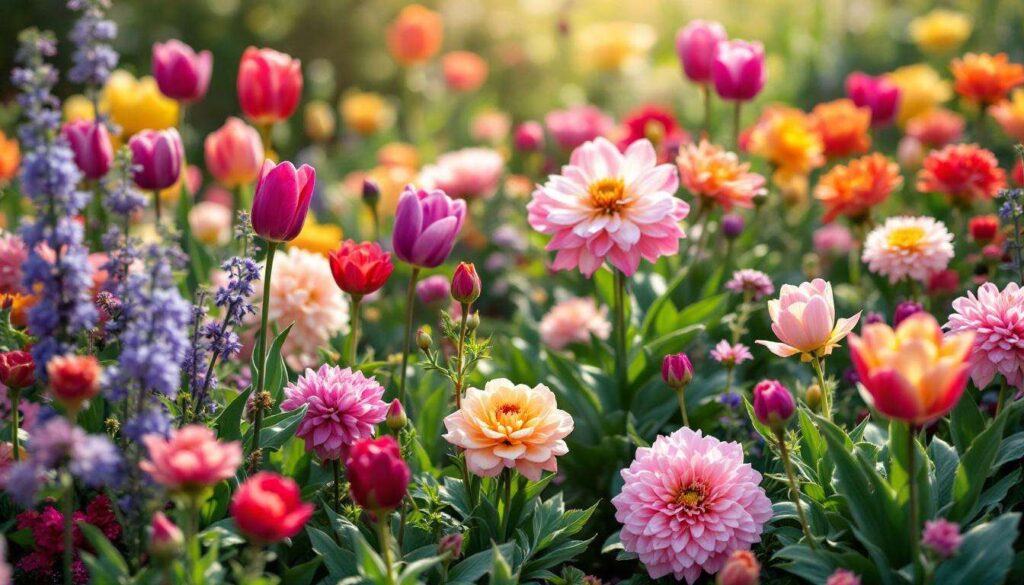
Transforming your garden into a vibrant tapestry of colors throughout the seasons requires strategic planning and careful selection of flower bulbs. Tulips, dahlias, and peonies stand out as the triumvirate of bulbous plants that can deliver continuous blooms from the first warm days of spring through the crisp air of fall. Understanding the unique characteristics and requirements of each variety enables gardeners to create a succession of flowering displays that captivate the eye and enhance outdoor spaces. The key lies in knowing when to plant and how to care for these spectacular specimens to maximize their ornamental potential.
When to plant bulbs for a colorful garden ?
Understanding planting seasons for different bulbs
The timing of bulb planting directly influences the success of your flowering display. Spring-blooming bulbs such as tulips require planting in fall, typically between September and November, before the ground freezes. This dormancy period allows roots to establish before winter sets in. Summer-flowering bulbs like dahlias demand a different approach, with planting occurring in spring after the last frost date when soil temperatures reach at least 60 degrees Fahrenheit. Peonies, particularly herbaceous varieties, thrive when planted in early fall, giving them time to develop robust root systems before winter dormancy.
Regional considerations for planting schedules
Geographic location plays a crucial role in determining optimal planting times:
- Northern regions: plant spring bulbs in late September through October
- Temperate zones: aim for October through early November for fall planting
- Southern climates: delay planting until November or even December when soil cools
- Frost-free areas: pre-chill spring bulbs for 6-8 weeks before planting
Monitoring soil temperature proves more reliable than following calendar dates, as unseasonable weather patterns can shift traditional planting windows. A soil thermometer becomes an invaluable tool for precision timing.
With planting schedules established, attention turns to the first star of the seasonal show.
Tulips: queen of spring
Selecting tulip varieties for maximum impact
Tulips offer an extraordinary range of forms, heights, and colors that can transform spring gardens into breathtaking displays. Early-blooming varieties such as Fosteriana and Kaufmanniana tulips emerge in March and April, while mid-season Darwin hybrids and Triumph tulips extend the show through May. Late-blooming types including Single Late and Lily-flowered tulips close the spring season with elegant flourishes. For continuous color, plant multiple varieties with staggered bloom times.
Proper planting depth and spacing
Technical precision in planting ensures optimal tulip performance. Position bulbs with the pointed end facing upward at a depth of 6 to 8 inches, measured from the base of the bulb. Space individual bulbs 4 to 6 inches apart, or plant them closer for dramatic clustered effects. In regions with mild winters, deeper planting at 10 to 12 inches helps satisfy chilling requirements and extends perennial performance.
| Tulip Type | Bloom Time | Height Range |
|---|---|---|
| Species/Botanical | Early March-April | 4-8 inches |
| Darwin Hybrid | Mid April-May | 20-28 inches |
| Parrot | Late April-May | 16-24 inches |
Once tulips fade, the garden spotlight shifts to summer’s dramatic performers.
Choosing the right summer dahlias
Dahlia classifications and garden uses
Dahlias encompass fifteen official classifications based on flower form and size, offering unprecedented versatility for garden design. Decorative dahlias feature fully double blooms with broad, flat petals, while cactus varieties display narrow, pointed petals that curl backward. Pompon dahlias produce perfectly spherical blooms under 2 inches in diameter, ideal for borders and cutting gardens. Ball dahlias create larger spherical flowers, and waterlily types mimic their namesake with flat, layered petals.
Site preparation and planting requirements
Successful dahlia cultivation begins with proper site selection and soil preparation. These sun-loving plants require minimum six hours of direct sunlight daily and well-draining soil enriched with organic matter. Before planting tubers in late spring, incorporate compost or aged manure to depth of 12 inches. Plant tubers horizontally 4 to 6 inches deep with the eye facing upward, spacing them 18 to 24 inches apart depending on mature size.
- Install support stakes at planting time to avoid root damage later
- Water sparingly until shoots emerge to prevent tuber rot
- Apply mulch after growth begins to retain moisture and suppress weeds
- Pinch terminal growth when plants reach 12 inches to encourage bushiness
As summer transitions toward autumn, another classic beauty takes center stage.
Planting and caring for fall peonies
Understanding peony types and bloom seasons
While most gardeners associate peonies with late spring, intersectional or Itoh peonies extend blooming into early summer, and proper planning ensures their presence enhances the fall garden with magnificent foliage. Herbaceous peonies die back completely in winter, while tree peonies maintain woody stems year-round. Itoh peonies combine the best attributes of both, offering large blooms on sturdy stems with herbaceous growth habits.
Essential planting techniques for long-term success
Peonies demand patience and precision but reward gardeners with decades of reliable blooms. Select sites with full sun exposure and excellent drainage, as waterlogged soil proves fatal to peony roots. Dig generous planting holes 18 inches deep and equally wide, amending native soil with compost. Position bare-root divisions so eyes sit no more than 2 inches below the soil surface, a critical factor for blooming success. Planting too deeply represents the most common reason for non-flowering peonies.
After planting, water thoroughly and apply a light mulch layer, keeping material away from emerging shoots. Peonies typically require three years to reach mature flowering capacity, making fall planting ideal for establishing strong root systems before the growing season.
Maximizing the potential of these bulbous beauties requires attention to specific cultivation practices.
Tips for optimal blooming
Fertilization strategies for bulbs
Strategic feeding enhances both bloom quality and bulb vigor for subsequent seasons. Apply bone meal or bulb-specific fertilizer at planting time to provide slow-release phosphorus that promotes root development. For spring bulbs, top-dress with balanced fertilizer when shoots emerge, then again after flowering to replenish energy reserves. Dahlias benefit from regular feeding throughout the growing season with fertilizers higher in phosphorus and potassium than nitrogen, which encourages blooms over foliage.
Water management for healthy growth
Proper irrigation proves essential for bulb performance while avoiding common pitfalls:
- Water spring bulbs during active growth but reduce after blooming
- Provide dahlias with consistent moisture, approximately 1 inch weekly
- Allow peony soil to dry slightly between waterings to prevent root rot
- Use drip irrigation or soaker hoses to deliver water at soil level
Deadheading and foliage maintenance
Removing spent blooms directs plant energy toward bulb development rather than seed production. For tulips, snap off faded flowers but allow foliage to yellow naturally for at least six weeks post-bloom. Deadhead dahlias regularly to promote continuous flowering through frost. Cut peony blooms for indoor enjoyment or remove faded flowers, but preserve foliage until it browns in fall.
Even with excellent care, bulbs face threats that require vigilant protection.
Protecting your bulbs from pests and diseases
Common pests affecting bulbous plants
Various creatures view flower bulbs as food sources, requiring defensive measures. Voles and mice tunnel underground to consume tulip bulbs, while squirrels dig up newly planted specimens. Deer browse emerging shoots and flower buds with particular fondness for tulips. Aphids colonize dahlia stems and peony buds, sucking plant juices and transmitting diseases. Thrips damage dahlia petals, creating silvery streaks and distorted blooms.
| Pest | Target Plant | Control Method |
|---|---|---|
| Voles | Tulips | Wire mesh barriers, gravel planting pockets |
| Slugs | Dahlias | Diatomaceous earth, beer traps, handpicking |
| Japanese beetles | All three | Morning handpicking, neem oil sprays |
Disease prevention and management
Fungal and bacterial diseases threaten bulb health, particularly in humid conditions. Botrytis blight affects tulips and peonies, causing gray mold on flowers and foliage during wet weather. Powdery mildew coats dahlia leaves with white fungal growth in late summer. Root rot decimates bulbs in poorly drained soil, while viral diseases create mottled foliage and stunted growth with no cure.
Prevention strategies include proper spacing for air circulation, avoiding overhead watering, removing infected plant material promptly, and rotating planting locations. Apply preventive fungicide sprays during vulnerable periods, particularly for dahlias in humid climates. Inspect bulbs before planting, discarding any showing soft spots or discoloration.
Creating a garden that blooms continuously from spring through fall represents an achievable goal through strategic planting of tulips, dahlias, and peonies. These three bulbous plants offer complementary flowering periods, diverse aesthetic qualities, and proven reliability when provided with appropriate growing conditions. Success hinges on understanding specific timing requirements, selecting suitable varieties for your climate, and implementing proper cultural practices including correct planting depth, adequate spacing, and vigilant pest management. The investment of time and attention during establishment pays dividends through years of spectacular seasonal displays that elevate any landscape from ordinary to extraordinary.