

Imagine transforming your garden into a productive haven where vegetables return year after year without replanting. Perennial vegetables offer this remarkable advantage, requiring minimal intervention while delivering consistent harvests for seasons to come. Among these resilient crops, asparagus and artichoke stand out as exceptional choices for spring planting, rewarding patient gardeners with decades of abundant yields from a single initial investment of time and effort.
Introduction to perennial vegetables: a sustainable solution
Understanding the perennial advantage
Perennial vegetables represent a fundamental shift in gardening philosophy. Unlike annual crops that complete their lifecycle in one season, these plants establish deep root systems and return stronger each year. Asparagus and artichoke exemplify this category, producing edible portions for fifteen to twenty-five years once properly established. This longevity translates into reduced soil disturbance, lower seed costs, and decreased labor compared to traditional annual vegetable gardening.
Environmental and economic benefits
The sustainability advantages of perennial vegetables extend beyond convenience:
- Reduced carbon footprint through eliminated annual tilling and replanting
- Enhanced soil structure from permanent root systems
- Decreased water consumption once established
- Lower fertilizer requirements compared to annual crops
- Significant cost savings over the plant’s productive lifespan
Research indicates that perennial cropping systems can sequester up to three times more carbon than annual vegetable gardens, making them an environmentally responsible choice for conscious gardeners. The initial investment in quality crowns or seedlings pays dividends through years of reliable production without the recurring expense of seeds and transplants.
These compelling advantages make asparagus and artichoke particularly attractive options for establishing a productive perennial garden bed.
Why choose asparagus and artichoke ?
Asparagus: the spring delicacy
Asparagus officinalis produces tender spears each spring, offering one of the season’s earliest harvests. This nutrient-dense vegetable thrives in temperate climates and tolerates various soil types when properly prepared. Established asparagus beds can produce for twenty-five years or more, with yields increasing annually during the first decade. The fern-like foliage that develops after harvest provides attractive ornamental value throughout summer and fall.
Artichoke: architectural beauty meets culinary excellence
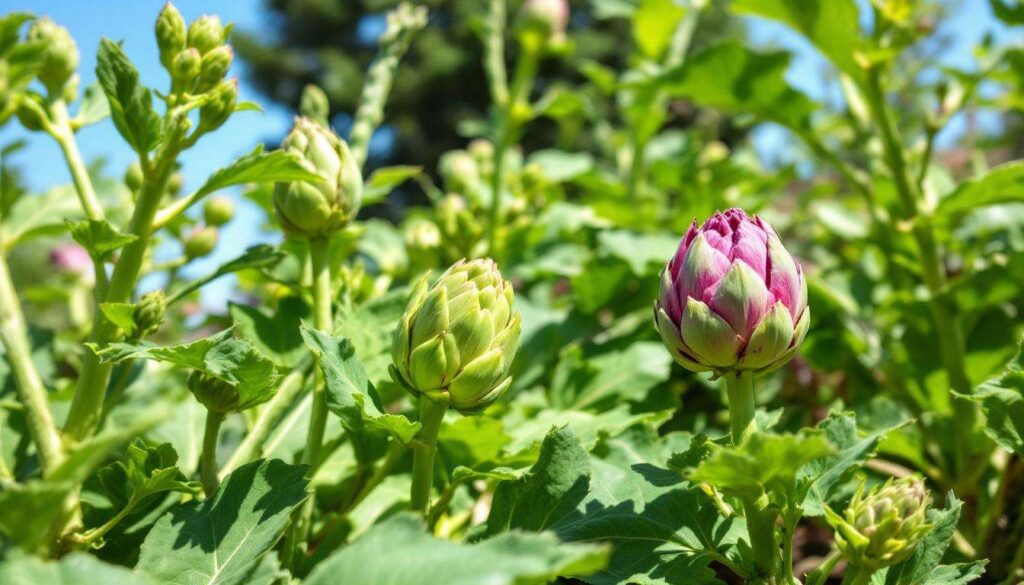
Artichokes bring dramatic visual appeal alongside their gourmet harvests. These Mediterranean natives feature silvery-green foliage and can reach four to six feet in height and width. While traditionally grown as perennials in mild climates, certain varieties now succeed as perennials in colder regions with proper winter protection. The edible flower buds offer unique flavor and texture, commanding premium prices at farmers’ markets.
Comparative productivity analysis
| Characteristic | Asparagus | Artichoke |
|---|---|---|
| Years to full production | 3-4 years | 2-3 years |
| Productive lifespan | 20-25 years | 5-10 years |
| Harvest period | 6-8 weeks (spring) | Several months (summer-fall) |
| Space requirements | 12-18 inches between plants | 4-6 feet between plants |
| Cold hardiness | USDA zones 3-8 | USDA zones 7-11 |
Understanding these cultivation requirements helps gardeners select the most appropriate perennial vegetables for their specific growing conditions and available space.
Steps for spring planting
Site selection and soil preparation
Both asparagus and artichoke demand well-drained locations with full sun exposure. Select permanent bed locations carefully, as these plants will occupy the space for many years. Asparagus particularly requires excellent drainage to prevent crown rot. Prepare beds by incorporating generous amounts of compost and aged manure, working amendments twelve inches deep. Soil pH should range between 6.5 and 7.5 for optimal nutrient availability.
Planting asparagus crowns
Spring planting occurs when soil temperatures reach fifty degrees Fahrenheit. Follow these critical steps for success:
- Dig trenches eight to twelve inches deep and twelve to eighteen inches wide
- Create a raised ridge along the trench bottom
- Spread asparagus crowns over the ridge with roots draping downward
- Space crowns twelve to eighteen inches apart within rows
- Cover crowns with two to three inches of soil initially
- Gradually fill trenches as spears emerge throughout the first season
Establishing artichoke plants
Artichokes start from dormant roots, transplants, or seeds. Transplants offer the most reliable results for home gardeners. Plant after the last frost date, spacing plants four to six feet apart in all directions. Set transplants at the same depth they grew in containers. Water thoroughly and apply a three-inch layer of organic mulch around plants, keeping mulch away from the crown to prevent rot.
Proper establishment practices set the foundation for years of productive harvests, but ongoing care remains essential for maximizing yields.
Annual maintenance for optimal production
Watering and fertilization schedules
Consistent moisture proves crucial during the establishment phase and harvest periods. Asparagus requires one to two inches of water weekly during spear production, while artichokes benefit from deep watering throughout their growing season. Apply balanced organic fertilizer in early spring before growth begins, followed by additional feedings after harvest for asparagus and monthly for artichokes during active growth.
Weed control and mulching strategies
Perennial beds require vigilant weed management to prevent competition for nutrients and water. Maintain a four-inch layer of organic mulch year-round, replenishing as it decomposes. Hand-pull weeds carefully to avoid damaging shallow feeder roots. The dense canopy of established plants eventually suppresses most weed growth, reducing maintenance requirements over time.
Seasonal care requirements
| Season | Asparagus tasks | Artichoke tasks |
|---|---|---|
| Spring | Fertilize, harvest spears, control weeds | Remove winter mulch, fertilize, monitor growth |
| Summer | Allow ferns to grow, maintain moisture | Harvest buds, water deeply, fertilize monthly |
| Fall | Cut back dead ferns, apply compost | Continue harvest, prepare for winter |
| Winter | Mulch in coldest zones | Heavy mulch or dig and store roots |
These maintenance practices ensure vigorous growth and prepare plants for abundant harvests when the time arrives.
Harvesting and preserving: enjoying your perennial vegetables
Asparagus harvest techniques
Patience yields rewards with asparagus cultivation. Resist harvesting during the first two years, allowing plants to establish robust root systems. Beginning in year three, harvest spears when they reach six to eight inches tall with tight tips. Snap or cut spears at ground level during the six to eight-week harvest window. Stop harvesting when spear diameter decreases noticeably, signaling the plant needs to build energy reserves for next season.
Artichoke harvesting guidelines
Harvest artichoke buds when they reach full size but before scales begin opening. Cut buds with one to two inches of stem attached using sharp pruners. Primary buds develop first at terminal positions, followed by smaller secondary buds on side shoots. Regular harvesting encourages continued production throughout the season.
Preservation methods for extended enjoyment
Both vegetables preserve well through various methods:
- Blanching and freezing maintains quality for eight to twelve months
- Pickling offers unique flavor profiles for both crops
- Dehydrating creates shelf-stable products
- Pressure canning ensures safe long-term storage
- Fermentation develops complex flavors and probiotic benefits
While asparagus and artichoke represent excellent perennial choices, adventurous gardeners can expand their permanent plantings with additional species.
Boost your garden: other perennial vegetables to consider
Cold-hardy perennial options
Rhubarb thrives in northern climates, producing tart stalks for pies and preserves for fifteen years or more. Horseradish provides pungent roots indefinitely once established, though it requires containment to prevent spreading. Walking onions and Egyptian onions produce edible bulbs and greens year after year with minimal care.
Warm-climate perennial vegetables
Sweet potatoes function as perennials in frost-free regions, while Jerusalem artichokes produce edible tubers reliably in zones three through nine. Chayote vines yield prolifically in subtropical climates, and tree collards provide nutritious greens for multiple years in mild-winter areas.
Herbs and specialty crops
Many culinary herbs qualify as perennial vegetables, including:
- Sorrel for lemony salad greens
- Lovage as a celery substitute
- Good King Henry for cooked greens
- Sea kale for blanched shoots
- Turkish rocket for peppery leaves
These diverse options allow gardeners to create comprehensive perennial food systems tailored to their climate, space, and culinary preferences.
Asparagus and artichoke exemplify the remarkable potential of perennial vegetables to transform home gardens into sustainable, low-maintenance food sources. Their ability to produce abundant harvests for years following a single spring planting offers economic and environmental advantages that annual crops cannot match. By investing time in proper site preparation, following established planting protocols, and maintaining consistent care schedules, gardeners secure decades of reliable production. The expansion possibilities with additional perennial species create opportunities for diverse, resilient food gardens that reward patience with ever-increasing yields and reduced workload over time.