

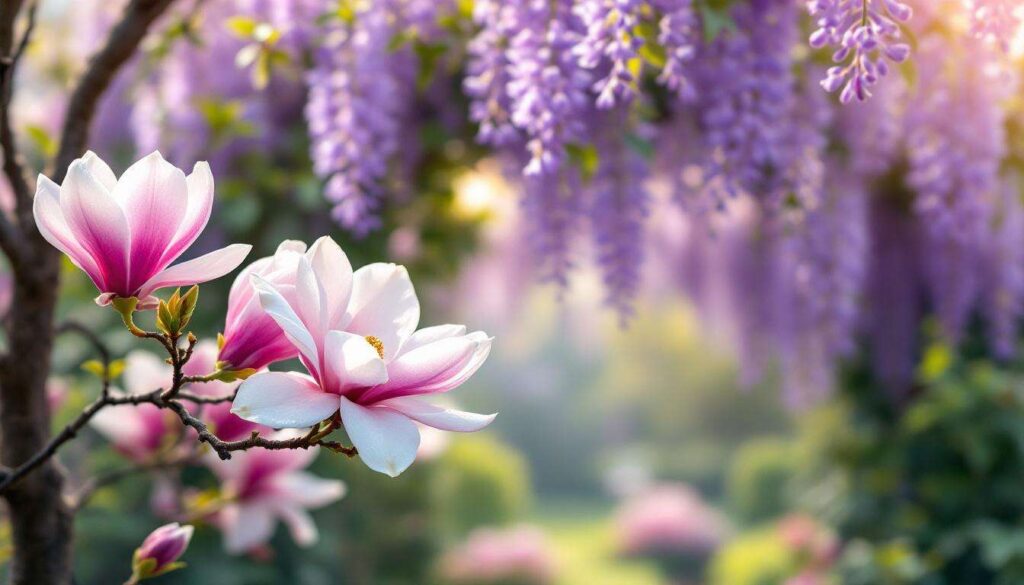
Spring gardens come alive with spectacular displays when certain flowering plants burst into bloom before their foliage appears. Among the most dramatic early bloomers are magnolias and wisterias, two ornamental favorites that transform landscapes with their showy flowers. These plants have evolved a unique blooming strategy that prioritizes reproduction over photosynthesis, creating stunning visual effects that signal the arrival of warmer weather. Understanding their characteristics and care requirements helps gardeners maximize their ornamental impact.
Introduction to magnolias and wisterias: characteristics and features
Magnolia characteristics
Magnolias belong to one of the oldest flowering plant families, with fossil records dating back millions of years. These deciduous or evergreen trees and shrubs produce large, fragrant flowers in shades of white, pink, purple, and yellow. The blooms typically feature thick, waxy petals that protect reproductive organs from early spring cold snaps.
- Flower size ranges from 3 to 12 inches in diameter
- Blooming period lasts approximately 2 to 4 weeks
- Trees can reach heights of 15 to 80 feet depending on variety
- Root systems are relatively shallow and sensitive to disturbance
Wisteria characteristics
Wisterias are vigorous climbing vines known for their cascading clusters of fragrant flowers called racemes. These woody perennials can live for decades and become substantial landscape features. The flowers appear in long, drooping chains that create a dramatic waterfall effect, particularly when trained over pergolas or arbors.
| Feature | Magnolia | Wisteria |
|---|---|---|
| Growth habit | Tree or shrub | Climbing vine |
| Flower arrangement | Solitary blooms | Hanging clusters |
| Typical bloom colors | White, pink, purple, yellow | Purple, white, pink |
| Fragrance intensity | Moderate to strong | Strong, sweet |
Both plants share the remarkable trait of flowering before foliage emerges, making their blooms even more visually striking against bare branches. This timing relates directly to their evolutionary strategies for reproduction.
The blooming cycle: why do these trees and vines bloom before the leaves ?
Energy allocation strategy
The decision to bloom before producing leaves represents a calculated energy investment by the plant. During winter dormancy, magnolias and wisterias store carbohydrates in their roots and woody tissues. When spring temperatures rise, these reserves fuel flower production rather than leaf development. This strategy ensures that maximum energy goes toward reproduction when pollinators first become active.
Pollination advantages
Blooming before leaf emergence provides several critical advantages for successful pollination:
- Flowers are more visible to pollinators without foliage obstruction
- Wind pollination occurs more efficiently without leaf interference
- Fragrance disperses more effectively through open branch structures
- Early blooming reduces competition with other flowering plants
Temperature triggers
Both magnolias and wisterias respond to accumulated heat units rather than specific calendar dates. Flower buds form the previous season and remain dormant through winter. When soil and air temperatures reach critical thresholds, hormonal changes trigger bud break. This mechanism explains why blooming times vary by several weeks depending on geographic location and yearly weather patterns.
Understanding these biological mechanisms helps gardeners appreciate why these plants require specific conditions to thrive and bloom reliably.
Magnolias: varieties and cultivation tips
Popular magnolia varieties
Different magnolia species and cultivars offer varied characteristics for diverse garden situations. Magnolia stellata, the star magnolia, produces white or pink star-shaped flowers and remains relatively compact at 15 feet. Magnolia × soulangeana, commonly called saucer magnolia, displays large pink and white goblet-shaped blooms and grows 20 to 30 feet tall. For warmer climates, the southern magnolia (Magnolia grandiflora) provides evergreen foliage and massive white summer flowers.
Planting requirements
Successful magnolia cultivation begins with proper site selection and planting technique. Choose locations with well-drained, slightly acidic soil and protection from harsh winds that can damage early blooms. Plant in early spring or fall when temperatures are moderate.
- Dig planting holes twice as wide as the root ball but no deeper
- Position the root flare at or slightly above soil level
- Apply 2 to 4 inches of organic mulch around the base
- Water deeply and regularly during the first growing season
Maintenance practices
Magnolias require minimal pruning, which should occur immediately after flowering to avoid removing next year’s flower buds. Remove dead or crossing branches and maintain the tree’s natural shape. Fertilize sparingly with acid-forming products in early spring before bloom. Excessive nitrogen promotes foliage growth at the expense of flowers.
While magnolias establish relatively slowly, wisterias present different cultivation challenges that require specific management approaches.
Wisteria: species, care, and ideal placement
Common wisteria species
Two primary species dominate garden cultivation. Chinese wisteria (Wisteria sinensis) produces fragrant purple or white flowers in 6 to 12-inch clusters that open simultaneously. Japanese wisteria (Wisteria floribunda) develops longer racemes up to 18 inches that bloom progressively from base to tip. American wisteria (Wisteria frutescens) offers a less aggressive alternative with shorter flower clusters but better cold hardiness.
Structural support requirements
Wisterias develop substantial weight and require robust support structures. Mature vines can exceed several hundred pounds and exert considerable force on supporting elements. Install heavy-duty pergolas, arbors, or trellises constructed from metal or thick timber before planting.
| Support type | Minimum specifications | Best uses |
|---|---|---|
| Pergola posts | 6×6 inch timber or 4-inch steel | Overhead coverage, seating areas |
| Wall trellis | Heavy gauge wire on masonry anchors | Vertical surfaces, privacy screens |
| Freestanding arbor | Metal framework with concrete footings | Garden focal points, entryways |
Pruning for bloom production
Wisterias require disciplined pruning to promote flowering rather than vegetative growth. Perform summer pruning in July or August by cutting new growth back to 6 inches. Follow with winter pruning in January or February, reducing these same shoots to 3 to 4 buds. This technique encourages formation of short flowering spurs that produce abundant blooms.
Beyond their cultivation requirements, these plants provide numerous benefits that justify their space in garden designs.
The benefits of magnolias and wisterias for your garden
Aesthetic contributions
Both plants deliver exceptional visual impact during their bloom periods. Magnolias create focal points with their architectural branching and large flowers, while wisterias transform structures into living art installations. The early blooming period provides color when most gardens remain dormant, extending the ornamental season significantly.
Wildlife value
Early blooming flowers provide critical resources for pollinators emerging from winter dormancy. Bees, particularly bumblebees and native species, rely on these early nectar and pollen sources when few alternatives exist. Hummingbirds visit magnolia flowers in some regions, while wisteria blooms attract various beneficial insects.
Property value enhancement
Mature specimens of both plants increase property values through their ornamental appeal and landscape maturity. Well-maintained magnolias and wisterias demonstrate established gardens and thoughtful landscape design, factors that appeal to potential buyers.
- Mature magnolias add vertical interest and seasonal drama
- Established wisterias create outdoor rooms and privacy
- Both plants signal quality landscaping and property care
- Fragrant blooms enhance outdoor living spaces
Maximizing these benefits requires implementing specific strategies to ensure reliable and abundant flowering each spring.
Tips to optimize your plants’ blooming in spring
Proper fertilization timing
Apply balanced fertilizer in early spring before bloom or immediately after flowering concludes. Avoid high-nitrogen formulations that promote leaf growth over flower production. For magnolias, use acid-forming fertilizers with micronutrients. Wisterias benefit from phosphorus-rich products that encourage bud formation.
Water management
Consistent moisture during bud development proves critical for optimal flowering. Water deeply during dry periods in late summer and fall when next year’s flower buds form. Avoid water stress during these critical developmental windows, but ensure good drainage to prevent root rot.
Protection strategies
Late frosts can damage or destroy flower buds and open blooms. Monitor weather forecasts during bloom periods and implement protective measures when freezing temperatures threaten:
- Cover smaller specimens with frost blankets or sheets
- Spray plants with water before temperatures drop to create insulating ice
- Position outdoor heaters near valuable specimens
- Select late-blooming cultivars in frost-prone areas
Site optimization
Evaluate existing plants for optimal placement conditions. Magnolias perform best with morning sun and afternoon shade in hot climates, while wisterias require full sun exposure for maximum bloom production. Consider transplanting young specimens to better locations if current sites limit flowering potential.
Magnolias and wisterias represent premier choices for early spring color and fragrance in temperate gardens. Their distinctive habit of blooming before leaves emerge creates dramatic displays that signal winter’s end. Successful cultivation requires understanding their specific needs, from proper site selection and structural support to disciplined pruning and appropriate fertilization. These investments yield decades of reliable performance, transforming ordinary landscapes into seasonal showcases. By implementing targeted care strategies and selecting appropriate varieties for your climate zone, you can ensure these remarkable plants deliver their full ornamental potential each spring.