

Pruning fruit trees at the right moment can mean the difference between a bountiful harvest and a disappointing season. March represents a critical window for pruning apple and cherry trees, as this timing allows gardeners to shape their trees before the sap begins its vigorous spring flow. When performed correctly, early spring pruning promotes healthy growth, improves fruit quality, and maintains the structural integrity of your trees. Understanding the specific needs of different fruit tree varieties ensures that your pruning efforts yield optimal results while minimizing stress on the plants.
Understanding the importance of pruning in March
Why timing matters for fruit tree health
March pruning offers distinct advantages that directly impact the vitality and productivity of apple and cherry trees. During this period, trees remain in their dormant state, which means they experience minimal stress from cutting. The absence of leaves provides clear visibility of the branch structure, allowing gardeners to make informed decisions about which branches to remove. Additionally, pruning before bud break prevents the loss of energy that trees would otherwise invest in developing shoots that will be cut away.
The physiological benefits of March pruning include:
- Reduced sap bleeding compared to later pruning dates
- Lower risk of disease transmission through pruning wounds
- Enhanced wound healing as growth resumes
- Improved air circulation throughout the canopy
- Better light penetration to fruiting branches
Impact on fruit production and tree structure
Proper pruning in March directly influences the quantity and quality of fruit your trees will produce. By removing competing branches and encouraging the development of fruiting spurs, you redirect the tree’s energy toward productive growth. This practice also establishes a strong scaffold system that can support heavy fruit loads without breaking. Trees that receive consistent March pruning develop balanced canopies that facilitate easier harvesting and maintenance throughout the growing season.
| Pruning benefit | Impact on apple trees | Impact on cherry trees |
|---|---|---|
| Fruit size | 15-25% increase | 10-20% increase |
| Disease reduction | 30-40% fewer infections | 25-35% fewer infections |
| Harvest efficiency | 40% faster picking | 35% faster picking |
These benefits accumulate over time, with consistently pruned trees demonstrating superior performance compared to neglected specimens. The structural foundation established through March pruning sets the stage for successful fruit production throughout the tree’s lifespan.
Identifying the right time to prune apple and cherry trees
Reading the signs of dormancy
Determining the precise moment to begin pruning requires careful observation of environmental conditions and tree physiology. The ideal pruning window occurs when temperatures consistently remain above freezing during the day but before buds begin to swell noticeably. Look for trees that still display tight, compact buds without any green tissue visible at the tips. The bark should appear firm and intact, with no signs of active sap flow from previous wounds or natural openings.
Regional considerations for March pruning
Geographic location significantly influences the optimal pruning schedule within the month of March. Northern regions may find that late March provides the safest conditions, while southern areas might need to prune in early March or even late February. Monitor local weather forecasts to avoid pruning immediately before severe cold snaps, which can damage fresh cuts and compromise the tree’s ability to heal properly.
Key indicators for pruning readiness include:
- Daytime temperatures consistently above 40°F
- No forecast of hard freezes within five days
- Soil beginning to thaw at the surface
- Buds remaining dormant without color change
- Absence of active sap dripping from previous wounds
With these timing considerations understood, the focus shifts to the specific techniques required for different fruit tree species.
Pruning techniques for the apple tree
Establishing the central leader system
Apple trees benefit most from a central leader pruning system that maintains one dominant vertical trunk with horizontal scaffold branches radiating outward. Begin by identifying the strongest central shoot and removing any competing leaders that could create a weak crotch angle. Select three to five scaffold branches distributed evenly around the trunk, ensuring they emerge at angles between 45 and 60 degrees from the main stem.
Removing problematic growth
Focus your pruning efforts on eliminating branches that compromise the tree’s structure or health. Cut away any dead, diseased, or damaged wood first, making clean cuts back to healthy tissue. Remove water sprouts, which are vigorous vertical shoots that drain energy without producing fruit. Address crossing branches that rub against each other, keeping the better-positioned branch and removing its competitor.
Priority removal targets include:
- Branches growing inward toward the tree center
- Shoots emerging at narrow angles below 30 degrees
- Weak, spindly growth that won’t support fruit
- Branches hanging low enough to touch the ground
- Previous season’s water sprouts and suckers
Encouraging fruiting wood development
Apple trees produce fruit on spurs that develop on wood that is at least two years old. Preserve these short, stubby branches while thinning out excessive vegetative growth. Head back the tips of young scaffold branches by about one-quarter of their length to encourage lateral branching. This technique promotes the development of fruiting spurs along the length of the branch rather than concentrating growth at the terminal end.
While apple trees respond well to moderate pruning, cherry trees require a somewhat different approach to achieve optimal results.
Specific methods for pruning the cherry tree
Sweet cherry versus sour cherry considerations
Cherry trees demand variety-specific techniques based on whether you’re working with sweet or sour cultivars. Sweet cherries naturally develop into large trees and benefit from a modified central leader system similar to apples. Sour cherries, however, grow more compactly and perform well with an open center or vase shape that maximizes light penetration to interior branches.
| Cherry type | Preferred form | Pruning intensity |
|---|---|---|
| Sweet cherry | Modified central leader | Light to moderate |
| Sour cherry | Open center vase | Moderate to heavy |
Managing cherry tree height and spread
Cherry trees can quickly become unmanageably tall without consistent height control. Reduce the central leader of sweet cherries to a strong lateral branch once the tree reaches your desired height, typically between 12 and 15 feet for home gardens. For sour cherries, maintain an open center by removing the central leader entirely when the tree is young, allowing three to four main scaffold branches to form the vase structure.
Addressing cherry-specific growth patterns
Cherry trees produce fruit on spurs that remain productive for several years, so avoid removing these structures during pruning. Unlike apples, cherries are more susceptible to disease entry through pruning wounds, making it essential to minimize the number and size of cuts. Focus on removing entire branches at their point of origin rather than heading back tips, which stimulates excessive regrowth and creates multiple small wounds.
Essential cherry pruning practices:
- Limit removal to no more than 25% of the canopy annually
- Make cuts just outside the branch collar without leaving stubs
- Avoid pruning during wet weather when disease spreads easily
- Thin crowded areas to improve air movement
- Remove shoots growing from the rootstock below the graft union
Success in pruning depends not only on technique but also on using appropriate tools that make clean, precise cuts.
Tools needed for effective pruning
Essential cutting implements
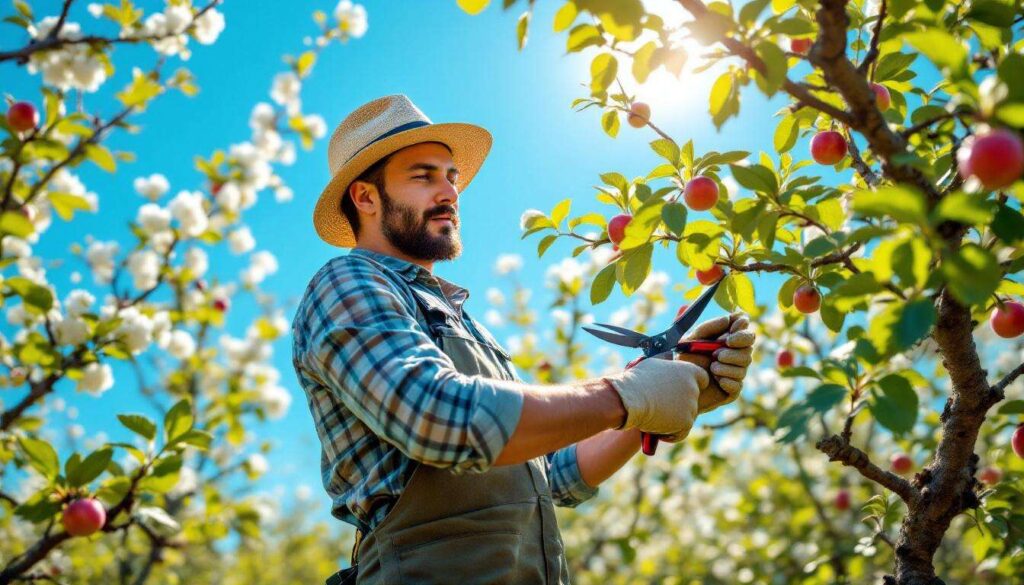
Investing in quality pruning tools ensures clean cuts that heal quickly and minimizes damage to tree tissues. Hand pruners handle branches up to three-quarters of an inch in diameter and should feature sharp bypass blades rather than anvil-style cutting mechanisms. Loppers extend your reach and cutting capacity to branches up to two inches thick, while a pruning saw becomes necessary for larger limbs that exceed lopper capacity.
Complete pruning toolkit:
- Bypass hand pruners for small branches and twigs
- Long-handled loppers for medium branches
- Curved pruning saw for large limbs
- Pole pruner for high branches without a ladder
- Leather gloves for hand protection
- Safety glasses to shield eyes from debris
Maintenance and sanitation practices
Tool maintenance directly impacts both cutting efficiency and disease prevention. Sharpen blades before each pruning session using a whetstone or file, maintaining the original bevel angle. Clean tools between trees using a solution of one part bleach to nine parts water, or use rubbing alcohol for quick sanitation. This practice prevents the transmission of bacterial and fungal pathogens from infected trees to healthy specimens.
Proper tool care extends equipment lifespan and ensures optimal performance:
| Tool type | Cleaning frequency | Sharpening frequency |
|---|---|---|
| Hand pruners | Between each tree | Before each session |
| Loppers | Between each tree | Every 2-3 sessions |
| Pruning saw | After each use | Annually or as needed |
Once pruning is complete, attention must shift to post-pruning care that protects your investment of time and effort.
Precautions to take after pruning
Wound protection strategies
Modern horticultural research suggests that wound dressings are generally unnecessary for most pruning cuts, as trees naturally compartmentalize damage through their own defense mechanisms. However, large cuts exceeding two inches in diameter may benefit from a thin application of wound sealant to prevent excessive moisture loss while the tree initiates its healing response. Avoid thick applications that can trap moisture and create favorable conditions for decay organisms.
Monitoring for disease and pest issues
The weeks following pruning require vigilant observation for signs of problems developing at cut sites. Inspect pruning wounds weekly for unusual discoloration, oozing, or fungal growth that might indicate infection. Watch for insect activity around fresh cuts, as some pests are attracted to the volatile compounds released by wounded tissue. Early detection allows for prompt intervention before minor issues escalate into serious threats.
Post-pruning monitoring checklist:
- Check cuts for signs of disease development
- Remove any broken stubs that didn’t heal cleanly
- Watch for excessive sap flow indicating improper timing
- Observe new growth patterns as buds break
- Document which branches were removed for future reference
Supporting recovery and new growth
Help your trees recover from pruning stress by providing adequate moisture as the growing season begins. Apply a two to four-inch layer of organic mulch around the tree base, keeping it several inches away from the trunk to prevent rot. Avoid fertilizing immediately after pruning, as this can stimulate excessive vegetative growth at the expense of fruit production. Instead, wait until new growth emerges before applying balanced nutrients if soil tests indicate deficiencies.
March pruning of apple and cherry trees represents a fundamental practice that shapes the future productivity and health of your orchard. By understanding the timing, techniques, and aftercare specific to each species, gardeners can maximize fruit quality while maintaining manageable tree sizes. The investment of time in proper pruning pays dividends through easier maintenance, reduced disease pressure, and improved harvests for years to come. Armed with sharp tools and knowledge of correct methods, you can confidently approach your fruit trees each March, knowing that your pruning efforts lay the groundwork for another successful growing season.