
Fruit trees can be finicky producers, often yielding disappointing harvests despite your best efforts with watering, pruning, and fertilizing. The missing piece in your orchard puzzle might be simpler than you think: effective pollination. Without proper pollination, even the healthiest trees will struggle to set fruit, leaving you with beautiful blossoms that never transform into the apples, pears, or cherries you anticipated. Understanding and optimizing pollination can dramatically transform your harvest from sparse to abundant.
Understanding the role of pollination
The biological process behind fruit formation
Pollination represents the transfer of pollen from the male parts of a flower to the female parts, initiating the fertilization process that ultimately produces fruit. When pollen grains land on the stigma of a flower, they germinate and grow down through the style to reach the ovary, where fertilization occurs. This biological mechanism is essential for most fruit trees, as without successful pollination, flowers simply wither and drop without developing into fruit.
Why some trees need help
Many fruit tree species cannot pollinate themselves effectively and require specific conditions to produce a crop:
- Self-sterile varieties need pollen from a genetically different tree of the same species
- Weather conditions during bloom time can interfere with natural pollination
- Lack of pollinator activity in urban or suburban environments reduces fertilization rates
- Poor timing between compatible varieties can result in missed pollination windows
Recognizing these challenges helps orchardists understand why their trees might bloom profusely yet produce minimal fruit. The journey from understanding pollination basics naturally leads to exploring the various mechanisms through which it occurs.
The different types of pollination
Self-pollination versus cross-pollination
Self-pollination occurs when a flower’s own pollen fertilizes its ovules, or when pollen transfers between flowers on the same tree. Some fruit trees like certain peach and apricot varieties are self-fertile, meaning they can produce fruit without another tree nearby. However, even self-fertile trees often benefit from cross-pollination, which typically results in larger crops and better fruit quality.
Cross-pollination requires pollen from a different cultivar of the same species. Most apple, pear, plum, and sweet cherry varieties are self-sterile and absolutely require a compatible pollinator tree planted within reasonable proximity, typically within 50 feet.
Wind versus insect pollination
| Pollination Type | Characteristics | Fruit Tree Examples |
|---|---|---|
| Wind pollination | Light, abundant pollen; inconspicuous flowers | Walnuts, pecans, chestnuts |
| Insect pollination | Sticky pollen; showy, fragrant flowers | Apples, cherries, plums, pears |
Most common fruit trees rely heavily on insect pollination, making the presence of pollinators crucial for successful fruit set. This dependence on insects brings us to examine the specific creatures responsible for this vital task.
Pollinating insects and their importance
Honeybees as primary pollinators
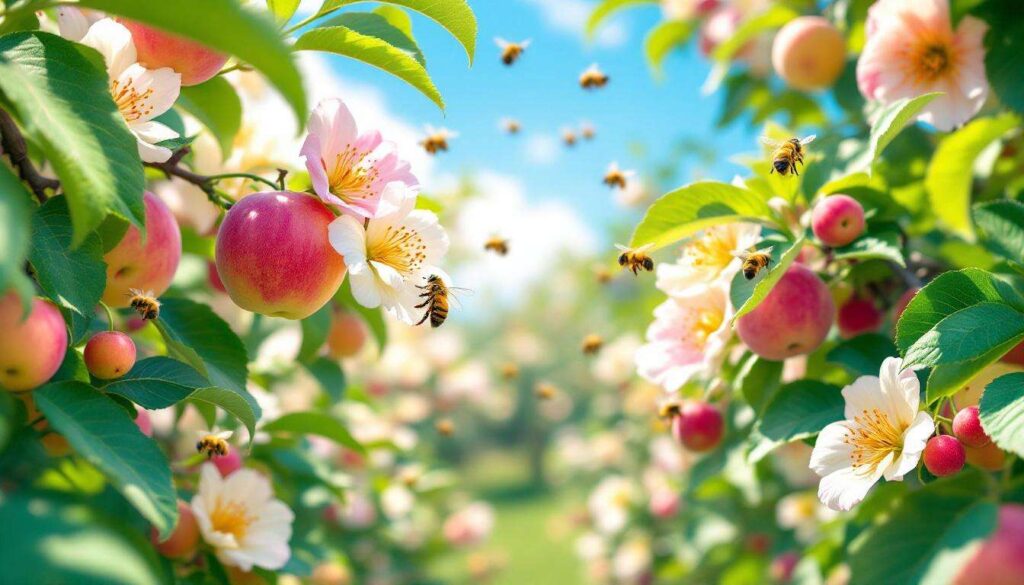
Honeybees remain the most efficient pollinators for commercial and home orchards. A single colony can pollinate acres of fruit trees during bloom season, with individual bees visiting thousands of flowers daily. Their fuzzy bodies collect and distribute pollen effectively, and their tendency to focus on one plant species during foraging trips ensures efficient cross-pollination between compatible varieties.
Native pollinators and beneficial insects
Beyond honeybees, numerous native insects contribute significantly to fruit tree pollination:
- Mason bees are exceptionally efficient pollinators, with a single mason bee doing the work of 100 honeybees
- Bumblebees work in cooler temperatures and poor weather when honeybees stay in their hives
- Butterflies and moths provide supplemental pollination services
- Hoverflies visit flowers and inadvertently transfer pollen while feeding on nectar
Creating pollinator-friendly environments
Encouraging diverse pollinator populations requires thoughtful habitat management. Avoid pesticide application during bloom periods, provide water sources, plant native flowering plants that bloom before and after fruit trees, and leave some undisturbed areas with bare soil for ground-nesting bees. These habitat enhancements support robust pollinator communities that reliably service your orchard. With pollinators present, specific techniques can further boost pollination success rates.
Techniques to enhance pollination
Strategic tree placement and spacing
Positioning compatible pollinator trees within 50 feet of each other ensures pollinators easily transfer pollen between them. Planting in blocks rather than rows increases pollination efficiency, as bees tend to work nearby flowers rather than traveling long distances. Consider wind patterns as well, as prevailing breezes can assist pollen movement between trees.
Hand pollination methods
When natural pollination proves insufficient, hand pollination offers a reliable alternative. Collect pollen from freshly opened flowers using a small brush, cotton swab, or even a clean makeup brush. Transfer this pollen to the stigmas of flowers on the target tree, working during mid-morning when flowers are most receptive. This technique works particularly well for:
- Small home orchards with limited space for multiple varieties
- Rare or unusual fruit varieties lacking compatible pollinators
- Seasons with poor weather or low pollinator activity
- Container-grown trees in urban settings
Attracting more pollinators
Increase pollinator visits by planting companion flowers near fruit trees, installing bee houses for solitary bees, maintaining diverse flowering plants throughout the growing season, and avoiding broad-spectrum insecticides. Some orchardists even rent honeybee hives during bloom periods to ensure adequate pollination. These enhancement techniques work best when paired with appropriate tree variety selection.
Choosing the right fruit tree varieties
Compatibility requirements
Successful cross-pollination demands compatible varieties that bloom simultaneously. Research pollination groups for your chosen fruit species, as not all varieties within a species can pollinate each other. For example, some apple varieties fall into early, mid-season, or late bloom groups, and effective pollinators must overlap in flowering time.
Recommended pollinator combinations
| Primary Variety | Compatible Pollinators | Bloom Overlap |
|---|---|---|
| Honeycrisp apple | Gala, Fuji, Granny Smith | Mid-season |
| Bartlett pear | Bosc, Anjou, Comice | Early to mid-season |
| Bing cherry | Rainier, Stella, Black Tartarian | Mid-season |
Selecting for your climate zone
Choose varieties adapted to your specific hardiness zone and chill hour requirements. Trees that bloom too early risk frost damage to flowers, eliminating pollination opportunities entirely. Conversely, late-blooming varieties in short-season climates may not have sufficient time for fruit development. Consult local extension services or experienced nurseries for region-appropriate recommendations. Proper variety selection directly influences the ultimate measure of success: fruit production.
Impact of pollination on fruit production
Quantifying the pollination effect
Research consistently demonstrates that adequate pollination increases fruit yield by 20 to 300 percent depending on the species and environmental conditions. Beyond quantity, pollination quality affects fruit characteristics including size, shape, seed development, and overall marketability. Poorly pollinated fruit often develops asymmetrically or drops prematurely.
Economic and practical benefits
For home orchardists, improved pollination translates to greater self-sufficiency and reduced grocery expenses. Commercial growers see direct financial returns through increased marketable yields. The benefits extend beyond immediate harvest:
- Consistent annual production rather than irregular boom-and-bust cycles
- Better fruit quality commands premium prices or greater personal satisfaction
- Reduced waste from misshapen or underdeveloped fruit
- Enhanced orchard ecosystem health through diverse pollinator populations
Long-term orchard sustainability
Establishing robust pollination systems creates sustainable orchards that produce reliably for decades. Trees experience less stress when pollination occurs efficiently, potentially extending productive lifespan. Supporting pollinator populations contributes to broader environmental health, benefiting vegetable gardens and ornamental plantings throughout your property.
Maximizing fruit production from your trees hinges on understanding and facilitating effective pollination. By recognizing the biological requirements, supporting diverse pollinator populations, implementing enhancement techniques, selecting compatible varieties, and appreciating pollination’s profound impact on yields, you can transform underperforming trees into abundant producers. Whether managing a commercial orchard or a backyard hobby planting, attention to pollination details delivers measurable results in fruit quantity and quality, making it perhaps the single most important factor in successful fruit growing.