
Moss growing on fruit trees is a common sight in many orchards and gardens, particularly in regions with high humidity and limited sunlight. While this green or grayish coating might seem harmless at first glance, experienced gardeners know that addressing moss growth is essential for maintaining healthy and productive fruit trees. The good news is that removing moss doesn’t require harsh chemicals or expensive treatments. Clever gardeners have long relied on natural methods that are both effective and environmentally friendly, ensuring their trees remain vigorous without compromising the surrounding ecosystem or the quality of their harvest.
Understanding the appearance of moss on fruit trees
What causes moss to grow on tree bark
Moss thrives in moist, shaded environments where conditions prevent the bark from drying out completely. Fruit trees located in areas with poor air circulation, excessive shade, or consistently damp weather become prime candidates for moss colonization. Unlike parasitic plants, moss doesn’t have roots that penetrate the tree’s vascular system. Instead, it anchors itself to the bark’s surface using tiny structures called rhizoids, drawing moisture and nutrients from the air and rain rather than from the tree itself.
Several environmental factors contribute to moss development on fruit trees:
- High humidity levels and frequent rainfall
- Dense canopy coverage that blocks sunlight
- North-facing tree sides that receive less direct sun exposure
- Poor drainage around the tree base
- Aging or damaged bark that provides textured surfaces for moss attachment
Identifying moss versus other tree growth
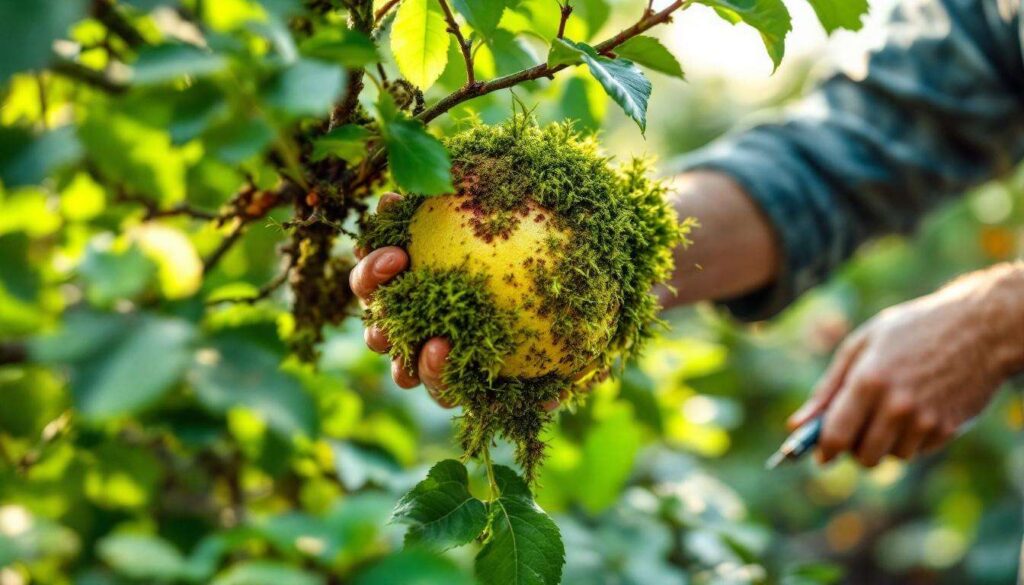
Gardeners should distinguish moss from other organisms that might colonize tree bark. Moss appears as a soft, cushiony growth that can be green, gray-green, or brownish depending on moisture levels. Lichens, often confused with moss, present as flat, crusty, or leafy growths in various colors including orange, yellow, and white. While both are non-parasitic, their presence indicates similar environmental conditions that may need addressing for optimal tree health.
Understanding why moss appears on your trees helps inform the most effective removal strategies and prevention methods moving forward.
The dangers of moss for your fruit trees
How moss affects tree health and productivity
While moss itself doesn’t directly harm fruit trees by extracting nutrients, its presence creates conditions that can compromise tree vitality. Thick moss layers trap moisture against the bark, creating an environment conducive to fungal diseases and pest infestations. This persistent dampness can soften bark tissue, making trees more vulnerable to infections and physical damage. Additionally, heavy moss accumulation adds weight to branches, particularly when saturated with water, potentially causing structural stress on older or weaker limbs.
Impact on fruit quality and tree longevity
Moss coverage can indirectly affect fruit production by harboring insects and disease organisms that may spread to leaves, flowers, and developing fruit. Trees weakened by the secondary effects of moss colonization often produce smaller yields and lower-quality fruit. The reduced air circulation around moss-covered bark also impedes the tree’s natural defense mechanisms, making it less resilient to environmental stresses such as temperature fluctuations and drought conditions.
| Tree condition | With heavy moss | Without moss |
|---|---|---|
| Bark moisture retention | Excessive | Balanced |
| Pest habitat potential | High | Low |
| Disease susceptibility | Increased | Normal |
Recognizing these potential problems makes clear why gardeners prioritize moss removal as part of comprehensive orchard management.
Why choose natural methods to remove moss
Environmental benefits of chemical-free approaches
Natural moss removal methods protect the delicate balance of garden ecosystems while safeguarding the health of beneficial organisms. Chemical treatments can contaminate soil and groundwater, affecting earthworms, pollinators, and microorganisms essential for soil fertility. When chemicals run off during rainfall, they may damage nearby plants and contaminate water sources. Natural approaches eliminate these risks while proving equally effective when applied correctly and consistently.
Protecting fruit quality and safety
For fruit trees, avoiding chemicals becomes particularly important since residues can persist on bark and potentially transfer to edible fruit. Organic gardeners and those committed to sustainable practices find that natural moss removal aligns with their overall garden philosophy. These methods also cost significantly less than commercial chemical products, making them accessible to gardeners with limited budgets while delivering results that match or exceed synthetic alternatives.
Long-term garden health considerations
Natural methods support soil health and encourage beneficial microbial activity that strengthens tree immunity. By choosing gentler approaches, gardeners maintain the beneficial bacteria and fungi that form symbiotic relationships with tree roots, enhancing nutrient uptake and overall vigor. This holistic approach creates resilient trees better equipped to resist future moss colonization and other environmental challenges.
With these compelling reasons established, the practical application of natural moss removal becomes the next logical focus.
Simple techniques to remove moss from fruit trees
The baking soda solution method
One of the most effective natural tricks involves using baking soda mixed with water to create a gentle yet powerful moss-removing solution. Mix two tablespoons of baking soda per liter of water and apply it directly to moss-covered areas using a spray bottle or soft brush. The alkaline nature of baking soda disrupts the moss’s ability to retain moisture, causing it to dry out and loosen from the bark. After application, wait several days for the moss to turn brown and brittle, then gently brush it away using a soft-bristled brush or cloth.
Vinegar-based treatments for stubborn moss
White vinegar offers another highly effective natural solution for moss removal. Create a mixture using equal parts water and white vinegar, then apply carefully to affected areas, avoiding direct contact with leaves and fruit. The acetic acid in vinegar alters the pH on the bark surface, making it inhospitable for moss growth. This method works particularly well on older, established moss colonies that have become deeply embedded in bark crevices.
Physical removal techniques
Manual removal remains the most straightforward approach for light to moderate moss coverage. During dormant seasons, gardeners can safely scrape moss from tree trunks and branches using:
- Plastic scrapers or old credit cards to avoid bark damage
- Soft-bristled brushes for gentle loosening
- Wooden spatulas for stubborn patches
- Pressure washers on low settings for large trees (used cautiously)
Always work gently to preserve the protective bark layer while removing the moss. Timing this work during dry weather prevents immediate recolonization and allows the bark to dry thoroughly after cleaning.
Successful moss removal sets the foundation for implementing preventive measures that keep trees clean long-term.
Preventing the reappearance of moss on your fruit trees
Improving air circulation and sunlight exposure
Prevention begins with addressing the environmental conditions that encourage moss growth. Pruning trees to open up their canopy allows better air movement and increased sunlight penetration, both of which discourage moss establishment. Remove lower branches that create excessive shade on the trunk, and thin out dense interior growth to promote drying conditions. Strategic pruning not only prevents moss but also improves fruit production by directing the tree’s energy toward productive branches.
Managing moisture levels around trees
Proper drainage around fruit trees significantly reduces moss susceptibility. Ensure water doesn’t pool near tree bases by grading soil away from trunks and improving overall drainage in low-lying areas. Mulch management also plays a crucial role: keep organic mulch several inches away from tree trunks to prevent moisture accumulation directly against the bark. This simple adjustment creates a drier microclimate that discourages moss colonization while still providing the benefits of mulched soil.
Regular maintenance and monitoring
Implementing a routine inspection schedule helps catch moss growth early when it’s easiest to address. Check trees quarterly, paying special attention to shaded sides and lower trunk areas. Light moss accumulations can be brushed away quickly before they establish firmly. Annual applications of preventive treatments during late winter or early spring, when moss is most vulnerable, maintain long-term control with minimal effort.
These preventive strategies not only control moss but contribute to overall orchard health and productivity.
The benefits of a moss-free garden for your orchard
Enhanced tree vigor and fruit production
Trees freed from moss coverage demonstrate noticeably improved vitality. Cleaner bark allows better gas exchange, supporting the tree’s respiratory functions and overall metabolic efficiency. Without the moisture-trapping effects of moss, bark remains healthier and more resistant to diseases and pest invasions. Gardeners typically observe increased fruit set, larger fruit size, and improved flavor quality in trees maintained moss-free, as the tree’s energy focuses on production rather than defending against secondary problems associated with moss presence.
Easier pest and disease monitoring
Moss-free bark makes it significantly easier to spot early signs of pest infestations or disease symptoms. Clear visibility of the bark surface allows gardeners to identify problems like scale insects, borers, or fungal infections before they become serious threats. This early detection capability often means the difference between minor interventions and major treatment efforts, saving time, money, and potentially the tree itself.
Aesthetic and practical advantages
Beyond health benefits, clean fruit trees simply look more attractive and well-maintained. A moss-free orchard presents a professional appearance that reflects careful stewardship. Practical advantages include easier application of protective treatments like dormant oils or lime sulfur sprays, which adhere better to clean bark surfaces. The overall improvement in orchard conditions creates a more pleasant environment for gardening activities and fruit harvesting.
Maintaining moss-free fruit trees through natural methods represents a cornerstone of successful organic orchard management. The techniques discussed offer practical, environmentally responsible solutions that protect both tree health and fruit quality. By understanding why moss appears, recognizing its potential impacts, and implementing regular removal and prevention strategies, gardeners create optimal growing conditions for productive, long-lived fruit trees. The investment of time in natural moss control pays dividends through improved harvests, reduced disease pressure, and the satisfaction of maintaining a healthy, sustainable garden ecosystem that benefits both plants and the surrounding environment.