

Growing a thriving vegetable garden requires more than just planting seeds and hoping for the best. Smart gardeners know that certain crops offer multiple benefits beyond their harvest, working behind the scenes to improve soil health and protect neighboring plants. The spring pea stands out as one such multitasking champion, delivering both practical advantages and delicious results. This humble legume transforms garden beds through natural processes that eliminate the need for synthetic fertilizers and pesticides, making it an essential addition to any eco-conscious growing space.
Introduction to the spring pea: an ally for your vegetable garden
What makes the spring pea special
The spring pea, scientifically known as Pisum sativum, belongs to the legume family and thrives in cooler temperatures. Unlike summer vegetables that demand warmth, this hardy plant tolerates frost and actually prefers the mild conditions of early spring. Gardeners can begin sowing as early as February in many regions, giving them a head start on the growing season.
This versatile crop comes in several varieties:
- Shelling peas with tender seeds inside pods
- Snap peas with edible pods and sweet peas
- Snow peas with flat, crisp pods perfect for stir-fries
- Dwarf varieties that reach 2 feet tall
- Climbing varieties that can grow up to 6 feet
The dual purpose of spring peas in garden planning
Beyond their culinary value, spring peas serve as companion plants that actively improve growing conditions for surrounding crops. Their ability to fix nitrogen and repel pests makes them strategic choices for gardeners who want to reduce chemical inputs while maximizing yields. The plant’s early sowing schedule also means it occupies garden space during a period when many beds would otherwise sit empty, making efficient use of available land.
Understanding how spring peas function within the garden ecosystem reveals why experienced growers consider them indispensable for soil health and pest management strategies.
How the spring pea naturally enriches the soil
The nitrogen-fixing process explained
Spring peas possess a remarkable ability that sets them apart from most garden vegetables. Their roots form symbiotic relationships with beneficial bacteria called Rhizobium leguminosarum. These microscopic organisms colonize root nodules and convert atmospheric nitrogen into ammonia, a form that plants can absorb and use for growth.
This natural process delivers significant benefits:
- Adds 40 to 150 pounds of nitrogen per acre to the soil
- Reduces or eliminates the need for synthetic nitrogen fertilizers
- Improves soil structure through root decomposition
- Leaves behind nutrient-rich residue when plants are cut at season’s end
- Creates better growing conditions for subsequent crops
Maximizing nitrogen fixation in your garden
To ensure optimal nitrogen fixation, gardeners should inoculate pea seeds with rhizobium bacteria before planting, especially in beds that haven’t grown legumes recently. The powder-form inoculant costs just a few dollars and dramatically increases the number of nitrogen-fixing nodules that develop. Simply moisten seeds and roll them in the inoculant powder before sowing.
| Soil condition | Nitrogen fixed (lbs/acre) | Inoculant needed |
|---|---|---|
| First-time legume planting | 40-80 | Yes |
| Legumes grown within 3 years | 80-120 | Optional |
| Regular legume rotation | 100-150 | No |
The enriched soil that spring peas create becomes the perfect foundation for addressing another common garden challenge that frustrates growers every season.
The role of the spring pea in combating aphids
Why aphids avoid pea plants
Aphids represent one of the most persistent garden pests, sucking sap from tender plant tissues and spreading viral diseases. However, spring peas possess natural defenses that make them unappealing to aphid populations. The plant’s chemical composition includes compounds that deter feeding, while its early growing season allows it to establish before peak aphid activity begins.
Using spring peas as trap crops and barriers
Strategic placement of spring peas creates protective zones around vulnerable plants. When positioned near aphid-prone crops like lettuce, cabbage, or roses, peas act as living barriers that intercept and redirect pest populations. Some gardeners intentionally use peas as trap crops, allowing aphids to congregate on the legumes while keeping them away from more valuable plantings.
Effective companion planting strategies include:
- Planting rows of peas between brassica family members
- Using climbing peas as vertical screens around susceptible plants
- Interplanting dwarf pea varieties with leafy greens
- Creating border plantings around the garden perimeter
- Succession planting to maintain continuous aphid deterrence
The broader pest management benefits
Beyond aphid control, spring peas attract beneficial insects including parasitic wasps and predatory beetles that feed on various garden pests. Their flowers provide nectar and pollen that sustain these helpful species, creating a balanced ecosystem that naturally suppresses pest outbreaks without chemical interventions.
Knowing when and how to plant ensures these benefits materialize in your garden beds throughout the growing season.
Steps for successfully sowing the spring pea from February
Timing your February planting
The key to successful spring pea cultivation lies in early sowing. Seeds germinate in soil temperatures as low as 40°F, though 45-55°F produces faster emergence. In most temperate regions, February provides ideal conditions, as the soil has thawed enough to work but remains cool enough to prevent premature bolting.
Soil preparation requirements
Spring peas thrive in well-drained soil with a pH between 6.0 and 7.5. Before planting, incorporate compost or aged manure to improve soil structure, but avoid excessive nitrogen additions since the plants produce their own. Remove rocks and break up clods to create a fine seedbed that allows easy root penetration.
Proper sowing technique
Follow these steps for optimal germination:
- Soak seeds overnight in room-temperature water to speed germination
- Apply rhizobium inoculant according to package directions
- Create furrows 1 to 2 inches deep and 18 to 24 inches apart
- Space seeds 2 inches apart for bush varieties, 3 inches for climbers
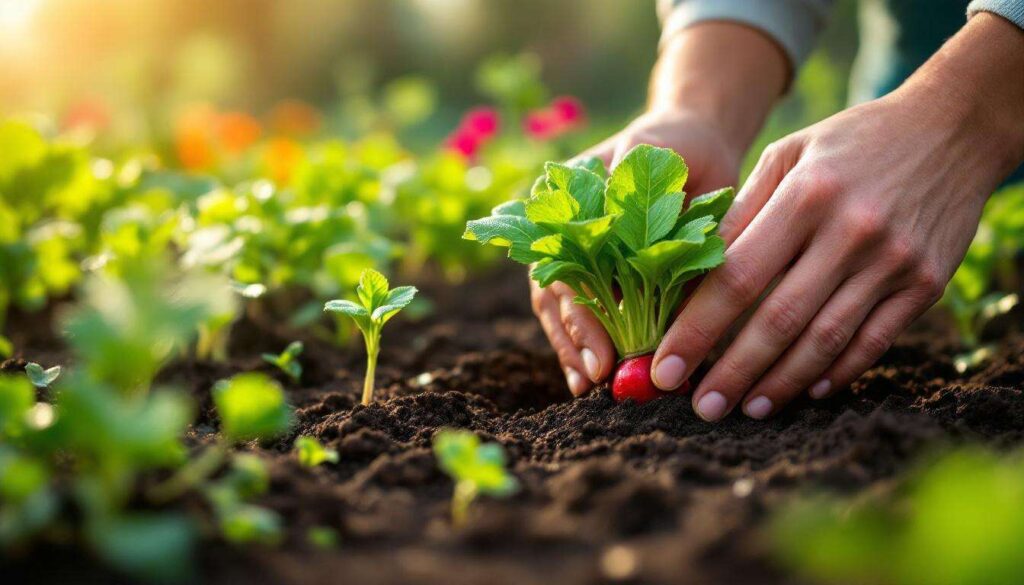
- Cover with soil and firm gently to ensure good seed-to-soil contact
- Water thoroughly but avoid saturating the soil
- Install supports for climbing varieties at planting time
Protection from early season challenges
While spring peas tolerate cold, newly emerged seedlings benefit from row covers that protect against hard frosts and hungry birds. Remove covers once plants reach 4 inches tall and temperatures stabilize. In areas with heavy clay soil, consider planting in raised beds to improve drainage and warm the soil faster.
Once your peas emerge and begin growing, maintaining them properly ensures the best harvest and maximum soil benefits.
Maintenance and harvesting tips for the spring pea
Watering and feeding requirements
Spring peas need consistent moisture during flowering and pod development, requiring about 1 inch of water per week. Water deeply at the base of plants rather than overhead to prevent fungal diseases. Despite their nitrogen-fixing abilities, peas benefit from a side-dressing of compost tea or diluted fish emulsion when flowers appear, focusing on phosphorus and potassium rather than nitrogen.
Supporting and training your plants
Climbing varieties require sturdy support systems installed at planting time. Options include:
- Bamboo teepees for attractive vertical elements
- Trellis netting attached to posts or fences
- Pea brush made from pruned twiggy branches
- String supports running between stakes
Gently guide young tendrils toward supports, and they will quickly climb on their own.
Recognizing harvest readiness
Harvest timing depends on variety type. Shelling peas are ready when pods swell and feel full but before they turn yellow. Snap peas should be plump with visible peas inside crisp pods. Snow peas harvest best when pods are flat and tender, before seeds develop fully.
| Pea type | Days to harvest | Harvest indicator |
|---|---|---|
| Shelling peas | 60-70 | Swollen, bright green pods |
| Snap peas | 55-65 | Crisp pods with visible seeds |
| Snow peas | 50-60 | Flat, tender pods |
Post-harvest soil management
After harvesting, cut plants at soil level rather than pulling them up. This leaves nitrogen-rich roots to decompose in place, releasing nutrients for the next crop. Add the above-ground plant material to compost piles or use it as mulch around other vegetables.
These cultivation practices contribute to a larger vision of sustainable gardening that extends beyond individual crops.
The benefits of the spring pea for an ecological garden
Reducing chemical dependency
By incorporating spring peas into rotation schedules, gardeners can dramatically reduce their reliance on synthetic inputs. The nitrogen fixed by pea roots replaces fertilizers that require significant energy to manufacture and transport. The natural aphid deterrence eliminates the need for insecticides that harm beneficial insects and contaminate soil and water.
Building long-term soil health
Regular legume cultivation creates a positive feedback loop in garden ecosystems. Each pea crop adds organic matter, improves soil structure, and increases microbial diversity. Over time, these improvements result in:
- Better water retention during dry periods
- Improved drainage in heavy soils
- Increased earthworm populations
- Enhanced disease suppression
- Greater resilience to environmental stress
Supporting biodiversity and wildlife
Spring pea flowers attract pollinators including native bees that visit other garden crops. The dense foliage provides shelter for beneficial ground beetles and spiders that prey on slugs and other pests. This habitat creation transforms gardens into thriving ecosystems rather than sterile growing spaces dependent on external inputs.
Economic and practical advantages
Beyond environmental benefits, spring peas offer practical advantages for home gardeners. Seeds are inexpensive and easy to save for future seasons. The early harvest provides fresh produce when grocery store options are limited and expensive. The space occupied by peas in early spring becomes available for summer crops like tomatoes and peppers, maximizing garden productivity throughout the year.
The spring pea demonstrates how thoughtful crop selection transforms vegetable gardens into self-sustaining systems. This single plant addresses multiple challenges simultaneously, enriching soil through nitrogen fixation while providing natural pest control that protects neighboring crops. Starting seeds in February takes advantage of cool weather preferences and delivers harvests before summer heat arrives. The minimal maintenance requirements and significant ecological benefits make spring peas essential for gardeners committed to reducing chemical inputs. Whether growing food for the table or building healthier soil for future seasons, this versatile legume proves that working with nature produces better results than fighting against it.