

Fruit trees require careful attention during their dormant season to ensure a productive growing period ahead. While many gardeners focus on spring and summer maintenance, the work performed during late winter can make the difference between a disappointing yield and an abundant harvest. February represents a critical window for pruning, a task that directly influences the health, structure, and fruit production of your trees. Neglecting this essential maintenance now could compromise your entire summer harvest, leaving you with fewer fruits, weaker branches, and increased susceptibility to disease.
The importance of pruning fruit trees in February
Why timing matters for dormant pruning
February offers optimal conditions for pruning fruit trees because they remain in their dormant state, conserving energy for the upcoming growing season. During this period, trees experience minimal stress from cutting, and the absence of leaves provides clear visibility of the branch structure. This clarity allows gardeners to make informed decisions about which branches to remove and which to preserve.
Pruning during dormancy also reduces the risk of disease transmission. Many pathogens that affect fruit trees are less active in cold weather, minimizing the chances of infection through fresh cuts. Additionally, the tree’s natural healing processes activate as temperatures begin to rise, allowing wounds to seal efficiently before pests and diseases become prevalent.
Benefits of February pruning for summer harvest
Proper pruning in February delivers multiple advantages that directly impact your summer harvest:
- Improved air circulation: removing crowded branches allows better airflow, reducing fungal diseases
- Enhanced sunlight penetration: strategic cuts ensure all fruiting branches receive adequate light
- Increased fruit size: directing energy to fewer branches produces larger, higher-quality fruits
- Stronger branch structure: eliminating weak or crossing branches prevents breakage under fruit weight
- Controlled tree size: maintaining manageable height simplifies harvesting and future maintenance
These combined benefits create ideal conditions for fruit development, ensuring that your trees channel their resources into producing a bountiful harvest rather than maintaining unnecessary growth.
Understanding the significance of February pruning sets the foundation for successful orchard management, but knowing which trees require attention is equally crucial.
Identifying fruit trees to prune
Trees that benefit most from February pruning
Not all fruit trees follow the same pruning schedule, but several varieties thrive with February attention. Apple and pear trees are prime candidates for late winter pruning, as they produce fruit on spurs that benefit from careful shaping. Stone fruits like plums and cherries can also be pruned in February, though some gardeners prefer waiting until late spring for these varieties.
| Tree Type | February Pruning | Primary Focus |
|---|---|---|
| Apple | Highly recommended | Spur development, shape control |
| Pear | Highly recommended | Vertical growth management |
| Plum | Acceptable | Disease prevention, thinning |
| Cherry | Acceptable | Light maintenance only |
| Peach | Wait until bloom | Delayed for disease prevention |
Signs your trees need immediate attention
Certain indicators reveal that your fruit trees require urgent pruning before the growing season begins. Dead or diseased branches pose immediate threats to tree health and should be removed promptly. Crossing branches that rub against each other create wounds that invite infection. Water sprouts, the vigorous vertical shoots that emerge from main branches, divert energy from fruit production and require elimination.
Examine your trees for branches growing inward toward the center, as these obstruct airflow and light penetration. Look for branches with narrow crotch angles, which are prone to splitting under the weight of developing fruit. These structural weaknesses become increasingly problematic as the harvest season approaches.
Once you’ve identified which trees need pruning, having the right equipment ensures the job is done correctly and safely.
The essential tools for effective pruning
Basic equipment every gardener needs
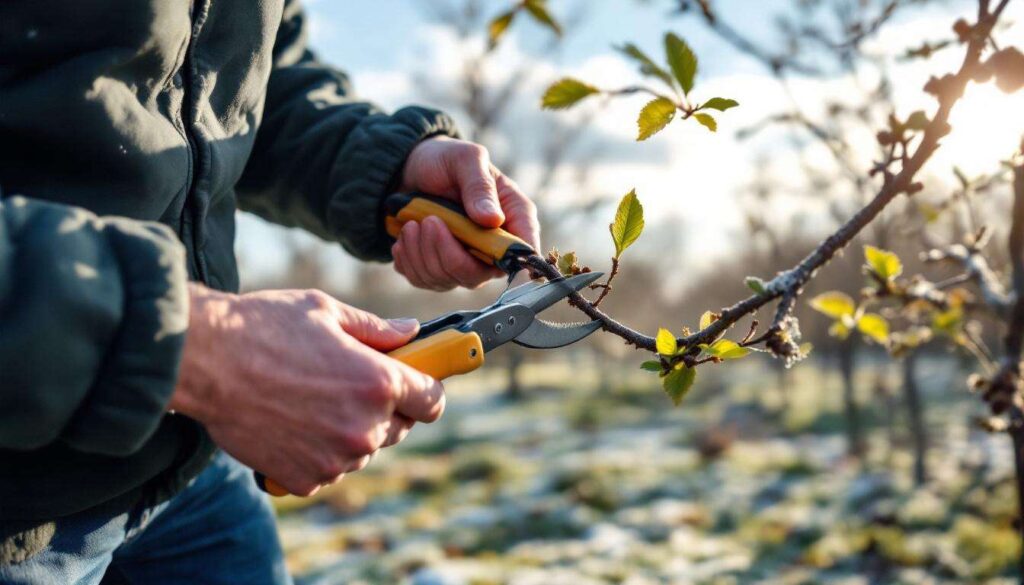
Quality tools make pruning more efficient and less damaging to your trees. Hand pruners, also called secateurs, handle branches up to three-quarters of an inch in diameter and should feature sharp, bypass blades for clean cuts. Loppers extend your reach and cutting power for branches up to two inches thick, while a pruning saw becomes necessary for larger limbs.
A pole pruner allows you to reach higher branches without a ladder, improving both safety and convenience. For larger orchards or extensive pruning projects, consider investing in a quality pruning saw with a curved blade designed specifically for green wood.
Maintenance and safety considerations
Tool maintenance directly affects both cutting quality and disease prevention. Sharp blades create clean cuts that heal quickly, while dull tools tear and crush plant tissue, creating entry points for pathogens. Clean your tools with rubbing alcohol or a bleach solution between trees to prevent disease transmission.
- Sharpen blades before each pruning session
- Oil moving parts to ensure smooth operation
- Wear safety glasses to protect against falling debris
- Use gloves to prevent blisters and improve grip
- Inspect tools for damage before use
Proper equipment preparation ensures your pruning efforts yield the best possible results while protecting both you and your trees from unnecessary harm.
With the right tools in hand, mastering specific pruning techniques becomes the next step toward maximizing your harvest.
Pruning techniques to maximize summer harvest
The three-cut method for larger branches
Removing large branches requires a systematic approach to prevent bark tearing and tree damage. The three-cut method begins with an undercut about twelve inches from the trunk, cutting upward approximately one-third through the branch. The second cut, made slightly farther from the trunk, removes the branch’s weight by cutting downward until the branch falls. The final cut removes the remaining stub just outside the branch collar, the swollen area where the branch meets the trunk.
This technique prevents the branch’s weight from tearing bark down the trunk as it falls, a common mistake that creates large wounds vulnerable to infection and decay.
Shaping for optimal fruit production
Fruit trees benefit from an open center or modified leader structure that maximizes light exposure and air circulation. Remove branches that grow straight up or straight down, as these rarely produce quality fruit. Focus on maintaining branches that grow at forty-five to sixty-degree angles from the trunk, as these angles provide the best balance between strength and productivity.
Thin fruiting spurs on apple and pear trees to prevent overcrowding, which leads to small, poorly developed fruits. Remove approximately one-third of the previous year’s growth on peach trees to encourage new fruiting wood.
Even with proper technique, certain mistakes can undermine your pruning efforts and harm your trees.
Tips to avoid common mistakes
Over-pruning and its consequences
Removing too much growth in a single session stresses trees and reduces their ability to produce fruit. As a general rule, never remove more than one-quarter of a tree’s canopy in a single year. Excessive pruning triggers vigorous vegetative growth at the expense of fruit production, forcing you to wait additional years for a substantial harvest.
Young trees particularly suffer from over-pruning, as they need foliage to establish strong root systems and develop structural strength.
Improper cut placement and angle
The location and angle of your cuts significantly impact tree health and healing. Cuts made too close to the trunk remove the protective branch collar, while cuts made too far leave unsightly stubs that die back and rot. Always cut just outside the branch collar at a slight angle that prevents water accumulation on the wound surface.
Avoid leaving branch stubs or creating flush cuts that damage the trunk. These mistakes create entry points for disease and compromise the tree’s natural defense mechanisms.
| Common Mistake | Consequence | Prevention |
|---|---|---|
| Topping trees | Weak regrowth, reduced fruiting | Use thinning cuts instead |
| Pruning too early | Cold damage to cuts | Wait until late February |
| Using dull tools | Ragged cuts, slow healing | Sharpen before use |
Avoiding these pitfalls ensures your pruning efforts support rather than hinder tree health and productivity.
Beyond February pruning, a comprehensive maintenance schedule keeps your fruit trees productive throughout the year.
Planning maintenance for an abundant harvest
Creating a year-round care schedule
Successful fruit production requires consistent attention beyond the February pruning window. Spring demands vigilance for pest emergence and disease symptoms, while summer requires monitoring fruit development and providing adequate water during dry periods. Fall cleanup removes disease-harboring debris, and winter offers opportunities for dormant oil applications that control overwintering pests.
Document your pruning decisions and observations to track which techniques produce the best results in your specific climate and with your particular tree varieties.
Fertilization and soil management
Proper nutrition supports the vigorous growth and abundant fruiting that pruning encourages. Apply balanced fertilizer in early spring as trees break dormancy, following soil test recommendations for precise nutrient management. Maintain organic mulch around trees to conserve moisture, suppress weeds, and gradually improve soil structure as it decomposes.
- Test soil pH every two to three years
- Apply compost annually to improve soil health
- Monitor trees for nutrient deficiency symptoms
- Adjust fertilization based on tree age and vigor
- Avoid fertilizing after midsummer to prevent late-season growth
Integrating these practices with your February pruning creates a comprehensive approach to fruit tree care that maximizes both tree health and harvest abundance.
February pruning represents a critical investment in your summer harvest, one that pays dividends in fruit quality, quantity, and overall tree health. The dormant season provides an ideal window for shaping trees, removing problematic growth, and establishing the structure needed for productive fruiting. By identifying which trees need attention, using proper tools and techniques, and avoiding common mistakes, you set the stage for an abundant harvest. Combined with year-round maintenance practices, this small February task becomes the foundation of successful fruit production, transforming your trees from neglected specimens into reliable sources of delicious, homegrown fruit.