



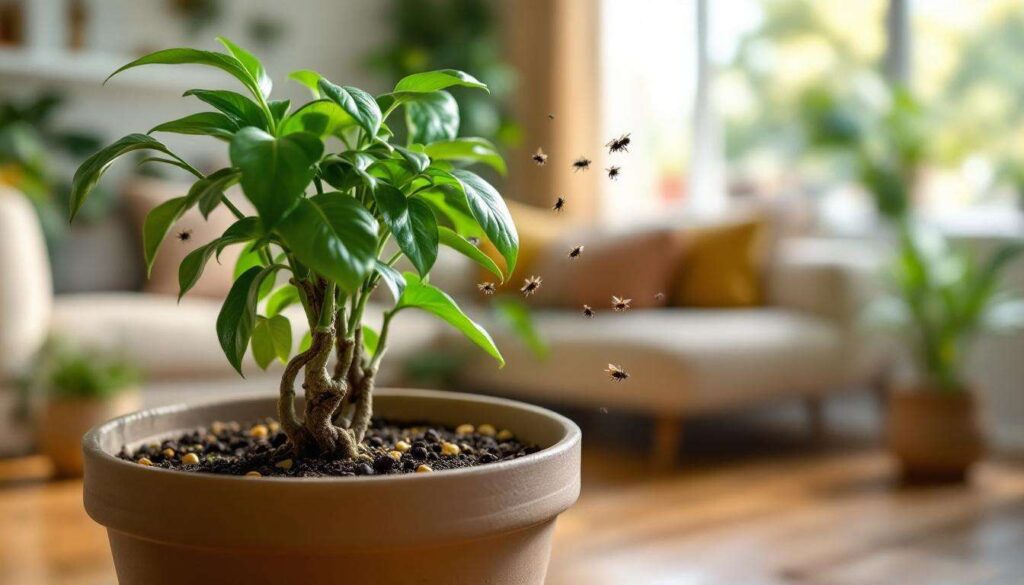
Those tiny flying insects hovering around your beloved houseplants can transform your indoor garden into a source of frustration. Fungus gnats, while not immediately harmful to humans, pose a significant threat to plant health and multiply rapidly if left unchecked. These persistent pests thrive in the moist soil of potted plants, creating an ongoing cycle that many plant owners struggle to break. Fortunately, effective solutions exist that don’t require harsh chemicals or expensive treatments. By understanding these common invaders and implementing proven home remedies, you can reclaim your plants and restore peace to your indoor growing space.
Understanding the problem of fungus gnats
Fungus gnats are small flying insects belonging to the families Sciaridae and Mycetophilidae. These delicate-looking pests measure approximately one-eighth of an inch in length and resemble miniature mosquitoes with dark bodies and long legs. While adult gnats are primarily a nuisance, the real damage occurs below the soil surface where their larvae feed.
The lifecycle and behavior patterns
Understanding the fungus gnat lifecycle helps explain why infestations can escalate quickly. The complete cycle unfolds in stages:
- Egg stage: females lay up to 300 eggs in moist soil rich in organic matter
- Larval stage: lasting approximately two weeks, larvae feed on fungi, organic debris, and plant roots
- Pupal stage: transformation occurs over three to four days
- Adult stage: mature gnats live for about one week, during which they reproduce
The entire process takes roughly three to four weeks under optimal conditions, meaning populations can explode within a single month.
Why houseplants attract these pests
Several environmental factors make indoor plants particularly vulnerable to fungus gnat colonization. Overwatering creates the consistently moist conditions these insects require for reproduction. Soil containing high levels of organic material, such as peat moss or compost, provides abundant food sources for developing larvae. Poor drainage compounds the problem by maintaining excessive moisture levels that encourage both fungal growth and gnat breeding.
| Environmental Factor | Impact Level | Prevention Difficulty |
|---|---|---|
| Excessive moisture | High | Moderate |
| Organic-rich soil | Medium | Low |
| Poor air circulation | Medium | Easy |
| Warm temperatures | Medium | Difficult |
Recognizing these attractants helps plant owners understand why certain plants become targets more frequently than others, setting the stage for identifying active infestations.
Identifying the signs of an infestation
Early detection of fungus gnats significantly improves treatment success rates. Visual confirmation represents the most obvious indicator, but several subtle signs often appear before adult gnats become noticeable.
Visible indicators above the soil
Adult gnats typically congregate near the soil surface and lower portions of plants. They exhibit weak, erratic flight patterns and are most active when disturbed during watering or plant maintenance. You might observe them resting on pot rims, saucers, or nearby surfaces. These insects are particularly attracted to bright windows and light sources, often accumulating on windowsills near affected plants.
Below-ground symptoms
Root damage from larval feeding manifests in various plant health issues. Yellowing leaves, especially lower foliage, often signal root stress. Stunted growth, wilting despite adequate watering, and overall plant decline suggest larvae are compromising the root system. In severe infestations, you may notice small, translucent larvae with black heads when examining the top layer of soil.
Testing for larvae presence
A simple potato slice test confirms larval activity. Place raw potato pieces on the soil surface and check after four hours. Larvae will gather on the potato’s underside if present. Alternatively, examining soil moisture levels helps: consistently soggy conditions combined with flying adults almost certainly indicate an active breeding population.
Once you’ve confirmed fungus gnats are present, distinguishing them from similar-looking insects ensures you apply the most effective treatment approach.
Distinguishing fungus gnats from other insects
Several household pests resemble fungus gnats, but each requires different control methods. Accurate identification prevents wasted effort on ineffective treatments.
Fruit flies versus fungus gnats
While both insects are small and fly, key differences exist:
- Body color: fruit flies have tan or brown bodies, while fungus gnats are dark gray or black
- Eye appearance: fruit flies possess distinctive red eyes; fungus gnats have dark eyes
- Flight pattern: fruit flies fly more purposefully toward food sources; fungus gnats exhibit weaker, more random flight
- Habitat preference: fruit flies congregate near ripening produce; fungus gnats remain close to soil
Other common lookalikes
Drain flies share similar size and dark coloring but feature fuzzy, moth-like wings and prefer bathroom drains. Phorid flies display a characteristic humpbacked appearance and run erratically across surfaces rather than flying immediately when disturbed. Shore flies, another plant-associated pest, have shorter antennae and stockier bodies compared to the delicate build of fungus gnats.
With proper identification complete, implementing targeted natural remedies becomes the next logical step toward elimination.
Natural remedies for fungus gnats
Five proven home treatments effectively combat fungus gnat infestations without introducing harsh chemicals into your living space.
Apple cider vinegar traps
Apple cider vinegar attracts adult gnats through its fermented scent. Fill shallow containers with equal parts vinegar and water, adding several drops of dish soap to break surface tension. Place traps near affected plants. Adults fly to the liquid and drown, reducing the breeding population. Replace traps every two to three days for maximum effectiveness.
Hydrogen peroxide soil drench
A solution of one part 3% hydrogen peroxide to four parts water kills larvae on contact while oxygenating soil. Pour the mixture directly onto soil until it drains from the bottom. The solution fizzes as it eliminates larvae and breaks down into harmless water and oxygen. Repeat applications every five to seven days until gnats disappear.
Diatomaceous earth barrier
Food-grade diatomaceous earth creates a lethal barrier for emerging adults. Spread a half-inch layer across the soil surface. The microscopic sharp edges damage insect exoskeletons, causing dehydration. This method works best when soil surfaces dry between waterings, as moisture reduces effectiveness.
Sticky yellow traps
Adult gnats are attracted to bright yellow surfaces. Position sticky traps horizontally just above soil level or vertically near plants. These traps capture flying adults, preventing reproduction. While they don’t address larvae, they significantly reduce adult populations when combined with other treatments.
Beneficial nematodes
Microscopic Steinernema feltiae nematodes parasitize fungus gnat larvae without harming plants or beneficial organisms. Mix nematodes with water according to package directions and apply to moist soil. These biological control agents actively hunt larvae, providing long-term suppression. Maintain soil moisture for several weeks post-application to support nematode survival.
| Remedy | Target Stage | Effectiveness | Reapplication Needed |
|---|---|---|---|
| Vinegar traps | Adults | Moderate | Every 2-3 days |
| Hydrogen peroxide | Larvae | High | Every 5-7 days |
| Diatomaceous earth | Adults/Larvae | Moderate-High | After watering |
| Sticky traps | Adults | Moderate | When full |
| Nematodes | Larvae | Very High | Seasonal |
Successfully eliminating current infestations provides relief, but implementing preventive measures ensures gnats don’t return.
Preventing a new infestation
Proactive strategies keep fungus gnats from reestablishing in your houseplants. Prevention requires less effort than repeated treatment cycles.
Proper watering techniques
Allow soil surfaces to dry completely between waterings. Insert your finger two inches deep; water only when soil feels dry at this depth. Bottom watering through drainage trays keeps surface soil drier, making it less hospitable for egg-laying females. Reduce watering frequency during cooler months when plants require less moisture.
Soil selection and sterilization
Choose well-draining potting mixes containing perlite or coarse sand. Avoid garden soil, which often harbors gnat eggs and larvae. Sterilize new soil by baking at 180°F for 30 minutes or microwaving moist soil for 90 seconds per pound. This process eliminates existing pests before introduction to your plants.
Quarantine procedures for new plants
Isolate newly acquired plants for two to three weeks before placing them near your collection. Monitor for gnat activity during this period. Repot suspicious plants using fresh, sterile soil. This simple step prevents introducing infestations from nurseries or garden centers.
Environmental modifications
Improve air circulation around plants using fans, which disrupts gnat flight and accelerates soil drying. Remove fallen leaves, dead plant material, and debris from soil surfaces promptly. Cover drainage holes with fine mesh to prevent gnats from entering through the bottom. These adjustments create conditions unfavorable for gnat establishment.
Beyond preventing pests, maintaining overall plant vigor strengthens their natural resistance to stress and damage.
Tips for maintaining healthy plants
Robust plants better withstand pest pressure and recover more quickly from minor infestations. Comprehensive care practices support long-term plant health.
Optimal growing conditions
Provide appropriate light levels for each species. Research specific requirements, as inadequate lighting weakens plants and slows growth. Maintain consistent temperatures within recommended ranges, avoiding cold drafts and heat sources. Humidity levels should match plant preferences; use pebble trays or humidifiers for tropical species requiring higher moisture.
Fertilization schedules
Feed plants during active growth periods using diluted, balanced fertilizers. Overfertilization promotes excessive organic matter buildup in soil, creating ideal conditions for fungus gnats. Follow package directions carefully, reducing frequency during dormant winter months. Organic fertilizers should be incorporated into soil rather than top-dressed to avoid attracting pests.
Regular monitoring and maintenance
Inspect plants weekly for early signs of stress or pest activity. Prune dead or dying foliage promptly. Rotate plants quarterly to ensure even growth. Clean leaves gently with damp cloths to remove dust and improve photosynthesis. Repot root-bound plants using fresh soil and appropriately sized containers.
- Check soil moisture before every watering session
- Remove water from saucers within 30 minutes of watering
- Trim yellowing leaves at the base using clean scissors
- Wipe pot rims and saucers regularly to remove organic debris
- Document care routines to identify patterns in plant health
Healthy plants grown in optimal conditions naturally resist fungus gnat colonization and recover quickly from minor pest encounters.
Fungus gnats represent a manageable challenge rather than an insurmountable problem for houseplant enthusiasts. Understanding their lifecycle, accurately identifying infestations, and distinguishing them from similar pests forms the foundation for effective control. The five natural remedies outlined provide safe, accessible solutions that target both adult gnats and soil-dwelling larvae. Prevention through proper watering, soil management, and quarantine protocols stops future infestations before they begin. Combined with comprehensive plant care practices, these strategies create an environment where your houseplants thrive while fungus gnats struggle to establish. Implementing these proven approaches restores the joy of indoor gardening without reliance on synthetic pesticides.