


Growing citrus trees from cuttings has long fascinated gardeners, but grafting offers a more reliable path to success. This ancient horticultural technique allows you to transform a simple lemon branch into a thriving, fruit-bearing tree that inherits the exact characteristics of its parent plant. Unlike growing from seeds, which can take years and often produces unpredictable results, grafting creates a genetic clone that maintains the desired traits of flavor, size, and disease resistance. The process requires patience and precision, but the rewards are substantial for anyone seeking to expand their citrus collection or share exceptional varieties with fellow enthusiasts.
Introduction to lemon tree grafting
Understanding the grafting process
Grafting involves joining two plant parts together so they grow as one organism. The scion, which is the branch you wish to propagate, is attached to a rootstock, an established plant with a healthy root system. This union allows the scion to draw nutrients and water from the rootstock while maintaining its own genetic identity. The technique has been practiced for thousands of years and remains the preferred method for commercial citrus production worldwide.
The science behind grafting relies on the cambium layer, a thin tissue just beneath the bark where cell division occurs. When the cambium layers of scion and rootstock align properly, they fuse together and create a permanent connection. This biological merger typically takes several weeks to months to complete, during which time the graft site must remain undisturbed and protected from environmental stress.
Why grafting works better than other methods
Several advantages make grafting superior to alternative propagation techniques for lemon trees:
- Faster fruit production compared to seed-grown trees
- Guaranteed replication of desirable traits from the parent tree
- Ability to select rootstocks with specific characteristics like cold hardiness or disease resistance
- Option to create multi-variety trees by grafting different citrus types onto one rootstock
- Improved overall tree vigor and longevity
The rootstock selection plays a crucial role in the tree’s future performance. Trifoliate orange rootstocks, for example, provide excellent cold tolerance, while Carrizo citrange offers resistance to certain soil-borne diseases. Understanding these combinations helps gardeners tailor their trees to local growing conditions.
With this foundation established, selecting the right branch becomes the next critical decision in the grafting journey.
Choosing the perfect branch
Identifying healthy scion wood
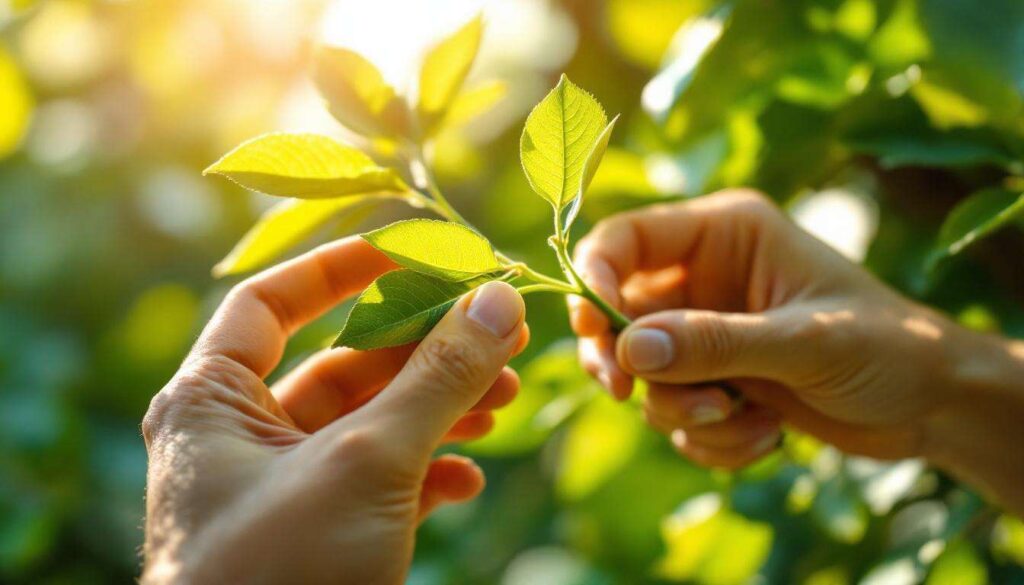
The success of your grafting project depends heavily on selecting high-quality scion material. Look for branches from a proven lemon tree that consistently produces abundant, flavorful fruit. The ideal scion wood should be from the previous season’s growth, approximately pencil-thick in diameter, and showing no signs of disease or pest damage. Dormant wood typically grafts more successfully than actively growing shoots because the plant’s energy is concentrated rather than dispersed.
Examine the branch carefully for these characteristics:
- Smooth, unblemished bark without cracks or discoloration
- Firm texture when gently squeezed
- Multiple healthy buds along the length
- No evidence of scale insects, aphids, or fungal infections
- Green, viable cambium layer visible when lightly scratched
Timing considerations for collection
The optimal time to collect scion wood varies by climate but generally falls during the tree’s dormant period in late winter or early spring. In warmer regions where citrus trees never fully go dormant, choose branches during the coolest months when growth has naturally slowed. This timing ensures the wood contains adequate stored energy reserves while minimizing stress on both the donor tree and the cutting.
| Climate Zone | Best Collection Time | Storage Duration |
|---|---|---|
| Cool temperate | January-February | Up to 6 weeks |
| Warm temperate | December-January | Up to 4 weeks |
| Subtropical | November-December | Up to 3 weeks |
Once collected, wrap the scion wood in slightly dampened paper towels and store it in a sealed plastic bag in the refrigerator until you’re ready to graft. This preserves the wood’s viability while preventing premature bud break.
Armed with the perfect branch, you’re now prepared to execute the actual grafting procedure.
The steps of grafting
Preparing your tools and materials
Successful grafting requires sharp, sterile tools to create clean cuts that heal quickly. A grafting knife or extremely sharp budding knife works best, though a clean razor blade can substitute in a pinch. Sterilize all cutting tools with rubbing alcohol or a 10% bleach solution before beginning, and re-sterilize between cuts to prevent disease transmission.
Gather these essential materials before starting:
- Grafting or budding knife
- Grafting tape or parafilm
- Grafting wax or sealant
- Rubbing alcohol for sterilization
- Labels and waterproof marker
- Clean cloth for wiping tools
Executing the whip and tongue graft
The whip and tongue graft represents one of the most reliable techniques for joining similar-sized scion and rootstock. Begin by making a long, slanting cut approximately one to two inches long on both the scion and rootstock. These cuts should be mirror images of each other to maximize cambium contact. Next, create a small tongue by making a shallow vertical cut in the center of each slanting surface, starting about one-third down from the tip.
Interlock the two pieces by sliding the tongues together until the cambium layers align on at least one side. The fit should be snug and secure without forcing. Immediately wrap the graft union with grafting tape, starting below the joint and spiraling upward with slight overlap. Apply grafting wax over the exposed surfaces to prevent moisture loss and pathogen entry.
Alternative grafting methods
While the whip and tongue graft works excellently for matching diameters, other situations call for different approaches. The cleft graft suits scenarios where the rootstock is significantly thicker than the scion. This method involves splitting the rootstock vertically and inserting one or two wedge-shaped scions into the cleft. Bark grafting works well during active growth when the bark slips easily from the wood, allowing you to insert scions beneath the bark layer.
With the graft complete, attention shifts to nurturing this delicate union through its critical early stages.
Post-graft maintenance and care
Creating optimal healing conditions
The first few weeks after grafting determine whether the union succeeds or fails. Keep the grafted plant in a protected environment with high humidity and moderate temperatures. Many gardeners create a mini-greenhouse effect by placing a clear plastic bag over the graft site, ensuring it doesn’t touch the union directly. This maintains moisture levels while the cambium layers fuse together.
Monitor these critical factors during the healing period:
- Temperature range between 65-75°F for optimal callus formation
- Humidity levels around 80-90% near the graft site
- Protection from direct sunlight that could overheat the union
- Absence of physical disturbance or movement
- Regular inspection for signs of disease or failure
Recognizing success and addressing failure
After approximately three to four weeks, signs of successful grafting become apparent. The scion buds will begin to swell and may produce new growth, while the graft union develops a callus tissue that bridges the joint. If the scion shrivels, turns brown, or shows no signs of activity after six weeks, the graft has likely failed and should be removed to allow the rootstock to recover.
| Success Indicators | Failure Indicators |
|---|---|
| Swelling buds | Shriveled, dry appearance |
| Green tissue under bark | Brown or black discoloration |
| Callus formation at joint | Separation at graft site |
| New leaf emergence | No bud activity after 6 weeks |
Once new growth reaches four to six inches, gradually acclimate the plant to normal conditions by slowly reducing humidity and increasing light exposure over several days. Remove any growth emerging from the rootstock below the graft union, as these shoots will drain energy from your desired lemon variety.
Successfully establishing your grafted tree opens the door to numerous long-term advantages.
The benefits of owning your lemon tree
Economic and practical advantages
A grafted lemon tree offers substantial economic benefits compared to purchasing mature specimens from nurseries. While a quality grafted tree can cost upward of fifty dollars, creating your own from a single branch costs only the price of rootstock and basic supplies. This economy of scale becomes even more apparent when propagating multiple trees or sharing grafts with fellow gardeners, effectively building an orchard for a fraction of commercial prices.
The practical benefits extend beyond initial savings:
- Fresh lemons available year-round in appropriate climates
- Control over pesticide and fertilizer applications
- Customization of tree size through rootstock selection
- Preservation of heirloom or rare lemon varieties
- Educational opportunities for family members
Environmental and health considerations
Growing your own citrus reduces the carbon footprint associated with commercial fruit production and transportation. Home-grown lemons require no packaging, refrigerated storage, or long-distance shipping, making them a genuinely sustainable choice. Additionally, you control exactly what goes onto your fruit, eliminating concerns about synthetic pesticides or post-harvest treatments commonly applied to store-bought citrus.
The nutritional value of tree-ripened lemons surpasses commercially harvested fruit picked prematurely for shipping. Lemons allowed to fully mature on the tree develop higher concentrations of vitamin C, flavonoids, and aromatic compounds that enhance both flavor and health benefits. The satisfaction of using fruit from your own tree adds an intangible quality that transforms ordinary recipes into personal achievements.
Grafting a lemon branch into a thriving tree represents more than a horticultural accomplishment. It connects you to centuries of agricultural tradition while providing tangible rewards in the form of fresh, flavorful fruit. The technique requires careful attention to detail, from selecting healthy scion wood to maintaining proper post-graft conditions, but the process becomes increasingly intuitive with practice. Whether you’re preserving a cherished family variety or simply seeking the satisfaction of growing your own citrus, grafting offers a proven pathway to success. The initial investment of time and effort yields dividends for years to come as your grafted tree matures, establishing itself as a productive member of your garden that continues to provide both fruit and fulfillment.