

Gardeners across social media platforms are buzzing about a centuries-old German technique that transforms ordinary raised beds into self-sustaining ecosystems. Hugelkultur, which translates to “mound culture,” combines wood debris, organic matter, and soil into raised garden beds that retain moisture, build fertility, and reduce the need for irrigation and fertilization. This sustainable approach to gardening has captured the attention of homesteaders, permaculture enthusiasts, and urban gardeners alike, offering a practical solution to common gardening challenges while promoting environmental stewardship.
Introduction to Hugelkultur: an Eco-Friendly Method
Origins and Philosophy
Hugelkultur originated in Eastern European forest gardens where farmers observed how fallen trees decomposed on the forest floor, creating nutrient-rich environments for new plant growth. This observation led to the deliberate construction of raised beds using woody material as the foundation. The method embodies permaculture principles by mimicking natural processes and creating closed-loop systems that require minimal external inputs.
Why Hugelkultur is Gaining Popularity
The resurgence of hugelkultur reflects growing concerns about water conservation and sustainable food production. Social media platforms showcase impressive results from gardeners who report reduced watering needs, extended growing seasons, and abundant harvests. The method appeals to both experienced gardeners seeking to improve soil quality and beginners attracted to its low-maintenance characteristics.
Understanding the basic framework of hugelkultur sets the stage for exploring how this technique differs from other layering methods in raised bed gardening.
The Basic Principles of Lasagna Gardening
Layering Organic Materials
While often confused with hugelkultur, lasagna gardening focuses on layering diverse organic materials without the woody core that defines true hugelkultur beds. Both methods share the principle of building soil through decomposition, but their construction differs significantly:
- Lasagna gardening alternates “green” nitrogen-rich materials with “brown” carbon-rich materials
- Layers typically include newspaper, cardboard, grass clippings, leaves, and compost
- The method creates gardens directly on existing lawn or soil without digging
- Decomposition occurs relatively quickly, usually within one growing season
Key Differences from Hugelkultur
The fundamental distinction lies in the core materials and longevity. Lasagna beds break down within months, requiring regular rebuilding, while hugelkultur beds contain large wood pieces that decompose over years or decades. Hugelkultur beds also create more dramatic elevation changes and offer superior water retention due to the sponge-like qualities of decomposing wood.
| Feature | Hugelkultur | Lasagna Gardening |
|---|---|---|
| Core Material | Logs and branches | Paper and cardboard |
| Lifespan | 5-20 years | 1-2 seasons |
| Water Retention | Excellent | Moderate |
| Height | 2-6 feet | 1-2 feet |
These structural differences directly influence the environmental advantages that make hugelkultur particularly valuable in challenging growing conditions.
Ecological Benefits of Hugelkultur
Water Conservation and Retention
The wood core acts as a reservoir, absorbing water during rainy periods and releasing it gradually to plant roots during dry spells. As the wood decomposes, it becomes increasingly spongy, creating air pockets that hold moisture while preventing waterlogging. Gardeners report reducing irrigation by 50-80 percent compared to traditional raised beds, making hugelkultur ideal for drought-prone regions.
Carbon Sequestration and Soil Building
Hugelkultur beds actively sequester carbon by burying wood that would otherwise decompose above ground, releasing carbon dioxide. The slow decomposition process transforms woody material into stable humus, permanently improving soil structure and fertility. This creates a carbon-negative gardening system that contributes to climate change mitigation.
Waste Reduction and Resource Efficiency
The method provides productive use for materials often considered waste:
- Fallen branches and storm-damaged trees
- Prunings from fruit trees and shrubs
- Logs unsuitable for firewood or construction
- Grass clippings and leaf litter
- Kitchen scraps and garden debris
By transforming these materials into growing space, hugelkultur reduces landfill waste while eliminating the need for commercial soil amendments and fertilizers.
With these environmental advantages in mind, the practical question becomes how to construct a hugelkultur bed that maximizes these benefits.
How to Build a Hugelkultur Raised Bed
Selecting and Preparing Materials
Choose hardwood logs and branches in various stages of decay for optimal results. Partially rotted wood begins releasing nutrients immediately, while fresh wood provides long-term structure. Avoid black walnut, cedar, and treated lumber, which contain compounds toxic to many plants. Gather nitrogen-rich materials like grass clippings, manure, and kitchen scraps to balance the carbon-heavy wood.
Construction Steps
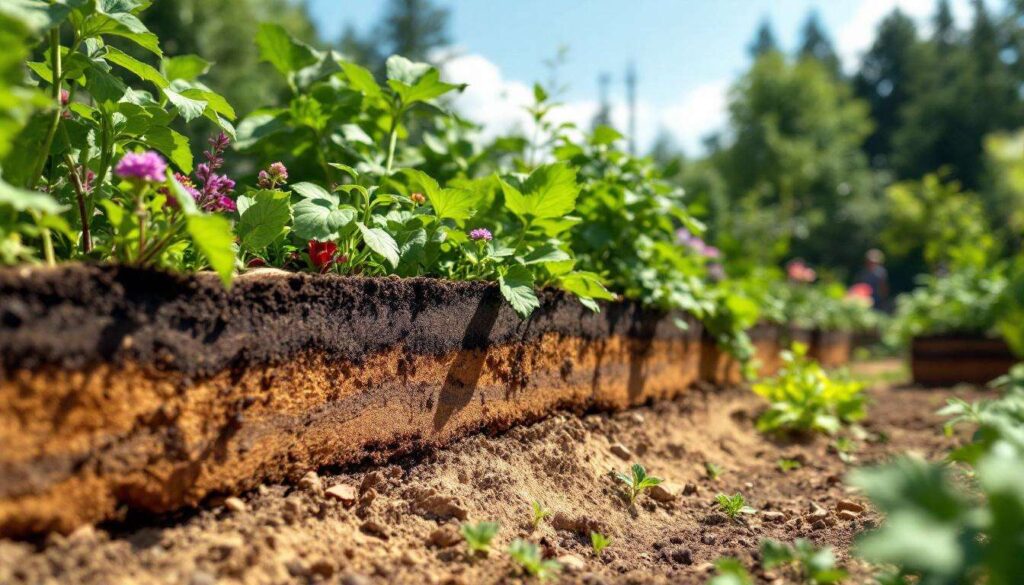
Building a hugelkultur bed follows a specific layering sequence:
- Excavate a shallow trench 6-12 inches deep if desired (optional but improves stability)
- Place largest logs parallel along the bed’s length as the foundation
- Fill gaps between logs with smaller branches and twigs
- Add a layer of nitrogen-rich materials to accelerate decomposition
- Cover with inverted sod, leaves, or straw
- Top with 4-6 inches of quality topsoil or compost
- Water thoroughly to initiate decomposition
Size and Location Considerations
Orient beds east-west to maximize sun exposure on south-facing slopes. Height ranges from 2-6 feet depending on available materials and physical capability. Wider bases (6-8 feet) provide stability, while narrower tops (3-4 feet) facilitate planting and harvesting. Consider starting with a smaller test bed before committing to larger installations.
Once constructed, specific strategies can enhance productivity and address common challenges in hugelkultur systems.
Tips for Maximizing Your Hugelkultur Garden Yield
First-Year Planting Strategies
New hugelkultur beds experience nitrogen tie-up as microorganisms consume available nitrogen while decomposing wood. Plant nitrogen-fixing legumes like beans and peas during the first season to counteract this effect. Heavy feeders like tomatoes and squash perform better in subsequent years once decomposition releases nutrients.
Optimizing Plant Placement
The mound’s varied topography creates multiple microclimates within a single bed:
- South-facing slopes receive maximum sunlight for heat-loving crops
- North-facing slopes stay cooler and moister for lettuce and greens
- The summit drains quickly, suiting herbs that prefer drier conditions
- Lower sections retain more moisture for thirsty plants
Seasonal Maintenance Practices
Monitor moisture levels during the first year as wood absorbs water. Add mulch layers annually to suppress weeds and retain moisture. Top-dress with compost each spring to replace nutrients removed by harvests. As the bed settles over time, add additional soil or compost to maintain planting depth.
These ongoing care practices ensure the bed continues delivering benefits year after year with minimal intervention.
Closing the Loop: maintaining and Improving Your Hugelkultur Garden
Long-Term Performance
Hugelkultur beds reach peak productivity in years 3-5 as wood decomposition accelerates and nutrient release increases. Beds can remain productive for two decades or more, though gradual settling reduces height over time. Some gardeners refresh aging beds by adding new woody material to the top or sides.
Troubleshooting Common Issues
Address problems promptly to maintain bed health. If plants show nitrogen deficiency (yellowing leaves), apply nitrogen-rich amendments like blood meal or fish emulsion. Excessive settling may indicate inadequate initial soil coverage; add compost to restore planting depth. Persistent dry spots suggest insufficient wood saturation; water deeply to recharge the woody core.
The self-sustaining nature of hugelkultur creates a gardening system that improves with age, requiring less intervention while producing more abundant harvests. This combination of ecological benefits and practical advantages explains why the method continues gaining followers across diverse growing regions and gardening philosophies.
Hugelkultur represents more than a gardening technique; it embodies a shift toward regenerative practices that work with natural processes rather than against them. By transforming waste wood into productive growing space, gardeners create ecosystems that conserve water, build soil, and sequester carbon while producing abundant food. The method’s viral popularity on social media reflects growing recognition that sustainable solutions often draw from traditional wisdom adapted to contemporary needs. Whether you’re managing a small urban plot or a sprawling homestead, hugelkultur offers a proven pathway to more resilient, productive gardens that benefit both growers and the environment.