
Patience may be a virtue, but when it comes to cultivating your own fruit-bearing paradise, waiting a decade for your first harvest can test even the most dedicated gardener’s resolve. Fast-growing fruit trees offer an attractive alternative to traditional orchard development, delivering delicious produce in a fraction of the time. These productive varieties enable homeowners to transform bare yards into thriving food sources without the prolonged commitment typically associated with fruit cultivation. Whether you’re a novice gardener eager for quick results or an experienced horticulturist looking to maximize productivity, selecting the right fast-maturing species can dramatically accelerate your journey from planting to picking.
The benefits of fast-growing fruit trees
Rapid return on investment
Fast-growing fruit trees provide tangible rewards within just a few seasons, making them particularly appealing for gardeners who want to see results from their efforts quickly. Unlike traditional varieties that may require seven to ten years before producing meaningful harvests, these accelerated growers can yield fruit in as little as two to three years. This rapid productivity translates into immediate cost savings on grocery bills while providing fresher, more flavorful produce than store-bought alternatives.
- Earlier harvests reduce the waiting period significantly
- Quicker establishment allows for garden planning adjustments
- Faster results maintain gardening enthusiasm and motivation
- Reduced long-term maintenance costs compared to slower varieties
Enhanced garden flexibility
These vigorous growers offer remarkable adaptability for evolving landscape designs. If you decide to relocate or redesign your outdoor space, fast-maturing trees allow you to enjoy substantial harvests before making changes. Their accelerated growth cycles also enable gardeners to experiment with different varieties without committing to decade-long trials, providing valuable learning opportunities through practical experience rather than prolonged observation.
Improved pollination and biodiversity
Establishing a productive orchard quickly creates an ecosystem that benefits both your garden and local wildlife. Early-blooming fruit trees attract essential pollinators including bees, butterflies, and beneficial insects that support overall garden health. This accelerated establishment of a diverse plant community contributes to improved soil quality, natural pest management, and enhanced environmental sustainability.
Understanding these advantages naturally leads to the question of selecting varieties that will thrive specifically in your growing conditions.
How to choose the right fruit tree for your garden
Assessing your climate zone
The foundation of successful fruit tree cultivation begins with understanding your USDA hardiness zone. This classification system determines which species will survive winter temperatures in your region. Fast-growing varieties span multiple climate zones, but selecting trees specifically adapted to your area ensures robust growth and reliable production. Consider both minimum winter temperatures and summer heat patterns, as some species require specific chill hours to set fruit properly.
| Climate Factor | Consideration | Impact on Selection |
|---|---|---|
| Hardiness zone | Winter minimum temperatures | Determines species survival |
| Chill hours | Hours below 45°F in winter | Affects fruit production |
| Growing season length | Frost-free days | Influences variety maturation |
| Summer heat | Maximum temperatures | Impacts stress tolerance |
Evaluating available space
Spatial constraints significantly influence which varieties will work best in your garden. Fast-growing trees still require adequate room for root systems and canopy development. Measure your planting area carefully and consider mature tree dimensions rather than initial nursery size. Dwarf and semi-dwarf varieties offer excellent solutions for smaller yards while still providing impressive yields, and many can be trained against walls or fences using espalier techniques to maximize limited space.
Matching soil conditions
Soil composition directly affects tree health and productivity. Most fruit trees prefer well-draining soil with moderate fertility, but specific requirements vary by species. Conduct a soil test to determine pH levels, nutrient content, and drainage characteristics before selecting varieties. Some fast-growing options tolerate clay soils better than others, while certain species thrive in sandy conditions that would challenge more finicky varieties.
- Test soil pH and adjust if necessary before planting
- Ensure adequate drainage to prevent root rot
- Consider existing soil texture and amendment requirements
- Evaluate sunlight exposure throughout the day
With these selection criteria established, exploring specific varieties that deliver rapid results becomes the logical next step.
Varieties of fruit trees that grow in less than 5 years
Stone fruits for quick harvests
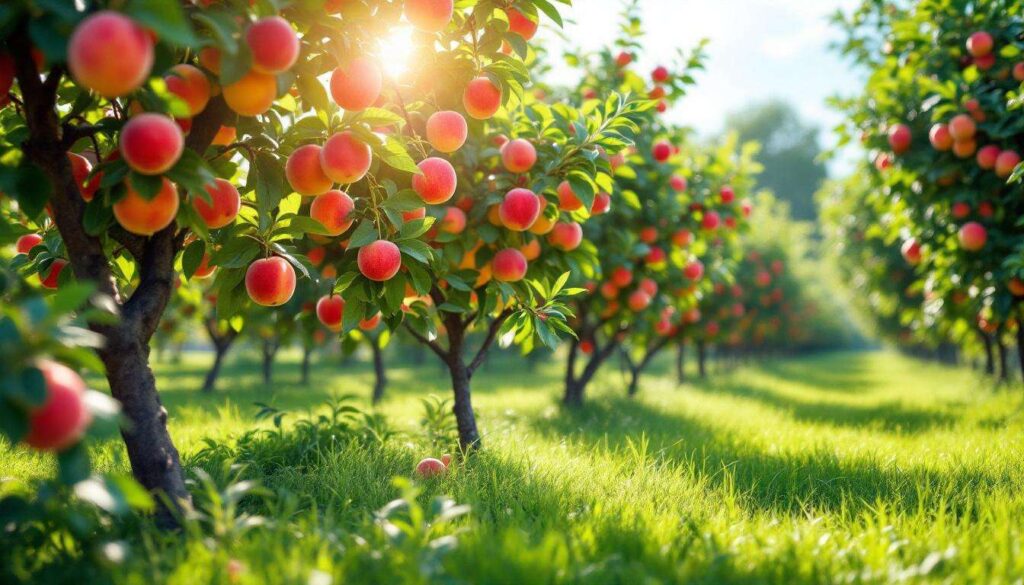
Peach trees rank among the fastest producers, often bearing fruit within two to three years of planting. These vigorous growers adapt to various climates and offer numerous cultivars suited to different taste preferences and regional conditions. Nectarines, closely related to peaches, provide similar rapid production with smooth-skinned fruit. Apricot trees also mature quickly, typically producing within three to four years, and their compact growth habit makes them suitable for smaller gardens.
Pome fruits with accelerated timelines
While apples traditionally require longer establishment periods, dwarf apple varieties can produce fruit within three to four years. These compact trees offer the advantage of easier harvesting and maintenance while delivering full-sized, flavorful apples. Pear trees, particularly Asian pear varieties, also demonstrate impressive growth rates, with some cultivars yielding fruit in their third or fourth season. Their disease resistance and adaptability make them excellent choices for beginning orchardists.
Exceptional performers
Fig trees stand out as remarkably fast producers, often bearing fruit in their second year, especially when purchased as larger nursery stock. These Mediterranean natives adapt surprisingly well to various climates and can even be grown in containers in colder regions. Mulberry trees represent another exceptional choice, with some varieties producing abundant harvests within two to three years while also providing valuable shade and wildlife habitat.
| Fruit Type | Years to First Harvest | Climate Adaptability |
|---|---|---|
| Peach | 2-3 years | Zones 5-9 |
| Fig | 1-2 years | Zones 7-11 |
| Dwarf Apple | 3-4 years | Zones 3-8 |
| Apricot | 3-4 years | Zones 5-8 |
| Mulberry | 2-3 years | Zones 5-9 |
Selecting promising varieties represents just the beginning, as proper installation techniques significantly influence subsequent growth rates and productivity.
Planting tips for optimal growth
Timing your planting correctly
Bare-root trees should be planted during dormancy, typically late winter or early spring before buds break. This timing allows roots to establish before the energy demands of leaf and fruit production begin. Container-grown specimens offer more flexibility and can be planted throughout the growing season, though spring and fall generally provide ideal conditions. Avoid planting during extreme heat or when soil is waterlogged, as these conditions stress young trees and compromise establishment.
Preparing the planting site
Proper site preparation dramatically impacts long-term tree health and productivity. Dig a hole twice as wide as the root ball but no deeper, as planting too deeply encourages root rot and stunted growth. Loosen soil around the hole perimeter to facilitate root penetration into surrounding ground. Avoid adding excessive amendments to the backfill, as this creates an artificial environment that discourages roots from spreading beyond the planting hole.
- Remove grass and weeds within a three-foot radius
- Ensure the graft union remains above soil level
- Water thoroughly immediately after planting
- Apply mulch while keeping it away from the trunk
- Stake only if necessary for wind protection
Initial watering and establishment
Consistent moisture during the first growing season proves critical for root development. Newly planted trees require deep watering once or twice weekly, depending on weather conditions and soil type. Focus water application around the root zone rather than against the trunk. Deep, infrequent watering encourages roots to grow downward, creating a more drought-resistant tree compared to shallow, frequent irrigation that promotes surface roots vulnerable to heat stress.
Once established through proper planting techniques, ongoing maintenance ensures trees reach their productive potential quickly.
Maintenance and care for fast-growing fruit trees
Pruning for structure and productivity
Strategic pruning during the first few years establishes strong branch architecture that supports heavy fruit loads while maintaining manageable tree size. Remove crossing branches, water sprouts, and diseased wood during dormancy. Fast-growing varieties particularly benefit from regular pruning to direct energy toward fruit production rather than excessive vegetative growth. Summer pruning can help control vigor in especially enthusiastic growers while improving light penetration to developing fruit.
Fertilization strategies
Fast-growing trees have higher nutritional demands than slower varieties. Apply balanced fertilizer in early spring as growth begins, following soil test recommendations to avoid over-fertilization that promotes excessive leafy growth at the expense of fruit production. Organic options like compost, aged manure, and fish emulsion provide slow-release nutrients while improving soil structure. Monitor foliage color and growth patterns to adjust feeding schedules, as nutrient deficiencies manifest through yellowing leaves and reduced vigor.
| Maintenance Task | Frequency | Primary Benefit |
|---|---|---|
| Pruning | Annually in dormancy | Structure and productivity |
| Fertilizing | Spring and mid-summer | Vigorous growth and fruiting |
| Watering | Weekly during dry periods | Stress prevention |
| Pest monitoring | Weekly during growing season | Early problem detection |
Managing pests and diseases
Regular monitoring enables early detection of problems before they compromise tree health or fruit quality. Integrated pest management combines cultural practices, biological controls, and targeted treatments when necessary. Remove fallen fruit and leaves that harbor disease organisms. Encourage beneficial insects by maintaining diverse plantings and avoiding broad-spectrum pesticides. Many fast-growing varieties demonstrate good disease resistance, but proper spacing for air circulation and avoiding overhead watering help prevent fungal issues.
These careful maintenance practices culminate in the rewarding experience of gathering fresh fruit from your own garden.
Harvesting and enjoying your orchard in no time
Recognizing ripeness indicators
Each fruit type displays unique signs indicating optimal harvest timing. Peaches and nectarines develop full color and yield slightly to gentle pressure when ripe. Apples should separate easily from the branch with a slight upward twist. Figs soften noticeably and may develop small cracks near the stem. Learning these variety-specific indicators ensures you pick fruit at peak flavor and nutrition rather than gathering underripe specimens that never develop proper sweetness.
Proper harvesting techniques
Gentle handling during harvest prevents bruising that shortens storage life and diminishes quality. Use both hands when picking larger fruits, supporting the fruit while detaching it from the branch. Harvest during cooler morning hours when possible, as fruit picked in afternoon heat deteriorates more rapidly. Place harvested fruit carefully in containers, avoiding drops or impacts that cause internal damage not immediately visible.
- Pick fruit at appropriate ripeness for intended use
- Handle gently to prevent bruising and damage
- Process or store promptly after harvesting
- Remove damaged fruit from storage to prevent spoilage spread
Maximizing your harvest
Fast-growing trees can produce substantial quantities even in their early productive years. Preservation methods including freezing, canning, drying, and jam-making allow you to enjoy your harvest throughout the year. Many fruits freeze exceptionally well with minimal preparation, while others shine in preserves that capture summer flavors for winter enjoyment. Consider sharing abundant harvests with neighbors, donating to food banks, or trading with other gardeners to diversify your homegrown food supply.
Fast-growing fruit trees offer an accessible pathway to homegrown abundance without the decade-long wait traditionally associated with orchard establishment. By selecting varieties suited to your climate and space, implementing proper planting techniques, and maintaining consistent care, you can enjoy fresh fruit from your own garden within just a few seasons. These productive trees provide not only delicious harvests but also enhanced property value, environmental benefits, and the deep satisfaction of cultivating your own food. Whether you choose stone fruits, pome fruits, or exceptional performers like figs and mulberries, your investment in fast-maturing varieties delivers rewards that extend far beyond the dinner table.