


Transforming your outdoor space doesn’t always require exotic plants or complex landscaping designs. Sometimes, the most overlooked flowers hold the secret to creating a vibrant, low-maintenance lawn that stands out in any neighborhood. Daisies, often dismissed as simple wildflowers, possess remarkable qualities that can revolutionize the way your garden looks and functions. These cheerful blooms offer far more than their innocent appearance suggests, combining aesthetic appeal with practical benefits that many homeowners have yet to discover. The expert insight that gardening professionals have been sharing reveals how these unassuming flowers can create a stunning visual impact while supporting local ecosystems and reducing maintenance demands.
Understanding the underestimated power of daisies
The resilience factor
Daisies demonstrate an exceptional ability to thrive in conditions where other ornamental plants struggle. Their hardy nature stems from deep root systems that access moisture and nutrients beyond the reach of shallow-rooted grasses. This natural resilience makes them ideal for areas with inconsistent watering or poor soil quality. Unlike delicate flowering plants that demand constant attention, daisies establish themselves quickly and maintain their presence with minimal intervention.
Natural ground coverage capabilities
The spreading habit of daisy varieties creates a living carpet effect that naturally suppresses weeds while filling bare patches in lawns. Their growth pattern involves both vertical flowering stems and horizontal runners that colonize open spaces efficiently. This characteristic addresses one of the most common lawn problems: unsightly gaps that typically require reseeding or sod replacement.
| Plant Type | Coverage Speed | Maintenance Level |
|---|---|---|
| Traditional Grass | Moderate | High |
| Daisy Varieties | Fast | Low |
| Clover Mix | Moderate | Medium |
These characteristics position daisies as a practical solution for homeowners seeking beautiful lawns without the traditional labor intensity. The question then becomes why more gardens don’t incorporate these versatile plants as a deliberate design choice.
Why to integrate daisies into your garden
Reducing chemical dependency
Incorporating daisies into lawn areas significantly decreases the need for synthetic fertilizers and pesticides. Their natural vigor means they compete effectively with unwanted plants without chemical assistance. This shift toward organic lawn management appeals to environmentally conscious homeowners while reducing ongoing maintenance costs. The financial savings accumulate over seasons, as fewer applications of expensive lawn treatments become necessary.
Year-round visual interest
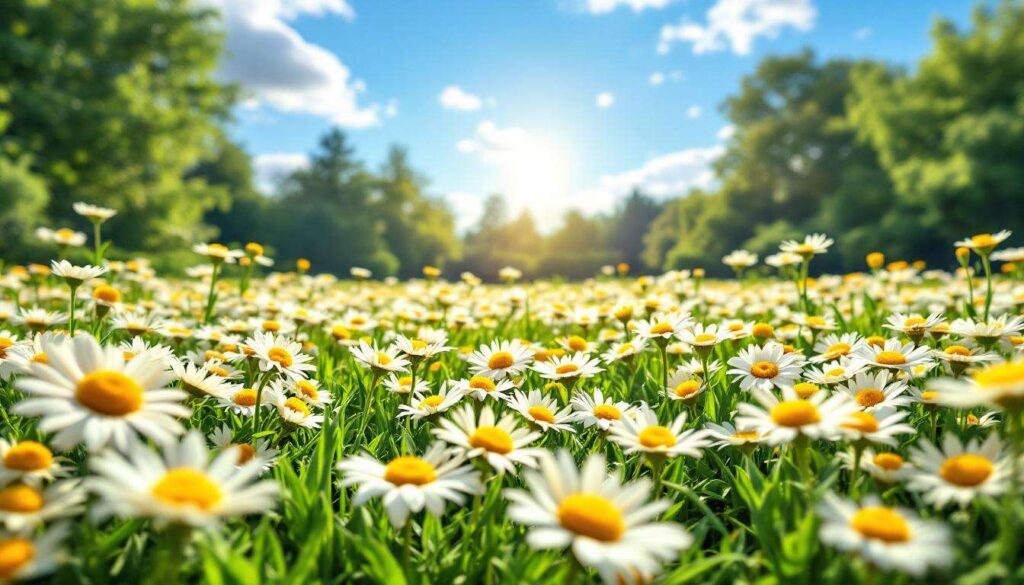
While traditional lawns offer monotonous green expanses, daisy-integrated landscapes provide seasonal variation and texture. The blooming cycles create waves of white and yellow that contrast beautifully with grass blades. Even during non-flowering periods, the distinctive foliage adds visual depth that pure grass lawns cannot match. This dynamic quality transforms ordinary yards into spaces with genuine character.
Practical advantages for busy homeowners
- Reduced mowing frequency due to lower overall growth rates
- Increased drought tolerance requiring less frequent irrigation
- Natural pest resistance minimizing disease problems
- Self-seeding properties that fill in damaged areas automatically
- Tolerance for foot traffic in mixed lawn applications
These practical benefits make daisies particularly valuable for families with limited time for yard work or those seeking sustainable landscaping alternatives. The environmental advantages extend these benefits even further into the realm of ecological responsibility.
The ecological benefits of daisies
Supporting pollinator populations
Daisy flowers provide essential nectar and pollen sources for bees, butterflies, and other beneficial insects. In an era of declining pollinator numbers, every garden that offers these resources contributes to broader conservation efforts. The simple flower structure makes pollen easily accessible to various species, from honeybees to native solitary bees. This ecological service transforms your lawn into a functional habitat rather than a biological desert.
Improving soil health naturally
The root systems of daisies contribute to soil structure improvement through several mechanisms. As roots grow and decompose, they create channels that enhance drainage and aeration. This biological activity increases the soil’s capacity to support diverse plant life while improving water retention during dry periods. The result is healthier ground that requires fewer amendments and supports more robust plant communities.
Biodiversity enhancement
A lawn incorporating daisies attracts a wider range of wildlife compared to monoculture grass. Birds visit to feed on insects attracted to the flowers, while small mammals find improved foraging opportunities. This increased biodiversity creates more resilient ecosystems that naturally balance pest populations and reduce disease pressure. The cascading effects benefit the entire garden environment beyond the immediate lawn area.
Understanding these ecological advantages makes the practical implementation of daisies in your landscape the logical next consideration.
How to plant and care for daisies
Selecting appropriate varieties
Choosing the right daisy type depends on your climate zone and lawn usage patterns. English daisies work well in cooler regions and tolerate moderate foot traffic, while ox-eye daisies suit larger naturalized areas. Shasta daisies offer dramatic blooms but require more space. Research varieties native to your region for optimal performance and ecological compatibility.
Planting methods for lawn integration
Two primary approaches exist for introducing daisies into existing lawns:
- Direct seeding: broadcast seeds over prepared soil in early spring or fall
- Plug planting: insert small plants at intervals throughout the lawn area
- Overseeding: mix daisy seeds with grass seed during regular lawn renovation
- Patch replacement: remove struggling grass sections and establish daisy colonies
The direct seeding method proves most economical for large areas, while plug planting offers faster establishment and more controlled placement. Regardless of method, initial watering during the establishment phase remains critical for success.
Maintenance requirements
Once established, daisies demand minimal ongoing care. Mowing height should be adjusted to at least three inches to allow flowers to develop properly. Some homeowners designate mowing-free zones where daisies can bloom fully, creating intentional wildflower patches within the larger lawn. Occasional division of clumps every few years prevents overcrowding and maintains vigor.
With proper establishment techniques in place, attention turns to maximizing the flowering potential of your daisy population.
Tips for maximum blooming
Timing considerations
Adjusting your mowing schedule around bloom cycles dramatically increases flower production. Allow daisies to complete their flowering and initial seed set before cutting, typically waiting until blooms begin to fade. This practice ensures plants have adequate energy reserves while allowing some self-seeding for continued population growth.
Soil amendments that enhance flowering
While daisies tolerate poor conditions, strategic improvements boost performance:
- Light compost applications in early spring provide gentle nutrient boosts
- Avoiding excessive nitrogen which promotes foliage over flowers
- Ensuring adequate phosphorus for root and bloom development
- Maintaining slightly acidic to neutral pH levels
Deadheading strategies
Selective removal of spent flowers encourages extended blooming periods by redirecting plant energy toward new bud production. This technique works best in smaller garden areas where individual attention is practical. In larger naturalized lawns, allowing some flowers to go to seed maintains population levels while still enjoying prolonged color from continuously developing blooms.
These cultivation techniques directly influence how daisies transform the overall appearance of your outdoor space.
Aesthetic impact of daisies on your lawn
Creating visual contrast
The white and yellow blooms against green backgrounds create striking visual interest that elevates ordinary lawns into memorable landscapes. This natural color combination offers a cottage garden aesthetic without requiring dedicated flower beds. The scattered distribution of flowers creates an organic, unforced appearance that formal plantings cannot replicate.
Seasonal transformation effects
Daisy-enhanced lawns undergo dramatic seasonal changes that keep the landscape visually engaging throughout the year. Spring brings the initial flush of blooms, summer offers sustained color, and fall provides seed heads with their own architectural interest. This cyclical variation creates a living calendar that connects residents more closely with natural rhythms.
Complementing existing landscape features
Daisies integrate seamlessly with various garden styles, from formal to naturalistic. They soften hardscape edges, provide transition zones between cultivated beds and open lawn areas, and create visual continuity across different garden sections. This versatile aesthetic quality makes them valuable in virtually any landscape design context.
The transformation that daisies bring extends beyond mere appearance to fundamentally change how homeowners interact with and perceive their outdoor spaces. These simple flowers demonstrate that sophisticated landscaping doesn’t require exotic species or intensive maintenance. By working with rather than against natural plant behaviors, gardens become more sustainable, ecologically valuable, and visually captivating. The expert tip of incorporating daisies represents a shift toward smarter, more rewarding approaches to lawn care that benefit both homeowners and the environment. Whether starting with a small patch or gradually transitioning larger areas, the daisy advantage becomes apparent quickly, proving that sometimes the best solutions have been hiding in plain sight all along.