

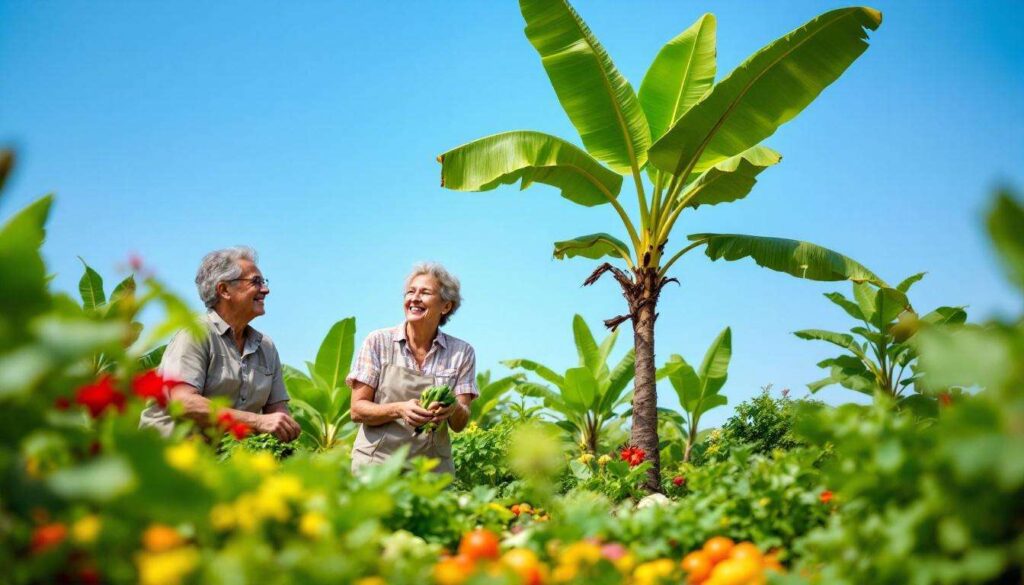
Wandering through old family gardens reveals curious planting choices that modern gardeners might dismiss as eccentric. Among the tomatoes, carrots, and lettuce, our grandparents often positioned a banana tree right in the center of their vegetable patches. This wasn’t mere whimsy or decorative fancy. These seasoned cultivators understood principles of companion planting and ecosystem balance that science is only now beginning to validate. Their banana trees served multiple practical purposes, from soil enrichment to pest management, creating a thriving micro-environment that benefited every plant in proximity.
The legacy of traditional gardening
Wisdom passed through generations
Traditional gardening practices emerged from centuries of observation and experimentation. Our ancestors lacked chemical fertilizers and synthetic pesticides, forcing them to develop natural solutions to agricultural challenges. They recognized patterns in plant behavior, noting which species thrived together and which combinations produced superior harvests. The banana tree placement wasn’t random but represented accumulated knowledge about:
- Natural nutrient cycling within garden ecosystems
- Moisture retention strategies for surrounding crops
- Microclimate creation for temperature-sensitive vegetables
- Biological pest control through strategic plant positioning
The disappearance of old techniques
Industrial agriculture and commercial gardening products gradually displaced these time-tested methods. The post-war agricultural revolution promised convenience through chemical inputs, leading many gardeners to abandon companion planting strategies. Banana trees disappeared from vegetable patches as standardized monoculture approaches dominated. However, environmental concerns and declining soil health have sparked renewed interest in traditional ecological practices that sustained productive gardens for generations without synthetic interventions.
Understanding why these methods worked requires examining the specific benefits banana trees provided to vegetable gardens.
The hidden virtues of the banana tree
A living mulch factory
Banana trees produce enormous leaves that continuously shed and decompose. Each plant generates substantial organic matter throughout the growing season, creating natural mulch that:
- Suppresses weed growth around vegetable crops
- Retains soil moisture during dry periods
- Regulates soil temperature fluctuations
- Decomposes into nutrient-rich humus
This self-renewing mulch system eliminated the need to transport materials from elsewhere. The broad leaves broke down rapidly, releasing potassium, nitrogen, and trace minerals directly where vegetables could access them.
Nutrient accumulation and distribution
Banana trees function as dynamic accumulators, drawing nutrients from deep soil layers that shallow-rooted vegetables cannot reach. Their extensive root systems mine minerals from subsoil zones, concentrating them in leaves and stems. When this plant material decomposes, it redistributes these nutrients to the topsoil where companion vegetables grow.
| Nutrient | Concentration in banana leaves | Benefit to vegetables |
|---|---|---|
| Potassium | High | Enhanced fruit development and disease resistance |
| Nitrogen | Moderate | Vigorous leaf growth and chlorophyll production |
| Phosphorus | Moderate | Strong root systems and flowering |
| Calcium | Present | Cell wall strength and nutrient uptake |
Water management capabilities
The massive leaf surface of banana trees creates a unique hydrological effect. Morning dew condenses on the broad leaves, dripping onto surrounding soil and providing supplemental moisture to nearby plants. The canopy also reduces direct sun exposure, minimizing evaporation from the soil surface. During heavy rains, the leaves channel water toward the root zone rather than allowing runoff, improving water infiltration throughout the garden bed.
These moisture benefits proved particularly valuable, but the banana tree’s contributions extended beyond water and nutrients to the living community within the garden.
An ally for the garden’s biodiversity
Habitat creation for beneficial insects
The structural complexity of banana trees provides shelter for predatory insects that control garden pests. Ladybugs, lacewings, and parasitic wasps find refuge in the leaf axils and pseudostem layers. These beneficial species establish permanent populations when given appropriate habitat, offering continuous biological pest control without chemical interventions. The flowers, when they appear, attract pollinators that improve fruit set on nearby tomatoes, peppers, and squash.
Breaking pest and disease cycles
Monoculture vegetable rows create ideal conditions for pest population explosions. Introducing a non-vegetable species like the banana tree disrupts these patterns by:
- Physically separating susceptible plants from one another
- Confusing pest insects that locate hosts by visual or chemical cues
- Providing alternative surfaces where pests become exposed to predators
- Altering air circulation patterns that affect fungal disease spread
Microbial diversity in the rhizosphere
The banana tree’s root zone hosts distinct microbial communities that differ from those around typical vegetables. This diversity strengthens overall soil health by introducing beneficial bacteria and fungi that suppress pathogens. Mycorrhizal networks extending from banana roots can connect with vegetable root systems, facilitating nutrient exchange and improving drought tolerance across multiple plant species.
While biodiversity benefits manifested above and below ground, the most dramatic improvements occurred in the soil itself and the harvests it produced.
The impact on soil and harvests
Soil structure enhancement
Banana tree roots penetrate deeply while also spreading laterally, creating channels throughout the soil profile. These root passages improve aeration and drainage, preventing the compaction that limits vegetable productivity. As older roots die and decompose, they leave behind organic matter and pore spaces that enhance water infiltration and root penetration for subsequent crops.
Yield improvements in companion vegetables
Gardeners who maintained banana trees in their vegetable patches consistently reported superior harvests compared to conventional layouts. The combined effects of improved nutrients, moisture retention, and pest reduction created optimal growing conditions. Vegetables near banana trees showed:
| Vegetable type | Observed improvement | Primary benefit |
|---|---|---|
| Tomatoes | Increased fruit size and number | Potassium availability |
| Leafy greens | Extended harvest period | Shade and moisture retention |
| Root vegetables | Better soil penetration | Improved soil structure |
| Cucurbits | Enhanced pollination | Beneficial insect habitat |
Long-term soil fertility building
Unlike annual vegetables that extract nutrients, banana trees function as perennial soil builders. Their continuous biomass production adds organic matter year after year, gradually increasing humus content and cation exchange capacity. This long-term fertility improvement meant grandparents could maintain productive gardens on the same land indefinitely without external fertilizer inputs or crop rotation to distant fields.
These practical benefits align perfectly with contemporary ecological gardening philosophies that emphasize working with natural systems.
Banana trees and permaculture: a natural symbiosis
Stacking functions in limited space
Permaculture principles emphasize obtaining multiple yields from single elements. The banana tree exemplifies this approach by simultaneously providing mulch, nutrients, pest control, microclimate modification, and potential fruit production. This functional stacking maximizes productivity per square foot, a critical consideration for small-scale gardeners working with limited land.
Creating productive guilds
Modern permaculture designers recognize banana trees as excellent guild anchors. Surrounding the central banana with complementary species creates self-maintaining plant communities that require minimal intervention. Effective banana-centered vegetable guilds include:
- Shade-tolerant greens beneath the canopy
- Nitrogen-fixing legumes around the perimeter
- Aromatic herbs that deter specific pests
- Ground covers that suppress weeds and retain moisture
Closed-loop nutrient cycling
The banana tree enables nutrient recycling within the garden system rather than requiring external inputs. Minerals absorbed from deep soil layers return to the surface through leaf drop. Vegetable trimmings and harvest residues can be placed around the banana base, where they decompose and feed the accumulator plant. This creates a self-sustaining cycle that builds fertility while producing food, embodying permaculture’s emphasis on regenerative systems.
Recognizing these ecological principles inspires contemporary gardeners to reconsider practices their grandparents understood intuitively.
Reviving traditions in our gardens
Adapting old wisdom to modern contexts
Implementing banana trees in contemporary vegetable gardens requires thoughtful adaptation to current conditions. Climate considerations, available space, and specific growing goals influence optimal placement and companion plant selection. Urban gardeners might use dwarf banana varieties in container systems, while suburban plots can accommodate full-sized specimens as focal points within raised bed arrangements.
Selecting appropriate varieties
Not all banana cultivars suit vegetable garden integration. The most effective varieties for companion planting share these characteristics:
- Moderate height that provides shade without excessive competition
- Prolific leaf production for continuous mulch generation
- Cold tolerance appropriate to the regional climate
- Disease resistance to minimize maintenance requirements
Implementation strategies for success
Successfully incorporating banana trees requires attention to spacing and positioning. Placing the tree where its shade benefits heat-sensitive crops while allowing sun-loving plants adequate light maximizes the arrangement’s productivity. Starting with a single specimen allows observation of its effects before expanding the system. Regular removal of dead leaves and strategic pruning maintains optimal conditions for surrounding vegetables while preventing excessive shading as the banana matures.
Our grandparents’ practice of planting banana trees among vegetables reflected sophisticated understanding of ecological relationships that sustained productive gardens without chemical inputs. The banana tree’s multiple functions as nutrient accumulator, mulch producer, pest deterrent, and biodiversity supporter created thriving garden ecosystems. Modern recognition of these benefits through permaculture principles validates traditional wisdom while offering contemporary gardeners proven strategies for building soil health and increasing yields. Reviving this practice connects us with ancestral knowledge while addressing current concerns about sustainable food production and environmental stewardship.