

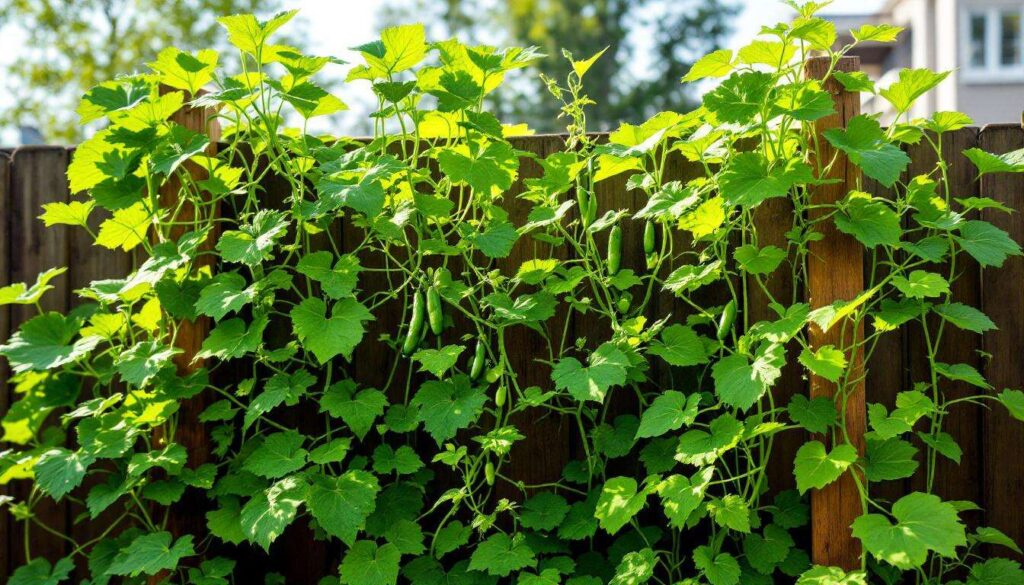
Transform your garden into a productive vertical oasis by training cucumber, green bean, and pea vines to climb a simple DIY trellis. This space-saving technique maximizes yields while minimizing ground clutter, making it perfect for urban gardeners and anyone looking to optimize their growing area. Building a sturdy support frame requires minimal materials and basic skills, yet delivers impressive results throughout the growing season.
Introduction to vertical gardening: a winning technique
Space optimization and improved yields
Vertical gardening represents a revolutionary approach to cultivating plants in limited spaces. By encouraging vines to grow upward rather than sprawling across the ground, gardeners can increase their productive area by up to 300 percent compared to traditional horizontal planting methods. This technique proves particularly valuable in urban settings where square footage comes at a premium.
The vertical method also improves air circulation around plants, reducing the risk of fungal diseases that thrive in damp, crowded conditions. Fruits and vegetables grown on trellises remain cleaner and easier to harvest, as they hang suspended rather than resting on soil.
Cost-effective and accessible solution
Building a DIY trellis requires minimal investment compared to purchasing pre-made structures. Most gardeners can construct a functional support frame using:
- Recycled materials from previous projects
- Inexpensive lumber from hardware stores
- Repurposed items like old ladders or wire fencing
- Natural materials such as bamboo poles or branches
This accessibility makes vertical gardening an ideal entry point for beginning gardeners who want to experiment with climbing varieties without significant financial commitment.
Understanding these foundational benefits sets the stage for selecting the right climbing plants that will thrive on your vertical structure.
Selecting climbing plants: cucumbers, green beans, and peas
Cucumber varieties for vertical growth
Cucumbers naturally produce tendrils that grasp onto supports, making them excellent candidates for trellis cultivation. Vining varieties such as Marketmore, Straight Eight, and Lemon cucumbers perform exceptionally well on vertical structures. These plants can reach heights of six to eight feet, producing abundant harvests throughout the summer months.
Growing cucumbers vertically results in straighter fruits with more uniform shapes, as gravity helps them develop without the curves that occur when they rest on the ground.
Green bean climbing champions
Pole beans, as opposed to bush varieties, are specifically bred for vertical growth. Popular options include Kentucky Wonder, Blue Lake Pole, and Scarlet Runner beans. These vigorous climbers can reach heights of eight to ten feet and produce continuously when harvested regularly.
| Variety | Days to Maturity | Height | Special Features |
|---|---|---|---|
| Kentucky Wonder | 65 days | 8 feet | Heirloom, heavy producer |
| Blue Lake Pole | 60 days | 7 feet | Stringless, tender pods |
| Scarlet Runner | 70 days | 10 feet | Ornamental red flowers |
Pea varieties for early season production
Peas thrive in cooler temperatures, making them perfect for early spring and fall planting. Climbing varieties such as Sugar Snap, Tall Telephone, and Oregon Sugar Pod II require support structures to reach their full potential. These plants typically grow four to six feet tall and produce sweet, crisp pods that can be eaten whole or shelled.
Once you have selected your climbing varieties, gathering the appropriate materials becomes the next essential step.
Materials needed to build a DIY trellis
Basic structural components
A functional trellis requires sturdy vertical and horizontal supports that can withstand wind, rain, and the weight of mature plants laden with produce. Essential materials include:
- Wooden posts or stakes: 2×2 or 2×4 lumber, eight feet long
- Horizontal crossbars: 1×2 furring strips or bamboo poles
- Fasteners: galvanized screws, nails, or zip ties
- Climbing surface: wire mesh, netting, or twine
Tools for construction
Most gardeners already own the basic tools needed for trellis construction. A complete toolkit includes:
- Power drill with bits
- Saw for cutting lumber to size
- Level to ensure vertical alignment
- Measuring tape and pencil
- Post hole digger or shovel
- Wire cutters for mesh installation
Optional enhancements for durability
While not strictly necessary, certain additions can extend the lifespan of your trellis. Consider applying weather-resistant wood stain or paint to protect lumber from moisture and decay. Concrete footings provide additional stability for permanent installations, though simple soil anchoring suffices for seasonal structures.
With materials assembled and tools at hand, the construction process becomes straightforward and manageable.
Steps to create a strong and durable support
Planning and measuring the frame
Begin by determining the dimensions of your trellis based on available space and the number of plants you intend to grow. A standard configuration measures eight feet tall by four to six feet wide, providing adequate support for three to five climbing plants. Mark the positions for vertical posts, spacing them four to six feet apart for optimal stability.
Installing vertical supports
Dig post holes approximately two feet deep to anchor the vertical supports securely. This depth prevents the structure from toppling when plants reach full maturity and catch wind. Insert the posts, ensuring they stand perfectly vertical using a level, then backfill the holes with soil, tamping firmly around each post. For added stability, consider mixing concrete around the base of each post.
Attaching horizontal elements and climbing surface
Once vertical posts are secure, attach horizontal crossbars at regular intervals, spacing them approximately 12 to 18 inches apart. These crossbars provide attachment points for the climbing surface and distribute weight evenly across the structure. Fasten wire mesh, netting, or string between the posts, creating a grid pattern that gives tendrils and vines multiple points to grasp.
For string trellises, run vertical lines from top to bottom, spacing them six to eight inches apart. This configuration works particularly well for lightweight climbers like peas, while heavier cucumbers and beans benefit from sturdier wire mesh.
A properly constructed trellis provides the foundation, but successful cultivation requires additional attention to planting and maintenance practices.
Tips for successful climbing plant cultivation
Proper planting techniques
Plant seeds or seedlings directly at the base of the trellis, spacing them according to variety recommendations. Cucumbers require 12 inches between plants, while beans and peas can be planted closer together at six to eight inches apart. Water thoroughly after planting to establish good soil contact and encourage germination.
Training vines onto the support
Young plants may need initial guidance to begin climbing. Gently weave tender shoots through the trellis openings or loosely tie them to the support using soft garden twine. Once plants establish their climbing habit, they will naturally seek out the structure and require minimal intervention.
- Check plants daily during early growth stages
- Redirect wayward vines before they become woody
- Avoid forcing stems that resist bending
- Remove lower leaves to improve air circulation
Ongoing maintenance and care
Climbing plants on trellises require consistent watering since vertical growth exposes more leaf surface to sun and wind, increasing moisture loss. Apply mulch around the base of plants to retain soil moisture and suppress weeds. Feed plants every two to three weeks with balanced fertilizer to support vigorous growth and fruit production.
Regular harvesting encourages continued production, so check plants every two to three days once they begin bearing. Remove any diseased or damaged foliage promptly to prevent problems from spreading.
These cultivation practices not only ensure abundant harvests but also highlight the broader advantages of vertical gardening methods.
Ecological and aesthetic benefits of vertical gardening
Environmental advantages
Vertical gardening reduces the need for chemical interventions by improving air circulation and keeping fruits off the ground where pests and diseases proliferate. This method also conserves water by concentrating irrigation efforts in a smaller footprint, reducing runoff and evaporation. The increased density of planting per square foot means more food production with less environmental impact.
Visual appeal and garden design
Trellises add vertical interest to garden spaces, creating living walls of greenery that transform flat landscapes into dynamic, three-dimensional environments. Flowering varieties like scarlet runner beans provide ornamental value alongside their culinary contributions. Strategic placement of vertical structures can create privacy screens, define garden rooms, or disguise unsightly features like fences or utility areas.
Maximize your growing space and harvest potential by implementing a vertical garden with a DIY trellis designed specifically for climbing vegetables. This approach combines practical benefits like increased yields and easier maintenance with aesthetic advantages that enhance any garden setting. The simple construction process makes this technique accessible to gardeners of all skill levels, requiring only basic materials and tools. By selecting appropriate climbing varieties such as cucumbers, green beans, and peas, then providing them with sturdy support, you create a productive system that delivers fresh produce throughout the growing season while adding visual interest to your outdoor space.