


Orchids have captivated plant enthusiasts for centuries with their exotic blooms and elegant appearance, yet many struggle to maintain their flowering cycle through the colder months. The secret to consistent annual blooming lies not in complex formulas or expensive products, but in mastering the art of winter watering. After years of trial and error, discovering the right approach transformed these temperamental beauties into reliable performers that burst into spectacular displays each season. The difference between orchids that thrive and those that merely survive often comes down to understanding their unique moisture requirements during dormancy.
Understanding the specific needs of orchids in winter
Temperature and dormancy considerations
Orchids enter a semi-dormant state during winter months, fundamentally changing their water requirements. Most common varieties, including Phalaenopsis and Cattleya, reduce their metabolic activity when temperatures drop and daylight hours decrease. This natural cycle means the plant consumes significantly less water than during active growth periods. Indoor heating systems create an artificial environment that affects orchid behavior. While the plant slows its growth, heated homes often reduce ambient humidity levels, creating a paradox where roots need less water but leaves require more moisture in the air.
Root system behavior in cold weather
The root system of an orchid becomes less active in winter, absorbing water at a considerably slower rate. Healthy roots should appear silvery-green when dry and turn bright green after watering. During winter, this color change occurs more gradually, indicating reduced water uptake.
- Roots grow slower and produce fewer new tips
- Water absorption capacity decreases by approximately 40-60%
- Risk of root rot increases due to prolonged moisture exposure
- Potting medium dries out more slowly in cooler conditions
Understanding these physiological changes sets the foundation for developing an effective watering strategy that addresses the plant’s altered needs.
Choosing the right winter watering method
The ice cube technique explained
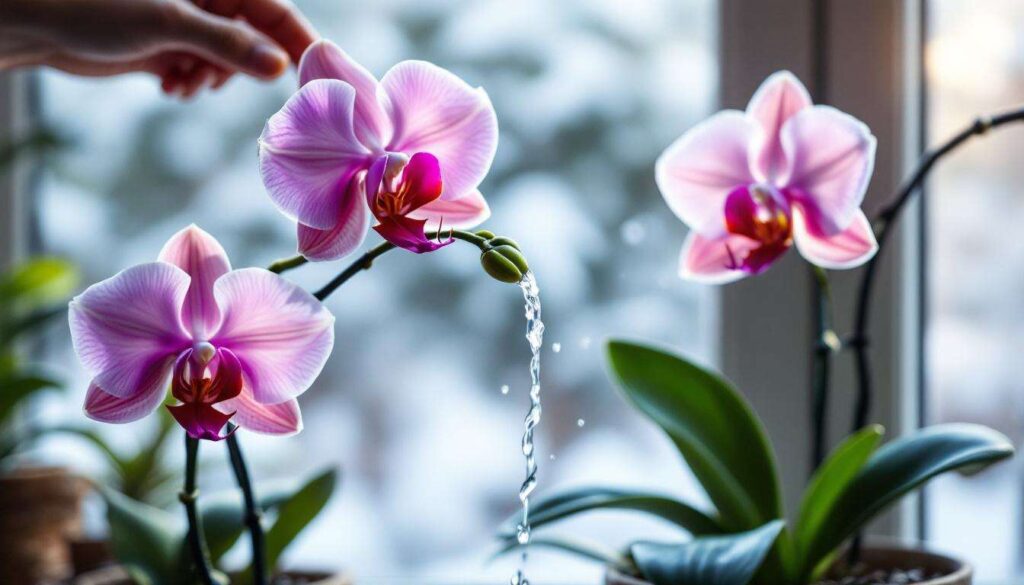
The ice cube method has gained popularity for its simplicity and effectiveness. Placing three ice cubes on the potting medium once weekly provides slow, controlled hydration that prevents overwatering. As the ice melts gradually, roots absorb moisture without becoming waterlogged. This technique works particularly well for standard-sized orchids in 6-inch pots. The slow melt rate mimics natural rainfall in tropical environments, allowing the bark medium to absorb water evenly.
Traditional soaking versus targeted watering
| Method | Frequency | Duration | Best For |
|---|---|---|---|
| Ice cube | Weekly | Gradual melt | Beginners, busy schedules |
| Soaking | Every 10-14 days | 15-20 minutes | Experienced growers |
| Targeted pour | Every 7-10 days | Until drainage | Multiple orchids |
The soaking method involves submerging the entire pot in room-temperature water, allowing roots to absorb moisture thoroughly. This approach requires careful timing to prevent root suffocation. Targeted watering directs water around the pot’s edge, avoiding the crown where water accumulation causes rot. Each method has merit, but consistency matters more than the specific technique chosen. Establishing a reliable schedule that aligns with environmental conditions produces better results than switching between approaches.
Common mistakes to avoid when watering
Overwatering symptoms and consequences
The most frequent error involves maintaining summer watering schedules throughout winter. Excessive moisture leads to root rot, the primary killer of indoor orchids. Yellow leaves, mushy roots, and a foul odor from the potting medium indicate overwatering damage. Crown rot develops when water collects in the central growth point, particularly dangerous for Phalaenopsis varieties. This condition often proves fatal, as the plant cannot regenerate its central growing point once destroyed.
Ignoring environmental factors
- Failing to account for reduced natural light exposure
- Overlooking the drying effects of heating systems
- Not adjusting for cooler room temperatures at night
- Watering on cloudy days when evaporation slows
- Using cold water that shocks the root system
Many growers make the mistake of watering by calendar date rather than observing actual plant conditions. The finger test provides reliable guidance: insert a finger one inch into the potting medium, and water only when it feels completely dry. Pot weight offers another indicator, as dry orchids feel noticeably lighter than freshly watered ones. These common pitfalls explain why many orchids fail to bloom, but understanding humidity’s role reveals another critical piece of the puzzle.
The impact of humidity on orchid blooming
Optimal humidity levels for winter care
Orchids thrive in humidity levels between 50-70 percent, yet winter heating often drops indoor humidity to 20-30 percent. This discrepancy stresses plants, causing bud blast where developing flowers drop before opening. Maintaining adequate humidity proves as crucial as proper watering for encouraging blooms. Humidity trays filled with pebbles and water create localized moisture zones without increasing soil wetness. As water evaporates from the tray, it surrounds the orchid with humid air, mimicking natural tropical conditions.
Balancing moisture and air circulation
Stagnant humid air invites fungal diseases and bacterial infections. Proper air movement prevents these issues while maintaining beneficial moisture levels. A small fan set on low speed, positioned to create gentle air flow around orchids, provides ideal conditions.
- Group orchids together to create a microclimate with shared humidity
- Place plants away from heating vents and cold drafts
- Use room humidifiers to raise overall moisture levels
- Mist leaves in early morning, allowing them to dry before nightfall
The relationship between humidity and watering requires careful calibration, as higher ambient moisture reduces the frequency of direct watering needed. Getting this balance right creates the foundation for encouraging those coveted annual blooms.
Tips to encourage annual blooming
Temperature fluctuation requirements
Most orchids require a temperature differential between day and night to trigger blooming. A drop of 10-15 degrees Fahrenheit signals the plant to initiate flower spike development. Placing orchids near windows where they experience natural temperature variation often stimulates blooming. Winter naturally provides this fluctuation in many homes, making it an ideal time for spike formation despite reduced watering. The combination of cooler nights and proper hydration creates optimal conditions for bud development.
Fertilization adjustments for winter
| Season | Fertilizer Strength | Frequency | NPK Ratio |
|---|---|---|---|
| Winter | Quarter strength | Monthly | 10-30-20 (bloom boost) |
| Spring/Summer | Half strength | Bi-weekly | 20-20-20 (balanced) |
Reducing fertilizer concentration during winter prevents salt buildup while providing essential nutrients for flower development. A bloom-boosting formula with higher phosphorus content supports spike and bud formation without promoting excessive leaf growth. Proper lighting remains essential, as orchids need adequate light energy to produce flowers. Supplemental grow lights compensate for shorter winter days, providing the 12-14 hours of indirect light most varieties require. These environmental factors work synergistically with correct watering to ensure reliable blooming, while additional maintenance practices protect overall plant health.
Tricks for maintaining orchid health in winter
Monitoring and adjusting care routines
Regular inspection reveals subtle changes that indicate whether the current care regimen works effectively. Firm, plump pseudobulbs signal adequate hydration, while wrinkled ones suggest insufficient water. New root growth, even minimal during winter, indicates the plant remains healthy. Keeping a simple log of watering dates, bloom cycles, and environmental conditions helps identify patterns and refine techniques over time. This record becomes invaluable for troubleshooting problems and replicating successful seasons.
Repotting considerations and timing
- Avoid repotting during winter dormancy unless absolutely necessary
- Wait until spring when new growth appears for routine repotting
- Emergency repotting for root rot requires immediate action regardless of season
- Use fresh, high-quality orchid bark medium for optimal drainage
- Choose pots with adequate drainage holes to prevent water accumulation
Maintaining clean growing conditions prevents disease and pest problems that compound during winter stress. Wiping leaves with a damp cloth removes dust that blocks light absorption and provides hiding spots for pests like scale and mealybugs. Strategic placement away from ripening fruit prevents ethylene gas exposure, which causes premature bud drop and flower aging. These preventive measures, combined with adjusted watering practices, create a comprehensive winter care approach that supports vigorous health and consistent blooming. Mastering winter orchid care transforms these plants from challenging specimens into dependable bloomers. The adjusted watering schedule, whether using ice cubes or traditional methods, addresses the plant’s reduced metabolic needs while preventing common pitfalls like root rot. Balancing humidity levels, providing appropriate temperature fluctuations, and maintaining proper light exposure work together with correct watering to trigger annual flowering. Regular monitoring and minor adjustments based on individual plant responses fine-tune the approach, ensuring each orchid receives exactly what it needs. With patience and consistent application of these principles, even novice growers can achieve the spectacular blooms that make orchid cultivation so rewarding.