
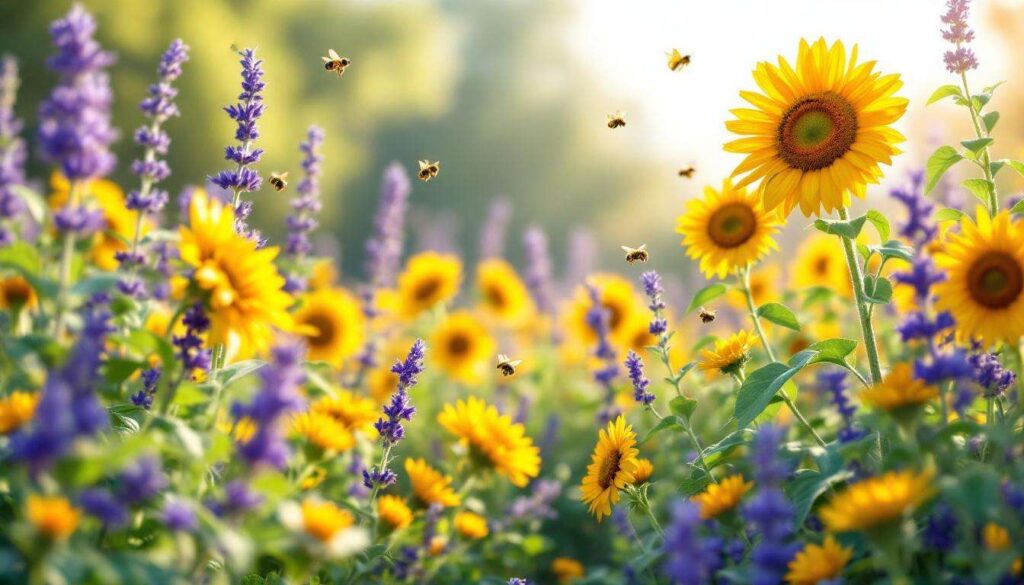
Gardens designed to support pollinators have become essential sanctuaries for declining bee and butterfly populations. As urban sprawl continues to reduce natural habitats, home gardeners are stepping up to create vibrant spaces that provide critical resources for these vital creatures. Three standout plants—lavender, sunflower, and sage—form the backbone of successful pollinator gardens, offering nectar, pollen, and visual appeal throughout the growing season. These hardy, low-maintenance selections work in harmony to create a continuous bloom cycle that sustains diverse pollinator species from early spring through late fall.
Introduction to the pollinator garden in 2026
The concept of pollinator gardening has evolved significantly, with modern approaches emphasizing strategic plant selection and habitat diversity. A well-designed pollinator garden in 2026 goes beyond simply planting flowers; it creates a comprehensive ecosystem that addresses the nutritional and shelter needs of various pollinator species.
Understanding pollinator needs
Successful pollinator gardens must provide three essential elements throughout the active season. First, nectar sources supply the energy pollinators need for flight and reproduction. Second, pollen offers protein necessary for larval development in bees and butterflies. Third, appropriate shelter and nesting sites allow pollinators to complete their life cycles within the garden space.
The three-plant foundation strategy
Building a pollinator garden around lavender, sunflower, and sage creates a reliable framework for success. These plants offer complementary bloom times, varied flower structures, and different nectar compositions that appeal to diverse pollinator species:
- Lavender provides early to mid-season blooms with high nectar concentration
- Sunflowers offer abundant pollen and accessible landing platforms
- Sage extends the blooming season with tubular flowers favored by long-tongued pollinators
This strategic combination ensures that pollinators find resources during critical periods when other food sources may be scarce. The diversity also reduces competition among pollinator species, allowing multiple insects to forage simultaneously within the same garden space.
The significant role of lavender in attracting bees
Lavender stands as one of the most bee-friendly plants available to home gardeners. Its distinctive purple spikes contain concentrated nectar that honeybees, bumblebees, and native solitary bees find irresistible.
Lavender varieties for maximum bee attraction
Not all lavender cultivars provide equal benefits to pollinators. The most effective varieties for bee gardens include:
- English lavender (Lavandula angustifolia): hardy and prolific bloomer
- French lavender (Lavandula dentata): extended bloom period in warmer climates
- Spanish lavender (Lavandula stoechas): distinctive bracts that increase visibility
Nectar composition and bee preferences
Lavender nectar contains high sugar concentrations, typically ranging from 40 to 50 percent, making it an energy-dense food source. This rich composition allows bees to maximize foraging efficiency, gathering substantial nutrition in fewer trips. The plant’s essential oils also provide antimicrobial properties that may help bees maintain hive health.
| Lavender Type | Bloom Duration | Primary Bee Visitors |
|---|---|---|
| English Lavender | 6-8 weeks | Honeybees, bumblebees |
| French Lavender | 10-12 weeks | Carpenter bees, native bees |
| Spanish Lavender | 8-10 weeks | Mason bees, leafcutter bees |
The aromatic qualities that make lavender appealing to humans also serve as powerful attractants for bees, who can detect the scent from considerable distances. While lavender forms the foundation of bee attraction, butterflies require different floral structures to meet their feeding needs.
Sunflower: a butterfly magnet all summer
Sunflowers provide ideal landing platforms and abundant resources that butterflies require throughout their active season. The large composite flower heads offer both nectar and pollen in quantities that support multiple butterfly species simultaneously.
Sunflower varieties for continuous butterfly activity
Selecting multiple sunflower varieties ensures blooms throughout summer and early fall. Strategic choices include:
- Early bloomers: Sunspot and Music Box varieties flower within 55-60 days
- Mid-season selections: Autumn Beauty and Velvet Queen bloom at 70-80 days
- Late varieties: Mammoth Russian extends blooming into September and October
Butterfly species attracted to sunflowers
Different butterfly species show preferences for specific sunflower characteristics. Monarchs favor larger flower heads where they can fully extend their wings while feeding. Swallowtails prefer sunflowers planted in clusters that provide multiple feeding options within a small area. Painted ladies and fritillaries visit sunflowers primarily for nectar but also use the sturdy stems as perching sites between feeding sessions.
Pollen accessibility advantages
The open structure of sunflower blooms makes pollen easily accessible to butterflies and other pollinators. Unlike tubular flowers that require specific tongue lengths, sunflowers accommodate various pollinator sizes and feeding adaptations. This accessibility makes them particularly valuable for supporting diverse butterfly populations with different physical characteristics.
Beyond their butterfly-attracting capabilities, sunflowers also provide seeds that sustain birds during fall migration, creating multi-season garden value. This ecological complexity increases when sage adds another dimension to the pollinator garden ecosystem.
Sage: an essential for garden biodiversity
Sage species contribute critical diversity to pollinator gardens through their unique flower structures and extended blooming periods. The tubular flowers specifically accommodate long-tongued bees and butterflies that cannot access nectar from open composite flowers.
Native sage species and their benefits
Native sage varieties offer superior pollinator support compared to culinary sage. Autumn sage (Salvia greggii) blooms from spring through frost, providing consistent nectar availability. Meadow sage (Salvia pratensis) attracts specialist bees that have co-evolved with these flower structures. Mexican bush sage (Salvia leucantha) extends the blooming season into late fall when other nectar sources have diminished.
Supporting specialist pollinators
Sage flowers serve specialist pollinators that depend on specific flower shapes for feeding. Long-tongued bumblebees use their extended proboscis to reach nectar deep within sage tubes. Certain butterfly species, including skippers and hairstreaks, have evolved feeding strategies specifically adapted to sage flower architecture. These specialist relationships highlight the importance of including diverse flower types in pollinator gardens.
| Sage Variety | Bloom Color | Primary Pollinators |
|---|---|---|
| Autumn Sage | Red, pink, white | Hummingbirds, butterflies |
| Meadow Sage | Purple, blue | Bumblebees, mason bees |
| Mexican Bush Sage | Purple with white | Butterflies, native bees |
The vertical flower spikes of sage also create visual interest and structural diversity within garden beds. These design elements become even more effective when combined with thoughtful planning and placement strategies.
Strategic choices for a successful pollinator garden
Creating an effective pollinator garden requires intentional planning beyond simply selecting the right plants. Location, arrangement, and companion planting all influence how successfully the garden supports pollinator populations.
Optimal placement and sun exposure
All three featured plants—lavender, sunflower, and sage—thrive in full sun conditions, requiring at least six hours of direct sunlight daily. Southern or western exposures provide ideal conditions in most climates. Positioning the garden near existing pollinator corridors, such as hedgerows or natural areas, increases visitation rates as pollinators incorporate the garden into their regular foraging routes.
Planting density and grouping strategies
Pollinators locate flowers more efficiently when plants are grouped in masses rather than scattered individually. Effective strategies include:
- Plant lavender in groups of at least five to seven plants
- Cluster sunflowers in odd-numbered groups for visual impact
- Create sage drifts with nine or more plants for maximum pollinator attraction
- Maintain 18 to 24 inches between plant centers for adequate air circulation
Companion plants to enhance diversity
While lavender, sunflower, and sage form the garden foundation, additional species increase ecological value. Coneflowers fill mid-season gaps in bloom times. Asters extend nectar availability into late fall. Native grasses provide nesting materials and overwintering sites for beneficial insects. This layered approach creates a more resilient ecosystem that supports pollinators throughout their complete life cycles.
Once established, these gardens require ongoing attention to maintain their pollinator-supporting capabilities and ensure continuous blooming throughout the season.
Maintenance tips for prolonged blooming
Sustaining abundant blooms requires consistent maintenance practices tailored to each plant’s specific needs. Proper care maximizes flower production and extends the period during which pollinators can access garden resources.
Deadheading and pruning techniques
Regular deadheading encourages continued flower production in lavender and sage. Remove spent lavender spikes immediately after flowers fade to promote secondary blooming. For sage, cut back flower stalks to the first set of leaves once blooms finish to stimulate new growth. Sunflowers generally do not rebloom after deadheading, but removing spent heads prevents self-seeding if desired and redirects plant energy toward supporting remaining blooms.
Watering strategies for established plants
Once established, these drought-tolerant plants require minimal supplemental watering. Lavender and sage prefer dry conditions between waterings, with deep soaking every 10 to 14 days during extended dry periods. Sunflowers need more consistent moisture during bloom development but tolerate drought once flowers open. Water early in the morning to reduce disease pressure and allow foliage to dry before evening.
Fertilization and soil management
These plants perform best in moderate fertility conditions. Excessive fertilization promotes vegetative growth at the expense of flowers. Apply a balanced, slow-release fertilizer at half the recommended rate in early spring. Lavender and sage particularly benefit from lean soils with excellent drainage. Adding compost annually maintains soil structure without over-enriching the planting area.
Gardens built around lavender, sunflower, and sage create thriving habitats that support critical pollinator populations while providing beauty and interest throughout the growing season. These strategic plant selections offer complementary bloom times, diverse flower structures, and reliable performance that benefits both wildlife and gardeners. By implementing thoughtful placement, appropriate maintenance, and companion planting strategies, any gardener can establish a successful pollinator sanctuary that contributes to broader conservation efforts while enjoying the vibrant activity these essential creatures bring to outdoor spaces.