



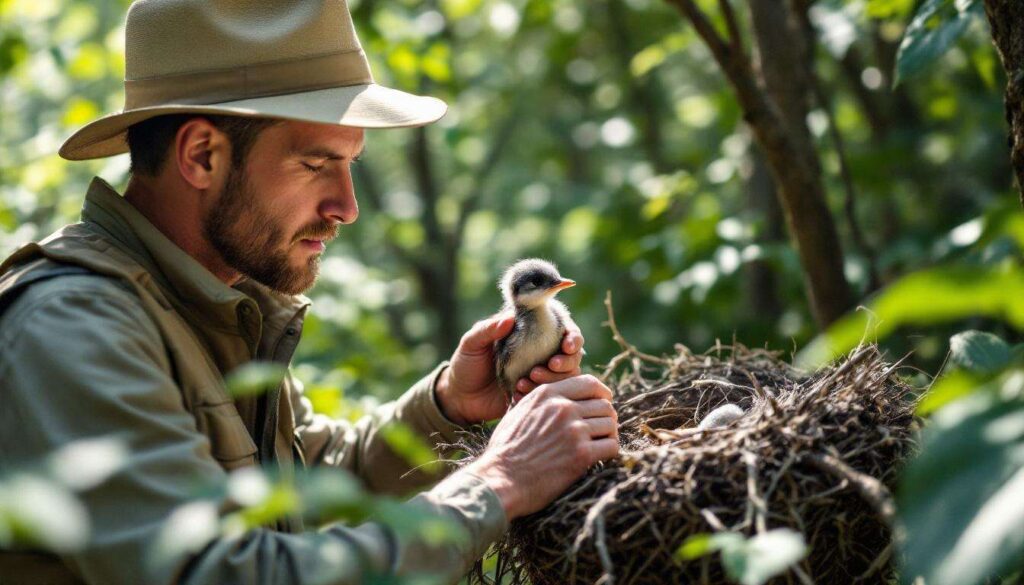
Every spring, wildlife rehabilitation centers receive thousands of calls from well-meaning individuals who discover young birds on the ground. While the impulse to rescue these seemingly vulnerable creatures is natural, ornithologists emphasize that one simple act can make the difference between life and death: leaving fledglings alone. This counterintuitive approach, repeated by bird experts season after season, stems from a fundamental understanding of avian development and parental care. The critical period when young birds leave their nests but cannot yet fly proficiently represents a natural stage in their growth, and human intervention, though well-intentioned, often does more harm than good.
The importance of feeding fledglings
Parental feeding patterns during the fledgling stage
Parent birds continue their feeding responsibilities even after their offspring leave the nest. Adult birds typically locate their fledglings through vocalizations, returning every 15 to 20 minutes with insects, worms, or other protein-rich foods essential for growth. This feeding schedule continues for one to three weeks depending on the species, during which time the young birds gradually develop their flight muscles and foraging skills.
The nutritional requirements during this phase are substantial. Fledglings need:
- High-protein foods for muscle development and feather growth
- Frequent small meals throughout daylight hours
- Species-appropriate diet that varies between insectivores, seed-eaters, and omnivores
- Hydration obtained primarily through food rather than standing water
Why human feeding attempts often fail
Well-meaning rescuers who attempt to feed fledglings frequently provide inappropriate nutrition that can cause severe digestive problems or nutritional deficiencies. Bread, milk, and other common household foods lack the essential proteins and nutrients that growing birds require. Additionally, improper feeding techniques can result in aspiration, where food enters the respiratory system rather than the digestive tract, often proving fatal.
Understanding these feeding dynamics helps explain why the simple act ornithologists advocate involves recognizing when birds are best left to their natural caregivers.
How to identify a fledgling in distress
Physical characteristics of healthy fledglings
Distinguishing between a fledgling following its normal development and one genuinely requiring assistance requires careful observation. Healthy fledglings display specific characteristics that indicate they are progressing appropriately through this vulnerable stage.
| Characteristic | Healthy Fledgling | Bird in Distress |
|---|---|---|
| Feathering | Mostly feathered with short tail | Mostly naked or sparse down |
| Eyes | Open and alert | Closed or crusted |
| Posture | Upright, hopping actively | Lying down, unable to stand |
| Behavior | Vocalizing, attempting movement | Silent, lethargic, unresponsive |
Signs that indicate genuine emergency
True emergencies require immediate intervention, but these situations represent a small fraction of fledgling encounters. Indicators of genuine distress include:
- Visible injuries such as bleeding, broken wings, or leg deformities
- Presence near a deceased parent bird
- Cat or dog attack with puncture wounds
- Exposure to extreme weather without shelter for extended periods
- Infestations of parasites covering the bird’s body
- Inability to right itself when placed upright
The majority of grounded fledglings exhibit none of these warning signs, appearing instead as simply awkward young birds learning to navigate their environment. This observation leads directly to understanding the appropriate response.
Steps to help a fledgling survive
Creating a safe immediate environment
When encountering a fledgling, the primary action involves ensuring the young bird’s immediate safety from ground predators while keeping it within the territory where parent birds can locate it. This approach respects the natural care system while addressing legitimate dangers.
Practical steps include:
- Keeping pets indoors or confined away from the area
- Gently placing the fledgling in nearby shrubs or low branches if ground conditions are hazardous
- Positioning the bird in shade during hot weather
- Observing from a distance of at least 30 feet to allow parents to approach
- Monitoring the situation for one to two hours before considering further action
The observation period
Patient observation represents the most valuable contribution concerned individuals can make. During this monitoring phase, parent birds typically reveal themselves through their feeding visits. Adults will not abandon their offspring due to human scent, a common myth that prevents many people from providing appropriate assistance.
If parent birds appear within the observation window, the fledgling requires no further intervention. The simple act of watching and waiting, rather than immediately rescuing, allows nature’s systems to function as evolved over millions of years.
When to intervene and when to refrain
Situations requiring human intervention
Ornithologists identify specific circumstances where human intervention becomes necessary and beneficial. These scenarios involve genuine threats to survival that parent birds cannot address independently.
Intervention is appropriate when:
- The bird is a nestling (naked or sparsely feathered) rather than a fledgling
- No parent birds appear after two hours of observation
- The location presents immediate danger such as busy roadways or construction sites
- Visible injuries require medical attention
- Nightfall approaches with no parental contact established
When to leave fledglings alone
The vast majority of fledgling encounters fall into the category requiring no intervention. This simple act of restraint, which ornithologists emphasize annually, proves crucial for species survival. Removing fledglings from their parents disrupts the learning process and reduces their ultimate survival chances.
Refrain from intervening when:
- The bird is fully feathered and hopping actively
- No visible injuries or illness signs appear
- The location is reasonably safe from immediate predators
- Parent birds vocalize nearby even if not visible
- The fledgling responds to your presence by moving away
This understanding of appropriate intervention naturally leads to exploring specific actions that support the parent-offspring reunion.
Simple actions to promote a return to the nest
Facilitating parental contact
The simple act that ornithologists champion involves creating conditions where parent birds can successfully continue their care. This approach requires minimal effort but produces maximum benefit for fledgling survival.
Effective actions include:
- Maintaining distance to avoid deterring parent birds
- Eliminating immediate threats without removing the fledgling from the area
- Placing the bird in elevated positions within shrubs if ground conditions are unsuitable
- Closing windows and doors to prevent indoor entrapment
- Educating neighbors about fledgling behavior to prevent multiple interventions
Understanding territorial boundaries
Parent birds maintain feeding territories that typically span 100 to 300 feet. Moving a fledgling beyond this range separates it from its caregivers permanently. The simple act of leaving the bird where found, or relocating it only a few feet to safer microhabitats, respects these territorial boundaries and maintains the family unit.
If a nest is visible and accessible, returning a true nestling (not a fledgling) to that nest provides appropriate assistance. However, fledglings should never be returned to nests, as they have naturally progressed beyond that developmental stage.
These individual actions gain amplified effectiveness through the coordinated efforts of trained professionals and dedicated volunteers.
The key role of ornithologists and volunteers
Educational outreach programs
Ornithologists and wildlife rehabilitation organizations conduct extensive public education campaigns each spring. These programs focus on teaching the simple act of leaving fledglings alone, countering deeply ingrained rescue impulses with scientific understanding of avian development.
Educational initiatives include:
- Social media campaigns explaining fledgling behavior
- Community workshops on bird identification
- Hotlines providing immediate guidance for concerned citizens
- Printed materials distributed through parks and nature centers
- School programs teaching children about wildlife observation
Rehabilitation center operations
When intervention becomes necessary, trained volunteers and ornithologists provide specialized care that dramatically improves survival outcomes. Wildlife rehabilitation centers operate under strict protocols that address the complex nutritional, behavioral, and medical needs of orphaned or injured birds.
These facilities report that 40 to 60 percent of birds admitted during fledgling season did not require rescue, representing unnecessary separations from parent birds. This statistic underscores why ornithologists repeat their annual message about the simple act of restraint.
Volunteers support these efforts through:
- Answering hotline calls and providing triage guidance
- Transporting genuinely distressed birds to rehabilitation facilities
- Preparing specialized diets for orphaned fledglings
- Conducting post-release monitoring to assess survival rates
- Participating in community education events
The simple act that ornithologists emphasize every spring requires no special training or equipment. Leaving fledglings in place, ensuring their immediate safety from ground predators, and observing from a distance allows parent birds to continue their essential care. This approach respects the natural developmental process while addressing legitimate concerns about vulnerable young birds. Understanding the difference between fledglings and nestlings, recognizing true distress signals, and knowing when intervention helps versus harms empowers individuals to make informed decisions. Wildlife rehabilitation professionals and volunteers amplify these messages through education and provide critical care when genuine emergencies arise. By adopting this simple act of informed restraint, communities can significantly improve fledgling survival rates while reducing unnecessary strain on rehabilitation resources.