


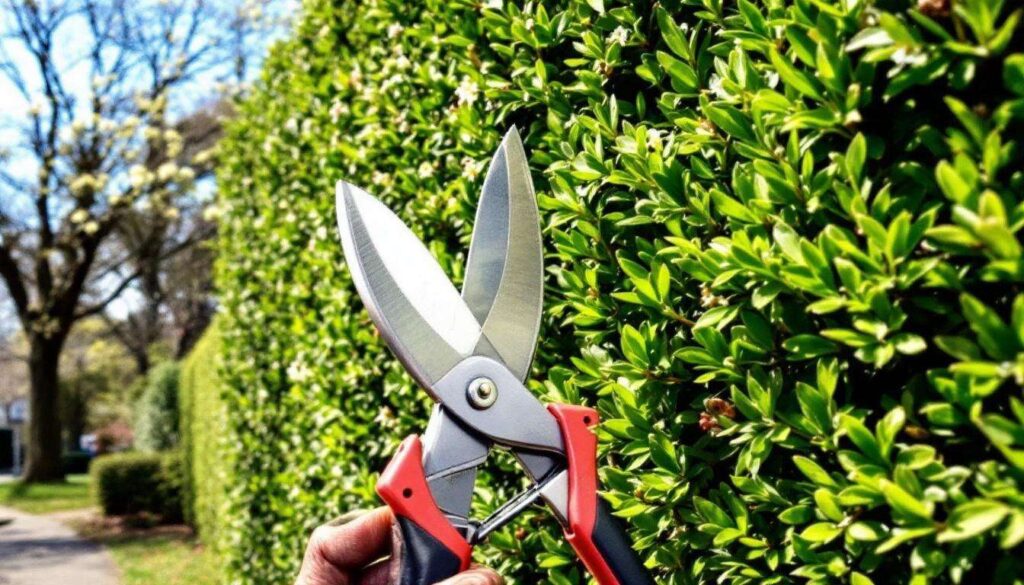
Towering hedges can transform a garden into a private sanctuary, but maintaining these green giants requires strategic timing and careful planning. For homeowners with hedges exceeding six feet in height, understanding when and how to prune becomes critical to both the plant’s health and legal compliance. As winter transitions into spring, March emerges as a pivotal month for hedge maintenance, offering the final safe window before environmental and regulatory factors make pruning increasingly problematic.
Why prune a hedge over 6 feet ?
Maintaining structural integrity and shape
Tall hedges demand regular pruning to preserve their structural integrity and prevent them from becoming unwieldy. Without proper maintenance, hedges over six feet develop several problematic characteristics:
- Uneven growth patterns that create gaps in coverage
- Heavy upper sections that can cause branches to split or break
- Reduced light penetration to lower branches, leading to bare patches
- Increased vulnerability to wind damage and storm breakage
Controlling growth and preventing encroachment
A six-foot hedge left unpruned can quickly extend beyond property boundaries, creating disputes with neighbors and potential legal complications. Regular pruning ensures the hedge remains within designated boundaries while maintaining the desired height. This becomes particularly important in suburban areas where property lines are closely spaced and visual privacy must be balanced with neighborly relations.
Promoting dense, healthy foliage
Strategic pruning stimulates new growth from dormant buds, encouraging the hedge to develop thick, lush foliage throughout its entire height. This density provides better privacy screening, noise reduction, and aesthetic appeal. Without regular trimming, hedges tend to become leggy with foliage concentrated at the top, defeating their primary purposes.
Understanding these maintenance needs sets the stage for recognizing why timing becomes so crucial in the pruning calendar.
The risks of pruning after March
Nesting season and legal restrictions
The most significant risk of pruning after March involves disrupting nesting birds. In many jurisdictions, including throughout the United States under the Migratory Bird Treaty Act, disturbing active nests is illegal. Birds typically begin nesting in early April and continue through August, making any hedge work during this period potentially unlawful and ecologically harmful.
| Month | Nesting Activity | Pruning Risk Level |
|---|---|---|
| March | Pre-nesting preparation | Low |
| April-May | Active nest building and egg laying | Very High |
| June-July | Chick rearing | Very High |
| August | Late nesting species | Moderate to High |
Plant stress during active growth
After March, most hedge species enter their vigorous spring growth phase. Pruning during this period can shock the plant, redirecting energy away from natural development. This stress manifests as:
- Reduced disease resistance
- Slower recovery and regrowth
- Increased susceptibility to pest infestations
- Potential dieback of pruned sections
Weather unpredictability
Late spring and summer weather patterns bring increased risks of extreme heat, drought, or heavy rainfall. Freshly pruned hedges are more vulnerable to these conditions, with exposed cut surfaces providing entry points for pathogens and moisture stress affecting recovery.
These compelling reasons to avoid late-season pruning highlight why March represents such a valuable opportunity for hedge maintenance.
The benefits of pruning in March
Optimal timing for plant recovery
March pruning allows hedges to heal before the growing season intensifies. The plant can seal cut surfaces and redirect energy into new growth as temperatures rise and daylight extends. This timing minimizes stress while maximizing the hedge’s ability to produce dense, healthy foliage throughout the upcoming season.
Visibility and accessibility advantages
Before spring foliage fully emerges, the hedge’s structure remains visible, making it easier to identify dead wood, crossing branches, and areas requiring attention. This clarity enables more precise pruning decisions and better overall shaping results.
Weather conditions favor outdoor work
March typically offers moderate temperatures and drier conditions compared to winter months, making outdoor work more comfortable and safer. The ground has usually firmed up from winter moisture, providing stable footing for ladders and equipment needed to reach tall hedges.
To capitalize on these advantages, homeowners need to employ appropriate techniques suited to tall hedge maintenance.
Pruning techniques for a tall hedge
The tapering method for stability
Tall hedges should be pruned with a slight taper, making the base wider than the top. This technique ensures lower branches receive adequate sunlight and prevents the heavy top-growth that can cause structural problems. A ratio of approximately 6 inches wider at the base for every foot of height provides optimal results.
Equipment and approach for height
Working on hedges over six feet requires specialized equipment and careful planning:
- Extendable hedge trimmers or pole pruners for reaching upper sections
- Stable ladders or scaffolding platforms for safe access
- String lines to maintain level cutting guides
- Safety harnesses when working at significant heights
Sectional pruning strategy
Rather than attempting to prune the entire hedge in one session, divide it into manageable sections. This approach prevents fatigue-related accidents and allows for more consistent results. Work from bottom to top, allowing cut material to fall away from uncut sections.
Even with proper techniques, certain precautions remain essential for safe and effective hedge maintenance.
Precautions to take when pruning
Safety considerations for tall hedges
Working at height presents inherent risks that require serious attention to safety protocols. Never work alone when pruning tall hedges, ensure ladders are properly secured, and avoid overreaching. Power tool safety includes wearing protective eyewear, hearing protection, and maintaining awareness of electrical cords.
Checking for wildlife before cutting
Even in March, conduct a thorough inspection for early nesting activity before beginning work. Look for nest structures, listen for bird activity, and observe the hedge for several minutes. If any nesting is detected, postpone pruning until the nesting cycle completes.
Weather monitoring
Avoid pruning immediately before predicted frost or during extremely windy conditions. Check forecasts to ensure several days of moderate weather following pruning, giving cut surfaces time to begin healing before exposure to harsh conditions.
When executed with proper precautions and timing, pruning delivers significant health benefits to the hedge itself.
Impact of pruning on the health of the hedge
Stimulating vigorous new growth
Proper March pruning activates dormant buds along branches, promoting bushy growth that fills in gaps and increases overall density. This rejuvenation effect is particularly pronounced in hedges that have received consistent annual maintenance.
Improving air circulation and light penetration
Thinning cuts and height reduction allow better air movement through the hedge, reducing humidity levels that promote fungal diseases. Improved light penetration ensures interior and lower branches remain photosynthetically active, preventing the bare-bottom syndrome common in neglected tall hedges.
Long-term vitality and lifespan extension
Regular, properly timed pruning extends hedge lifespan by preventing the structural deterioration and disease susceptibility that plague unmaintained specimens. A well-pruned hedge can remain healthy and attractive for decades, while neglected hedges often require complete replacement within 15 to 20 years.
Tall hedges represent significant investments in property privacy and landscaping value. March provides the ideal window for maintenance that respects wildlife, supports plant health, and ensures legal compliance. By understanding the risks of delayed pruning and implementing proper techniques during this critical month, homeowners can maintain beautiful, healthy hedges that fulfill their intended purposes for years to come. The combination of favorable weather, plant dormancy, and pre-nesting timing makes March the clear choice for tackling hedge maintenance tasks that might otherwise create problems later in the season.