

Gardeners have long relied on unexpected household items to improve their potting practices, and wine cork stoppers have emerged as one of the most ingenious solutions. This simple material, often discarded after a bottle is opened, offers remarkable benefits when incorporated into plant containers. The practice has gained renewed attention as more growers seek sustainable alternatives to synthetic products while addressing common challenges like drainage issues and soil compaction. Understanding why this method works requires examining both the unique properties of cork and the specific needs of potted plants during their most active growing season.
Origin of the cork stopper method
Historical roots in European gardening
The technique of using cork stoppers in plant pots traces back to traditional European gardening practices, particularly in Mediterranean regions where cork oak trees are abundant. Resourceful gardeners in Portugal, Spain, and southern France discovered that leftover wine corks could serve multiple purposes beyond their original function. These early practitioners noticed that cork fragments placed at the bottom of terracotta pots prevented soil from washing through drainage holes while maintaining proper water flow.
Evolution from necessity to intentional practice
What began as a practical solution to material scarcity evolved into a deliberate gardening technique. During periods when commercial gardening supplies were limited or expensive, home gardeners experimented with available materials. Cork emerged as particularly effective due to its availability in wine-producing regions and its natural resistance to decay. The method spread through gardening communities via word-of-mouth recommendations and eventually appeared in horticultural publications throughout the twentieth century.
This historical foundation sets the stage for understanding the specific benefits that make cork stoppers valuable in modern container gardening.
Why use cork stoppers in plant pots
Drainage optimization without soil loss
The primary reason gardeners incorporate cork stoppers into their potting systems involves creating optimal drainage conditions. When placed strategically at the bottom of containers, cork pieces perform several critical functions:
- Prevent potting mix from escaping through drainage holes during watering
- Create air pockets that facilitate oxygen circulation to root systems
- Maintain consistent moisture levels by slowing water passage without blocking it
- Reduce soil compaction that typically occurs with repeated watering cycles
Weight reduction in containers
Cork offers a significant advantage for container gardening due to its exceptionally low density. Traditional drainage materials like gravel or pottery shards add considerable weight to pots, making them difficult to move. Cork stoppers provide drainage enhancement without this burden, which proves especially valuable for balcony gardens, rooftop installations, or any situation requiring periodic container relocation.
| Material | Weight per cup | Drainage efficiency |
|---|---|---|
| Cork pieces | 0.8 oz | Excellent |
| Gravel | 6.2 oz | Good |
| Pottery shards | 4.5 oz | Good |
These functional benefits connect directly to the broader environmental considerations that make cork an increasingly popular choice among conscious gardeners.
The ecological and practical advantages of cork
Sustainability and renewable resource status
Cork stands out as one of the most environmentally responsible materials available for gardening applications. Harvested from the bark of cork oak trees without harming the tree itself, cork regenerates naturally over nine-year cycles. This renewable characteristic means using discarded wine corks in plant pots diverts waste from landfills while avoiding the extraction of non-renewable resources like perlite or vermiculite.
Natural antimicrobial properties
Cork contains suberin, a natural waxy substance that provides inherent resistance to mold, mildew, and bacterial growth. This characteristic proves particularly valuable in the moist environment of plant pots, where fungal issues frequently develop. The antimicrobial nature of cork helps maintain healthier root zones without requiring chemical treatments.
Longevity and decomposition rate
Unlike organic materials that break down rapidly in potting environments, cork maintains its structure for extended periods. A cork stopper placed in a plant pot can remain functional for multiple growing seasons before gradually decomposing. When it eventually breaks down, cork releases no harmful substances into the soil, instead contributing neutral organic matter that slightly improves soil structure.
Understanding these advantages leads naturally to the question of proper implementation for maximum effectiveness.
How to prepare and place cork stoppers in pots
Preparation methods for optimal performance
Before incorporating cork stoppers into your containers, proper preparation enhances their effectiveness. The process involves several straightforward steps:
- Collect used wine corks, ensuring they are natural cork rather than synthetic alternatives
- Cut larger corks into halves or quarters using a sharp knife or scissors
- Soak cork pieces in water for 30 minutes to remove any wine residue and allow expansion
- Allow pieces to dry partially, maintaining slight moisture for easier handling
Strategic placement techniques
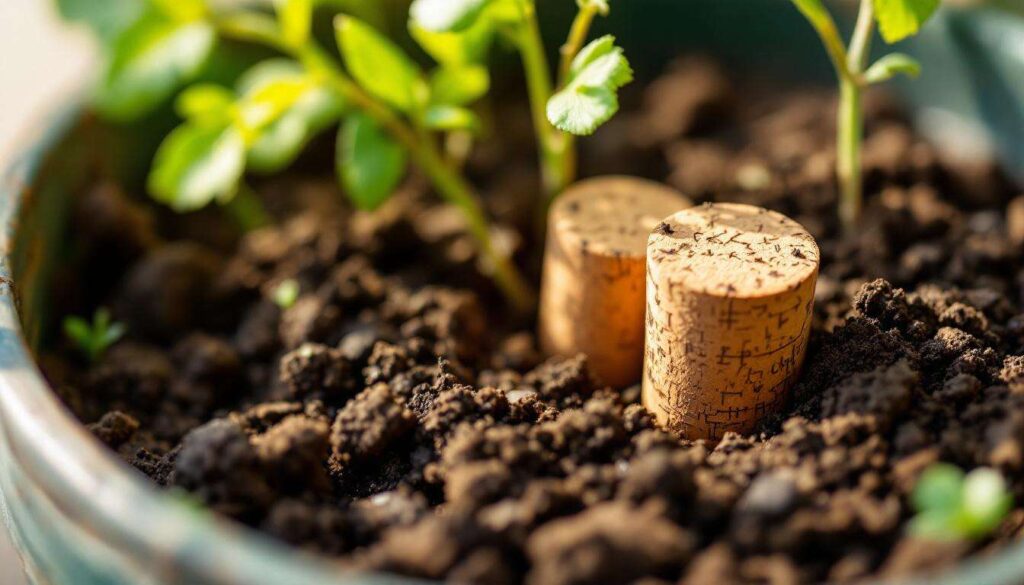
The positioning of cork within containers significantly impacts its effectiveness. For standard-sized pots ranging from six to twelve inches in diameter, place three to five cork pieces at the bottom, covering approximately one-third of the drainage hole area. In larger containers, create a single layer of cork pieces that covers the entire base without completely blocking drainage openings.
Layering considerations
When building your potting system, follow this recommended sequence from bottom to top:
| Layer | Material | Depth |
|---|---|---|
| 1 | Cork pieces | 0.5-1 inch |
| 2 | Coarse material (optional) | 0.5 inch |
| 3 | Potting mix | Remaining space |
This systematic approach to cork placement directly influences how plants respond during their most vigorous growth period.
The impact on plant growth in spring
Enhanced root development
Spring represents the most critical growth phase for most potted plants, and cork stoppers contribute significantly to root system development during this period. The improved aeration provided by cork layers allows roots to access oxygen more readily, promoting the formation of fine feeder roots that absorb nutrients efficiently. This enhanced root architecture translates to more vigorous above-ground growth as temperatures warm.
Temperature regulation benefits
Cork’s natural insulating properties help moderate soil temperature fluctuations that commonly occur during spring’s variable weather patterns. The material acts as a thermal buffer, protecting roots from sudden cold snaps while preventing excessive heat buildup during unexpectedly warm days. This stability allows plants to maintain consistent metabolic activity rather than experiencing stress-induced growth interruptions.
Moisture management during active growth
Spring growth demands careful moisture balance, as plants require increased water to support new foliage and flowering. Cork’s ability to slow water drainage without creating waterlogged conditions proves particularly valuable during this season. The material helps maintain consistent moisture availability, reducing the frequency of watering while preventing the drought stress that can stunt spring development.
Maximizing these benefits requires attention to complementary care practices that work synergistically with the cork method.
Additional tips for plant care with cork stoppers
Monitoring and maintenance schedule
While cork requires minimal maintenance, periodic inspection ensures continued effectiveness. Check containers every four to six weeks during the growing season to assess drainage performance. If water begins pooling on the soil surface or draining too slowly, the cork layer may have shifted and require repositioning.
Combining cork with other sustainable practices
The cork stopper method integrates seamlessly with various eco-friendly gardening approaches:
- Pair with organic fertilizers that complement cork’s neutral pH contribution
- Use alongside rainwater collection systems for completely sustainable watering
- Combine with companion planting strategies in larger containers
- Incorporate into crop rotation plans for edible container gardens
Troubleshooting common issues
Occasionally, gardeners encounter challenges when implementing the cork method. If plants show signs of nutrient deficiency despite adequate fertilization, the cork layer may be too thick and restricting root penetration. Reduce the cork depth to half an inch. Conversely, if drainage seems too rapid and plants require frequent watering, add additional cork pieces to slow water passage.
Seasonal adjustments
While cork performs well year-round, slight modifications optimize its effectiveness across seasons. During spring’s active growth, ensure cork layers remain intact to support vigorous root development. In summer, the moisture-retaining properties become more valuable. As fall approaches and growth slows, the existing cork setup requires no adjustment and continues providing drainage benefits through winter dormancy.
The cork stopper method represents a convergence of traditional wisdom and practical sustainability. By repurposing a common household discard, gardeners enhance drainage, reduce container weight, and support healthier root systems without synthetic materials or significant expense. The technique proves particularly valuable during spring when plants demand optimal conditions for vigorous growth. Whether managing a few windowsill herbs or an extensive container garden, incorporating cork stoppers offers tangible benefits that become apparent within a single growing season. This simple practice demonstrates how small, thoughtful choices in gardening methods can yield substantial improvements in plant health while honoring environmental responsibility.