

Gardeners working with heavy clay soil often face challenges when establishing productive vegetable gardens. The dense, compacted nature of clay creates poor growing conditions that can stunt plant development and reduce yields. However, strategic soil amendments applied before spring planting can transform difficult clay into a thriving growing medium. By incorporating both compost and sand, gardeners can address the fundamental drainage issues that plague clay soils while simultaneously improving soil structure and fertility.
Understanding the composition of clay soil
Clay soil consists of extremely fine mineral particles measuring less than 0.002 millimeters in diameter. These microscopic particles pack tightly together, creating a dense soil structure with minimal pore space. When dry, clay becomes hard and nearly impenetrable, while wet conditions turn it into a sticky, waterlogged mass that lacks adequate oxygen for root growth.
Physical characteristics of clay particles
The unique properties of clay particles stem from their plate-like structure and negative electrical charge. These characteristics cause clay particles to bind together strongly, resulting in several distinctive features:
- High water retention capacity that can lead to waterlogging
- Slow drainage rates that delay spring warming
- Poor aeration limiting root respiration
- Tendency to form hard crusts on the surface
- Difficulty in cultivation when either too wet or too dry
Nutrient holding capacity
Despite drainage challenges, clay soil possesses excellent nutrient retention due to its high cation exchange capacity. The negative charges on clay particles attract and hold positively charged nutrients like calcium, magnesium, and potassium, preventing them from leaching away. This means that once drainage issues are resolved, clay-based soils can become highly productive growing environments.
Recognizing these fundamental characteristics helps gardeners understand why specific amendments prove effective in transforming clay soil into a more workable medium suitable for vegetable cultivation.
The importance of drainage in the vegetable garden
Proper drainage represents one of the most critical factors determining vegetable garden success. Without adequate water movement through the soil profile, even the most carefully selected varieties will struggle to establish healthy root systems and produce abundant harvests.
Root health and oxygen availability
Plant roots require oxygen for cellular respiration and nutrient uptake. In waterlogged clay soils, water fills the pore spaces that should contain air, effectively suffocating roots. This oxygen deprivation leads to:
- Stunted root development and shallow root systems
- Increased susceptibility to root rot diseases
- Reduced nutrient absorption efficiency
- Overall plant stress and diminished vigor
Disease prevention through drainage
Excessive moisture creates ideal conditions for soil-borne pathogens including fungi and bacteria that attack vegetable crops. Well-drained soil reduces disease pressure by creating an environment less favorable to these organisms while promoting beneficial microbial populations.
| Drainage condition | Disease risk | Root development |
|---|---|---|
| Poor drainage | High | Shallow and weak |
| Moderate drainage | Medium | Adequate |
| Good drainage | Low | Deep and robust |
Addressing drainage concerns before planting establishes the foundation for a healthy, productive vegetable garden throughout the growing season.
The benefits of compost for the soil
Compost serves as a multifunctional soil amendment that addresses multiple challenges associated with clay soil. This decomposed organic matter improves soil structure while providing essential nutrients and supporting beneficial microbial life.
Improving soil structure and aggregation
When incorporated into clay soil, compost acts as a binding agent that helps clay particles cluster into larger aggregates. This aggregation creates pore spaces between particle groups, dramatically improving soil structure. The organic matter in compost also prevents clay particles from compacting as tightly as they would otherwise.
Nutrient contribution and microbial activity
Quality compost delivers a balanced array of nutrients in forms readily available to plants. Beyond direct nutrient provision, compost introduces and feeds beneficial soil organisms that further enhance soil health:
- Bacteria and fungi that decompose organic matter
- Earthworms that create channels improving aeration
- Microorganisms that suppress plant diseases
- Beneficial organisms that make nutrients more available
Water retention balance
While improving drainage in clay soils, compost simultaneously enhances water holding capacity in a beneficial way. Rather than creating waterlogged conditions, the organic matter holds moisture in a form accessible to plant roots while allowing excess water to drain away. This balance proves particularly valuable during variable weather conditions.
The structural improvements provided by compost work synergistically with other amendments to create optimal growing conditions.
The effect of sand on improving drainage
Sand particles measure significantly larger than clay particles, typically ranging from 0.05 to 2.0 millimeters in diameter. Adding coarse sand to clay soil physically disrupts the tight clay particle arrangement, creating pathways for water movement and air circulation.
Particle size and pore space creation
The large size differential between sand and clay particles allows sand grains to prop open spaces within the clay matrix. These enlarged pores facilitate faster water percolation through the soil profile, reducing surface ponding and waterlogging issues that commonly plague clay gardens.
Selecting appropriate sand types
Not all sand products deliver equal benefits for clay soil amendment. Coarse builder’s sand or horticultural sand works most effectively, while fine sand or beach sand can actually worsen compaction problems. Key considerations include:
- Particle size: coarse sand with varied particle sizes performs best
- Avoid fine sand that can fill small pores without improving drainage
- Choose washed sand free from salt and contaminants
- Ensure sand is free from clay or silt content
Limitations of sand-only amendments
While sand improves physical drainage, it provides no nutritional value and does not support soil biology. Used alone in insufficient quantities, sand can create a concrete-like mixture. This limitation underscores why combining sand with organic matter produces superior results compared to either amendment used independently.
Understanding how sand functions mechanically within clay soil helps gardeners apply it effectively as part of a comprehensive amendment strategy.
Procedure for mixing compost and sand
Successfully amending clay soil requires proper timing, quantities, and incorporation techniques to achieve lasting improvements. The process demands physical effort but delivers substantial long-term benefits for vegetable production.
Determining amendment quantities
For significantly improving clay soil, gardeners should plan to incorporate substantial amounts of both materials. Recommended application rates include:
| Amendment | Quantity per 100 sq ft | Depth of incorporation |
|---|---|---|
| Compost | 2-3 cubic yards | 8-12 inches |
| Coarse sand | 1-2 cubic yards | 8-12 inches |
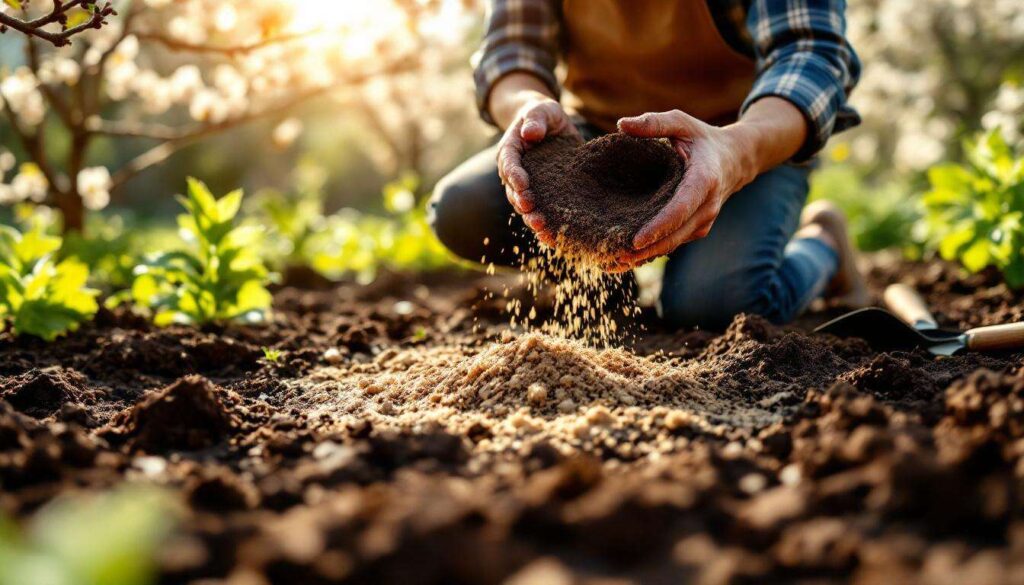
Step-by-step incorporation process
Proper mixing ensures amendments distribute evenly throughout the root zone. Follow this systematic approach for best results:
- Work soil when slightly moist, never when wet or completely dry
- Spread compost evenly across the garden bed surface
- Add sand layer on top of compost
- Use a garden fork or tiller to incorporate amendments 8-12 inches deep
- Break up large clods and mix thoroughly
- Rake surface smooth and allow soil to settle for several days
Timing considerations
Amending clay soil works best when completed several weeks before planting. This settling period allows the amendments to integrate with existing soil particles and microbial populations to establish. Working amendments into soil during fall provides even better results, as freeze-thaw cycles over winter further improve soil structure.
With amendments properly incorporated, the garden bed becomes ready for strategic planting decisions that capitalize on the improved growing conditions.
Planning spring planting after amendment
Amended clay soil offers dramatically improved conditions for vegetable cultivation, but thoughtful planting strategies maximize the benefits of soil improvement efforts. Selecting appropriate crops and timing plantings correctly ensures success in the first season following amendment.
Assessing soil readiness
Before planting, verify that amended soil has reached appropriate conditions. Perform a simple squeeze test by grabbing a handful of soil and compressing it firmly. Properly amended soil should crumble apart easily when poked rather than remaining in a tight ball. The soil should feel loose and friable rather than sticky or hard.
Selecting suitable first-season crops
While amended soil supports most vegetables, certain crops particularly thrive in newly improved clay soil:
- Root vegetables like carrots and beets that benefit from loosened soil
- Leafy greens including lettuce and spinach that appreciate improved drainage
- Tomatoes and peppers that develop strong root systems in aerated soil
- Beans and peas that fix nitrogen while establishing in amended beds
Ongoing soil management
Maintaining improved soil structure requires continued attention beyond the initial amendment. Add compost annually as a top-dressing or work it into the top few inches of soil. Avoid walking on beds when soil is wet, as this recompacts the structure. Consider using raised beds or permanent pathways to prevent compaction in growing areas.
Gardeners who face the challenges of clay soil can achieve remarkable transformations through strategic amendment with compost and sand. The combination addresses both drainage and fertility concerns while creating physical conditions that support robust root development. Though the initial work requires effort, the resulting improvements last for multiple growing seasons and establish the foundation for productive vegetable gardens. By understanding soil composition, selecting appropriate amendments, and incorporating them properly before spring planting, even heavy clay can become a fertile, well-drained growing medium capable of producing abundant harvests throughout the season.