



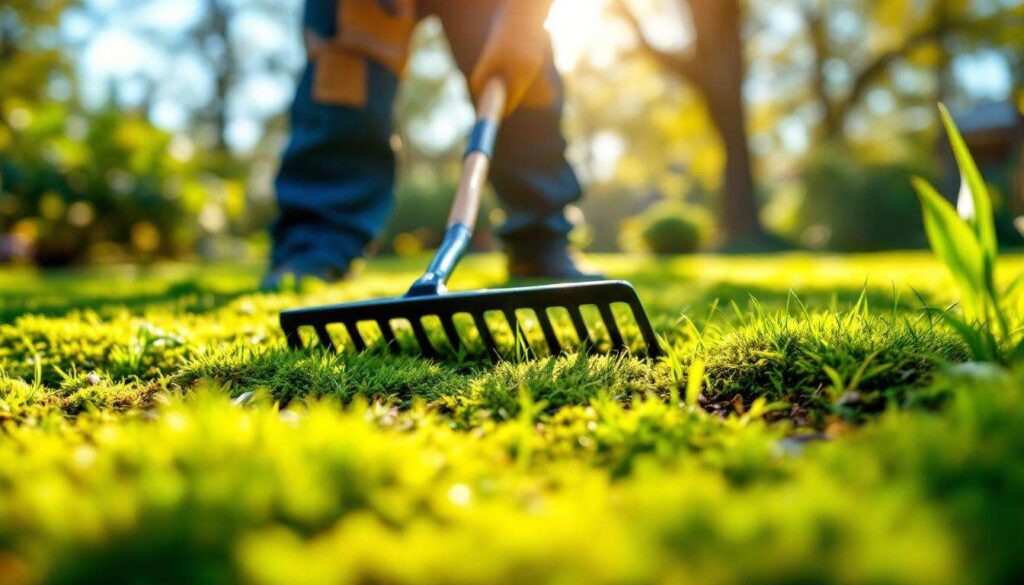
Moss creeping across your lawn signals underlying issues that demand immediate attention. This green invader thrives in conditions where grass struggles, creating unsightly patches that compromise the aesthetic appeal and vitality of your outdoor space. Addressing moss growth requires understanding its root causes and implementing strategic interventions that restore your lawn’s natural resilience. Spring presents the optimal window for tackling this persistent problem, as warming temperatures and increased sunlight support grass recovery while allowing effective moss treatment.
Understanding the appearance of moss on your lawn
Environmental conditions favoring moss growth
Moss establishes itself when specific environmental factors align to create inhospitable conditions for traditional turf grasses. Unlike grass, moss lacks a root system and absorbs nutrients directly through its leaves, making it remarkably adaptable to challenging environments. Shade, excessive moisture, and compacted soil form the trinity of conditions that encourage moss proliferation. Areas beneath trees, along north-facing slopes, or in low-lying sections of your property become prime real estate for moss colonies.
Soil chemistry and moss establishment
The pH level of your soil plays a critical role in determining whether moss or grass dominates your lawn. Acidic soils with pH levels below 6.0 create favorable conditions for moss while simultaneously weakening grass growth. Testing your soil reveals this crucial metric and guides appropriate amendment strategies. Additionally, nutrient-poor soil lacking essential elements like nitrogen, phosphorus, and potassium fails to support robust grass development, leaving vacant spaces for moss to colonize.
| Factor | Moss-Friendly Condition | Grass-Friendly Condition |
|---|---|---|
| Soil pH | Below 6.0 | 6.0-7.0 |
| Light Exposure | Heavy shade | 4-6 hours sunlight |
| Soil Compaction | High density | Aerated, loose |
Recognizing these contributing factors provides the foundation for developing an effective moss management strategy that addresses causes rather than merely treating symptoms.
The impacts of moss on your lawn’s health
Competition for resources and space
Moss functions as an aggressive competitor that monopolizes space, moisture, and nutrients that would otherwise support grass growth. As moss spreads across your lawn, it forms dense mats that prevent grass seeds from making soil contact, effectively blocking natural lawn regeneration. This smothering effect creates expanding dead zones where grass cannot establish or maintain healthy growth patterns. The visual impact becomes increasingly pronounced as moss patches enlarge and merge into continuous coverage.
Long-term structural damage to turf
Beyond aesthetic concerns, moss presence indicates deeper structural problems within your lawn ecosystem. The conditions that permit moss establishment typically signal poor drainage, inadequate aeration, or nutritional deficiencies that compromise overall turf health. Persistent moss growth weakens the lawn’s root structure, making it more susceptible to disease, pest infestation, and weather-related stress. Left unaddressed, these cascading effects transform a minor moss problem into comprehensive lawn failure requiring extensive restoration efforts.
Understanding these detrimental effects underscores the importance of implementing timely interventions that restore balance to your lawn ecosystem.
Natural solutions to eliminate moss in spring
Manual removal techniques
Physical removal represents the most environmentally gentle approach to moss elimination. Raking with a specialized dethatching rake lifts moss from the soil surface, allowing you to collect and dispose of it before it releases spores. This method works best when soil remains slightly moist but not saturated, as wet conditions make moss more difficult to extract completely. Spring timing proves ideal because moss actively grows during cool, damp conditions, making it easier to identify and target affected areas.
Organic moss control products
Several natural substances effectively combat moss without introducing harsh chemicals into your lawn environment. Consider these proven options:
- Baking soda solution: mix 2-3 tablespoons per gallon of water and spray directly on moss
- Dish soap mixture: combine gentle liquid soap with water to dehydrate moss cells
- Ferrous sulfate: an iron-based compound that kills moss while providing beneficial iron to grass
- Vinegar application: diluted white vinegar creates acidic conditions lethal to moss
Application timing and methodology
Applying natural moss treatments requires strategic timing for maximum effectiveness. Early spring mornings when dew moistens moss surfaces enhance absorption of liquid treatments. Avoid application immediately before rainfall, which dilutes products and reduces contact time. After treatment, wait 24-48 hours before raking dead moss, allowing products to fully penetrate and kill moss down to its base. Remove all debris promptly to prevent reestablishment from remaining fragments.
These natural interventions set the stage for creating soil conditions that actively discourage future moss colonization.
Soil preparation: the secret to preventing moss
pH adjustment strategies
Modifying soil pH creates an environment where grass thrives while moss struggles to establish. Lime application raises acidic soil pH toward the neutral range preferred by most turf grasses. Conduct a soil test to determine current pH levels and calculate appropriate lime quantities. Pelletized lime offers easier application and faster soil incorporation compared to traditional powdered forms. Spring application allows lime to activate as soil temperatures rise, supporting grass growth throughout the growing season.
Aeration and soil structure improvement
Compacted soil prevents proper air circulation, water penetration, and root development, creating conditions where moss outcompetes grass. Core aeration removes small plugs of soil, creating channels that alleviate compaction and improve soil structure. This process delivers multiple benefits:
- Enhanced oxygen availability to grass roots
- Improved water infiltration reducing surface moisture
- Better nutrient absorption throughout the root zone
- Reduced soil density that grass roots can easily penetrate
Spring aeration coincides with active grass growth, allowing turf to quickly fill spaces left by moss removal while establishing stronger root systems.
Proper soil preparation directly influences drainage capacity, another critical factor in moss prevention.
The importance of good drainage for your lawn
Identifying drainage problems
Poor drainage manifests through several observable indicators that signal intervention needs. Persistent standing water after rainfall, spongy soil texture when walking across the lawn, and moss concentration in specific areas all point toward drainage deficiencies. Low spots and depressions collect water, creating perpetually damp conditions ideal for moss establishment. Observing water flow patterns during rain events reveals problem areas requiring correction.
Drainage improvement techniques
Addressing drainage issues requires both surface and subsurface interventions. Regrading eliminates depressions and establishes proper slope that directs water away from problem areas. For severe cases, installing French drains or dry wells provides underground pathways for excess water removal. Surface solutions include:
| Method | Best For | Difficulty Level |
|---|---|---|
| Topdressing | Minor depressions | Easy |
| Regrading | Slope correction | Moderate |
| French drains | Chronic wetness | Advanced |
| Rain gardens | Water collection | Moderate |
Improved drainage eliminates the moisture excess that sustains moss colonies, creating conditions where grass naturally outcompetes this unwanted invader.
Once drainage issues resolve and moss disappears, maintaining these improvements ensures long-term lawn health.
Maintaining the lawn after moss removal
Overseeding and grass establishment
Bare areas left by moss removal require prompt reseeding to prevent moss return. Select grass varieties suited to your specific conditions, including shade-tolerant cultivars for areas with limited sunlight. Prepare the seedbed by loosening soil and incorporating compost to improve texture and fertility. Spring seeding capitalizes on moderate temperatures and adequate moisture that support germination and establishment before summer heat stress arrives.
Ongoing maintenance practices
Sustaining a moss-free lawn demands consistent attention to cultural practices that favor grass health. Regular mowing at appropriate heights maintains grass vigor while preventing excessive shade at the soil surface. Fertilization schedules provide essential nutrients that support dense turf growth, leaving no room for moss infiltration. Monitor these key practices:
- Mow at recommended heights for your grass type
- Apply fertilizer based on soil test recommendations
- Water deeply but infrequently to encourage deep root growth
- Prune overhanging branches to increase sunlight penetration
- Conduct annual aeration to prevent soil compaction
Consistent lawn care creates resilient turf that naturally resists moss encroachment, reducing the need for repeated interventions and maintaining the aesthetic appeal you desire.
Combating moss requires a comprehensive approach addressing underlying causes rather than superficial symptoms. Spring offers the ideal opportunity to implement natural moss removal techniques, improve soil conditions, enhance drainage, and establish healthy grass that prevents future moss problems. Success depends on understanding the environmental factors favoring moss growth and systematically correcting each contributing element. Through proper soil preparation, strategic drainage improvements, and consistent maintenance practices, you can transform a moss-invaded lawn into thriving turf that remains resilient throughout the growing season.